White House Summit: Can the Feb 10 Meeting End the Crypto-Bank Standoff?
The White House will host a major summit on February 10, 2026, bringing together crypto executives and banking leaders for a crucial...
Quick overview
- The White House will host a summit on February 10, 2026, to address the legislative deadlock surrounding the U.S. crypto market bill.
- Key issues to be discussed include liquidity risks, regulatory jurisdiction, reserve standards, and consumer protections for digital assets.
- Recent market volatility, including a significant drop in Bitcoin prices, has heightened the urgency for regulatory clarity in the crypto space.
- If progress is made at the summit, the bill could advance to a Senate vote by early spring, otherwise the U.S. may lag behind other regions in financial innovation.
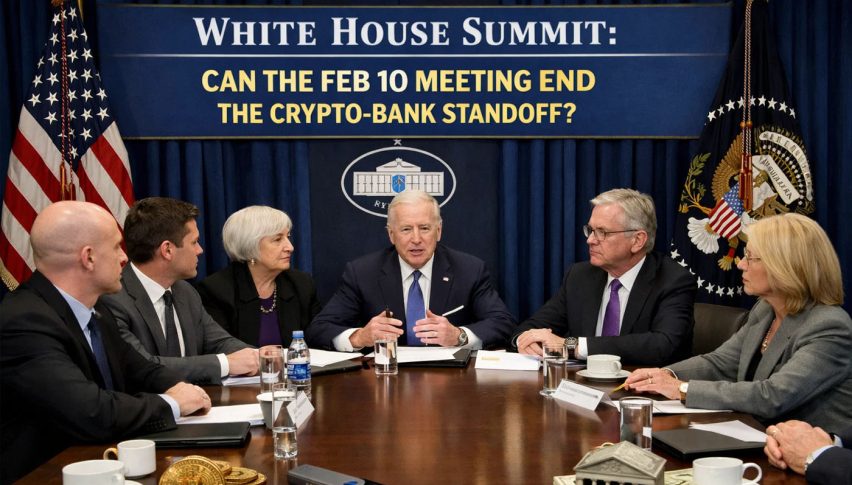
The White House will host a major summit on February 10, 2026, bringing together crypto executives and banking leaders for a crucial round of negotiations. The goal is to resolve the legislative deadlock that has stalled the U.S. crypto market bill, while digital assets continue to struggle with a sharp market downturn.
After the Senate Banking Committee postponed a key vote last month because of limited bipartisan support, the Biden administration is now stepping in to help resolve a dispute between traditional finance and the digital asset industry.
The Stablecoin Standoff: Interest vs. Security
The main obstacle to passing the CLARITY Act, which would create a federal framework for stablecoins, is a strong disagreement over rewards and interest.
- The Banking Perspective: Major banking groups, such as the ABA and BPI, say that if stablecoin issuers can offer interest-like rewards, it could cause a large shift of deposits. Banks worry that as much as $6.6 trillion in traditional deposits could move to higher-yield digital assets, reducing the funds available for local loans and mortgages.
- The Crypto Perspective: Companies like Coinbase argue that rewards are important for competition and transparency. They say the GENIUS Act already set rules for issuers, and claim that banks are just trying to close a loophole to limit competition and protect their profits.
🚨CONFIRMED: White House Schedules NEXT Stablecoin Meeting for TUESDAY (Feb 10) — Banks Officially Join the Talks 🇺🇸🔥
The White House just confirmed in the next round of stablecoin yield discussions between crypto and banks for Tuesday, Feb 10 — and this time, bank… https://t.co/cG5p23x5q8 pic.twitter.com/pA48NjAaBs
— Diana (@InvestWithD) February 6, 2026
Key Policy Disagreements on the Table
People who attended a closed-door session earlier this week described the mood as ‘constructive but rigid.’ For the bill to move forward, the February 10 meeting needs to address four main issues:
- Liquidity Risks: Determining if stablecoin yields pose a systemic threat to bank liquidity.
- Regulatory Jurisdiction: Finalizing the “bright line” between the SEC and CFTC to end regulation-by-enforcement.
- Reserve Standards: Solidifying the 1:1 high-quality liquid asset (HQLA) backing requirement for all payment stablecoins.
- Consumer Protections: Implementing federal insurance or equivalent safeguards for digital asset holders.
Market Volatility Raises the Stakes for Regulation
Recent market chaos is adding urgency in Washington. Bitcoin (BTC) fell below $64,000 and nearly hit the $60,000 support level. This 12% drop, the biggest since the FTX collapse, erased more than $1 trillion from the total crypto market cap in just a month.
The lack of clear laws is making the situation worse. “Regulatory clarity isn’t just a legal necessity; it’s a market stabilizer,” says one senior analyst. “Institutional investors are sitting on the sidelines until they know the rules of the road.”
What to Expect on February 10
The White House Crypto Council has reportedly told both sides to identify their main concerns and reach a compromise by the end of February. One possible solution is for community banks to serve as regulated reserve holders for stablecoin issuers, combining the technical skills of crypto companies with the compliance systems of traditional banks.
If Senator John Boozman and other important lawmakers see progress at the summit, the bill could move quickly to a Senate vote by early spring. If not, the U.S. may stay stuck in ‘legislative limbo’ while places like the EU (under MiCA) move ahead in financial innovation.
- Check out our free forex signals
- Follow the top economic events on FX Leaders economic calendar
- Trade better, discover more Forex Trading Strategies
- Open a FREE Trading Account
- Read our latest reviews on: Avatrade, Exness, HFM and XM

Related Articles


Sidebar rates

Related Posts
 Save
Save