Russia’s 2026 Crypto Ultimatum: July Deadline Set for Licensed Trading as Moscow Targets “Grey Zone” Exchanges
Big changes are coming to Russia’s crypto scene. After years of skepticism, the Central Bank of Russia and the Ministry of Finance...
Quick overview
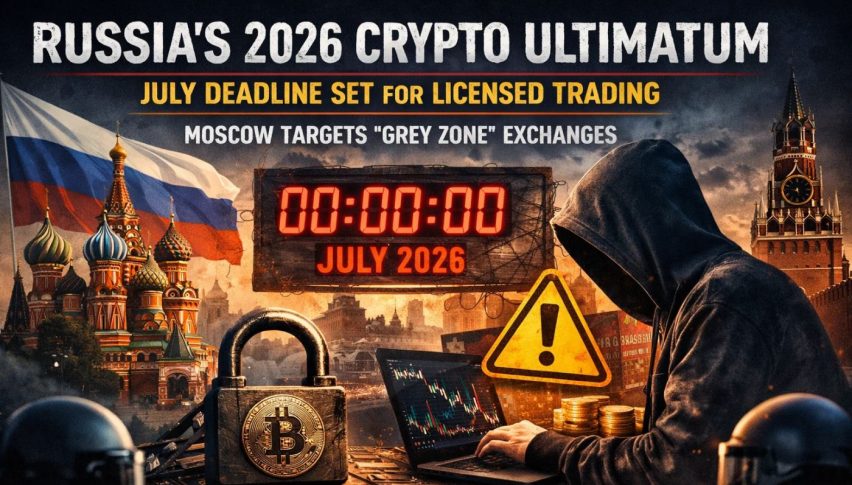
- Russia's Central Bank and Ministry of Finance have agreed to integrate cryptocurrency into daily life, with a strict condition that all unlicensed platforms will be shut down by July 1, 2026.
- Only eight licensed platforms will be allowed to handle crypto trades, limiting operations to established institutions to prevent capital flight and circumvent sanctions.
- Non-qualified investors will face a cap of 300,000 rubles per year on crypto purchases, while qualified investors will have no limits but cannot buy privacy coins.
- The new law mandates that every crypto account be linked to a user's real identity, enhancing transparency but potentially compromising privacy.
Big changes are coming to Russia’s crypto scene. After years of skepticism, the Central Bank of Russia and the Ministry of Finance have agreed on a plan to make cryptocurrency part of daily life. But there’s a big condition: all unlicensed platforms will be shut down, and by July 1, 2026, every digital asset must be under state control.
Today, February 25, 2026, the State Duma is getting ready to review the final draft of the law in its spring session. If it passes, the days of unregulated crypto trading in Russia will end, and millions of users will have to use only licensed, closely monitored platforms.
The “Big Eight”: Only Licensed Giants Allowed
A key part of the new law is limiting who can handle crypto trades. To stop money from leaving the country and to get around sanctions, only established institutions with regular financial licenses will be allowed to operate.
Right now, just eight platforms are set to take the lead:
- Moscow Exchange (MOEX)
- Petersburg Exchange (SPB)
- Petersburg Currency Exchange
- Petersburg Commodity Exchange
- Eastern Exchange
- National Commodity Exchange
- Central Trading System
- Decentralized Trading System
For crypto-only platforms, any new exchange will have to register as a digital currency organization, keep a monthly turnover of at least 3.5 million rubles (about $45,000), and hold large capital reserves.
There’s also a possible exception for foreign exchanges. The law might allow ‘friendly’ foreign trading platforms to operate if they help Russian companies get around Western sanctions.
https://www.kommersant.ru/doc/8460083/
Retail Access: The 300,000 Ruble Cap
For everyday people in Russia, crypto will be easier to access but tightly controlled. The new law draws a clear line between Qualified and Non-Qualified investors.
- Non-Qualified investors can only buy up to 300,000 rubles’ worth of crypto each year (about $3,800 to $4,000). They’ll also have to pass required risk-awareness tests to trade popular coins like Bitcoin and Ethereum.
- Qualified investors won’t have any limits on how much they can buy, but they are not allowed to purchase privacy coins like Monero (XMR) or Zcash (ZEC).
- The Central Bank of Russia is expected to publish a whitelist of approved coins, mainly focusing on the top 5 to 10 largest cryptocurrencies.
Total Visibility: The End of Crypto Privacy?
The Kremlin is making crypto legal in exchange for more transparency. Every crypto account will get a unique ID that connects it to the user’s real identity.
- Mandatory Reporting: Any transfer over 100,000 rubles (about $1,300) must be reported by intermediaries to the Central Bank and Rosfinmonitoring, the anti-money laundering agency.
- The “Shadow Fleet” Support: Domestic crypto payments are still banned, so only rubles can be used inside Russia. However, the law highlights stablecoins as a legal option for foreign business, making them a kind of ‘digital dollar’ for Russian companies.
| Feature | Regulation | Status |
| Domestic Payments | Strictly Banned | Ruble is the only legal tender. |
| Stablecoins (USDT) | Legal for Trade | Classified as “currency values” for imports. |
| Staking & Mining | Regulated | Mined assets treated as “export products.” |
| Punishment | Fines/Jail Time | Effective July 2027 for unlicensed trading. |
The Analyst’s Verdict: Consolidation is Coming
From my perspective as an analyst, this move looks like Russia’s effort to create a closed crypto system. By pushing users to the Moscow and SPB Exchanges, the government can collect billions in fees that now go to foreign platforms like Bybit or OKX.
For professionals, the July 2026 deadline is approaching fast. If you manage Russian capital, moving to Digital Financial Assets and domestic storage is now a must.
If you’re new to crypto, here’s the upside: soon you’ll be able to buy Bitcoin right from your banking app, like Sberbank or T-Bank. The downside is that the tax authorities will know exactly how much you own.
- Check out our free forex signals
- Follow the top economic events on FX Leaders economic calendar
- Trade better, discover more Forex Trading Strategies
- Open a FREE Trading Account
- Read our latest reviews on: Avatrade, Exness, HFM and XM

Related Articles

Sidebar rates

Related Posts
 Save
Save