Bank of Japan Signals Rate Pause as Yen Weakens, Helping Bitcoin Climb Above $74,000
The Bank of Japan has backed off on further rate hikes, which is a big deal - especially for Bitcoin, because it's helped push it above...
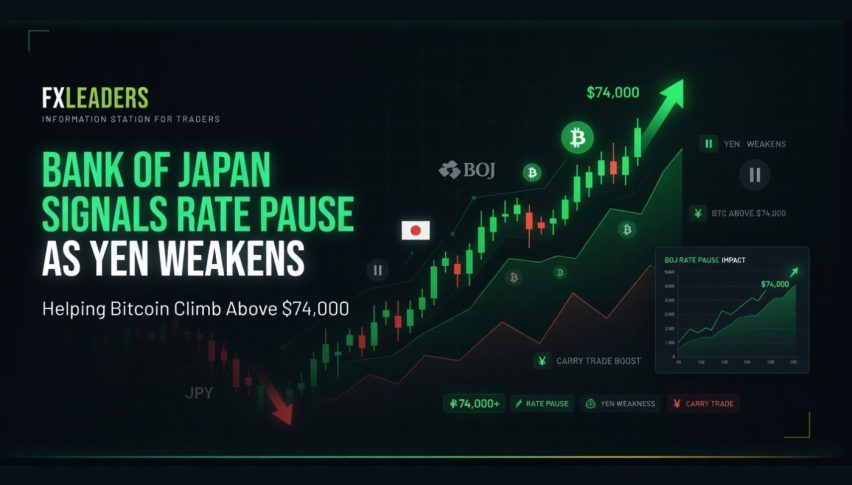
Quick overview
- The Bank of Japan has decided against further rate hikes, contributing to Bitcoin's rise above $74,000.
- Governor Kazuo Ueda emphasized the need to monitor economic stability amid global uncertainties and energy market risks.
- Strong demand for Japanese government bonds indicates market confidence in the Bank's cautious approach to monetary policy.
- A weakened yen encourages investment in higher-yielding assets abroad, positively impacting global risk appetite and cryptocurrency markets.
The Bank of Japan has backed off on further rate hikes, which is a big deal – especially for Bitcoin, because it’s helped push it above the $74,000 mark. Governor Kazuo Ueda was a bit more careful about the language he used ahead of the policy meeting on April 28, saying that the bank needs to keep an eye on economic stability, with all the uncertainty in the world and energy market risks piling up.
This means Japan’s loose monetary policy is staying pretty much where it is, and that keeps the global liquidity flowing, which is good news for risk assets – like cryptocurrencies.
The Bank of Japan Takes a Wait and See Approach
The bank’s shift in policy is a sign that they’re getting nervous about the external pressures building up, particularly with oil prices all over the place and trade routes getting affected by geopolitical tensions. As it stands, Japan imports a massive 90% of its oil and most of that comes through the Strait of Hormuz – any disruption there and you’re looking at higher inflation and slower economic growth.
So, instead of getting too aggressive with rate hikes, the policymakers are focusing on keeping an eye on a few key things:
What’s happening with global oil prices
What comes out of the US-Iran talks
Wage growth and inflation trends back home
This cautious approach says that they’re not going to rush into any further rate hikes any time soon, which means less chance of a sudden reduction in liquidity.
A Strong Demand for Bonds Backs Up the Bank’s Stance
Financial markets are actually lining up behind the Bank of Japan on this one. There was a recent auction of 20-year government bonds that saw the strongest demand since 2019 – the bid to cover ratio went up to 4.82, which is a whole lot higher than the average of 3.27 over the past year. And after the auction, long term yields actually went down by nine basis points, showing that investors didn’t think there was going to be any sudden tightening of policy.
A Weakened Yen Encourages More Outflows
The Japanese yen is still trading at around 160 against the US dollar, which is pretty much where it’s been – the gap between Japan’s policy and that of other major central banks is just getting wider. A weaker yen means that investors can still get cheap borrowing in yen, which makes it easier for them to invest in higher-yielding assets abroad – that’s good for the global risk appetite, and it’s especially good for equities and crypto markets.
Bitcoin Reaches a New High as Liquidity Conditions Improve
Bitcoin’s surge above $74,000 is partly thanks to the Bank of Japan keeping interest rates low in Japan – that means it’s still cheap for investors to borrow in yen and invest in assets that can give them a better return. And that’s happening now – we can see that investors are taking a more bullish view on crypto markets, with data showing that open interest in both Bitcoin and Ether has been going up.
In one 24 hour period, Bitcoin open interest jumped by $2.1 billion
Ether open interest went up by $2.2 billion
This is a big change from what happened back in August, when the Bank of Japan unexpectedly hiked rates and the whole market came crashing down – this time, the conditions are very different.
The Big Picture
Of course, the Bank of Japan’s policy is still going to be influenced by what’s happening on the global stage and in Japan’s domestic economy. If oil prices settle down and geopolitical risks ease off a bit, inflation pressure in Japan should go down too, giving the policymakers even more room to delay any tightening.
And for global investors, including Bitcoin fans, that means this: as long as Japan keeps playing it cautious, there’s still a good supply of liquidity in the market, which is good news for risk assets.
- Check out our free forex signals
- Follow the top economic events on FX Leaders economic calendar
- Trade better, discover more Forex Trading Strategies
- Open a FREE Trading Account
- Read our latest reviews on: Avatrade, Exness, HFM and XM

Related Articles



Sidebar rates

Related Posts
 Save
Save