Asian Stocks Bounce on Wall Street Inflation Relief but China Stumbles
Asian markets followed Wall Street higher Wednesday morning after US inflation came in softer than feared.
Quick overview
- Asian markets rose following softer-than-expected US inflation data, with South Korea's Kospi leading the gains at 7.1%.
- Korea's semiconductor stocks rebounded sharply, with SK Hynix and Samsung Electronics seeing significant increases of 9.4% and 6.1%, respectively.
- Despite the overall regional rally, China's Shanghai Composite fell 0.4%, indicating a divergence in market sentiment.
- Geopolitical tensions and concerns over China's economic slowdown are tempering enthusiasm, leading to a cautious market outlook.
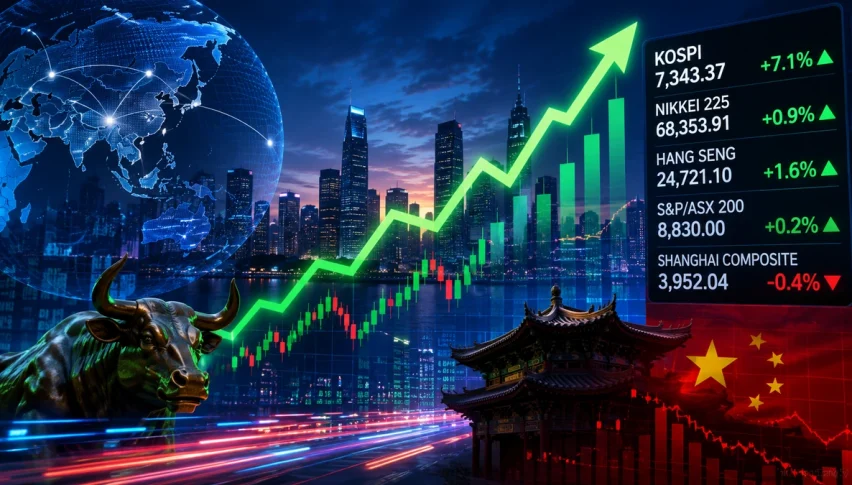
Asian markets followed Wall Street higher Wednesday morning after US inflation came in softer than feared. South Korea’s Kospi led the charge, surging 7.1% to 7,343.37 as semiconductor stocks recovered hard from recent selling. SK Hynix jumped 9.4%, Samsung Electronics popped 6.1%.
Japan’s Nikkei 225 gained 0.9% to 68,353.91. Hong Kong’s Hang Seng edged up 1.6% to 24,721.10. Australia’s S&P/ASX 200 barely moved, up 0.2% to 8,830.00. Broad regional move higher but Korea’s semiconductors did the heavy lifting.
Shanghai Composite actually dropped 0.4% to 3,952.04 even while everything else rallied. That divergence matters. It signals the global relief from softer US inflation isn’t spreading to Chinese equities equally.
The whole Asia rally hinged on one thing: US inflation data released overnight showed things weren’t as bad as economists feared. That immediately killed rate-hike expectations, which flipped sentiment from defensive to buying. What’s good for US rates is good for growth assets globally.
Korea’s chip rebound makes sense. Semis got demolished last week on global recession fears and weak demand signals. When sentiment shifts positive suddenly, oversold sectors bounce hardest. Institutions covering short positions plus new buyers stepping in equals 7%+ rallies.
But here’s the catch. Overall gains stayed moderate despite the big Korea pop. That’s because US-Iran war worries aren’t going away. The geopolitical risk keeps lid on buying enthusiasm. You get rallies when data improves but they get capped by macro tension.
China’s economy expanded 4.3% in Q2, down sharply from 5% in Q1. That slowdown should’ve been more negative for Shanghai. Instead, minus 0.4% is basically flat. Suggests the market already priced in the slowdown before official numbers dropped.
Foreign investors watching this setup see mixed signals. Korea’s chip rebound suggests demand recovery. China’s slowdown suggests global growth pressure. Neither is obviously bullish or bearish long-term. You’re stuck in a “show me” environment where data moves markets but no clear trend emerges.
The inflation data working its way through global markets shows how connected everything is. Better US news lifts risk sentiment everywhere within hours. But geopolitical overhang and China slowdown story keeps regional enthusiasm capped. Markets grinding higher but with caution.
- Check out our free forex signals
- Follow the top economic events on FX Leaders economic calendar
- Trade better, discover more Forex Trading Strategies
- Open a FREE Trading Account
- Read our latest reviews on: Avatrade, Exness, HFM and XM

Related Articles
Sidebar rates

Related Posts
 Save
SaveAva

