JSE Top 40 Forecast: Can 104,000 Support Weather the Global Storm?
The FTSE/JSE Top 40 Index (JTOPI) is trading between 103,900 and 104,500 ZAR on March 30, 2026. This is 13% below its all-time high...
Quick overview
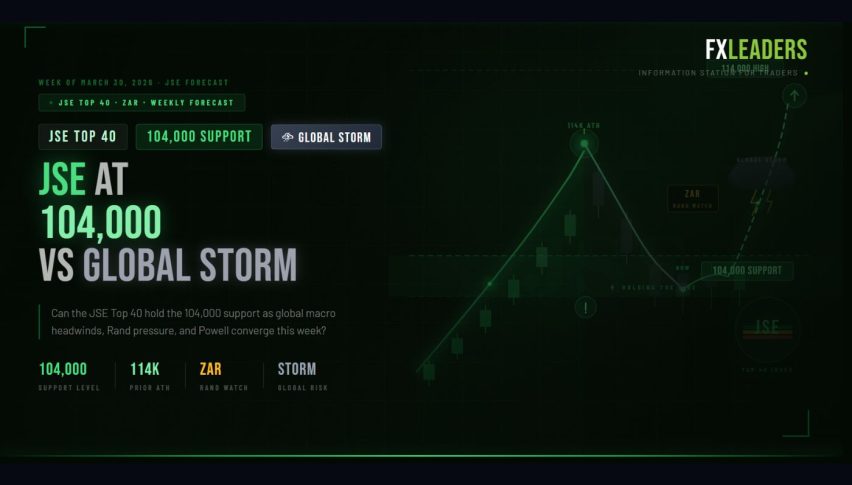
- The FTSE/JSE Top 40 Index is currently trading between 103,900 and 104,500 ZAR, which is 13% below its all-time high.
- Three main factors contributing to the index's decline include a pullback in gold prices, a shift of investments from emerging markets to the US dollar, and a change in the SARB's policy direction.
- The index is facing resistance at a descending trendline and key support levels are at 102,481 and 100,000, with potential for a breakout above 105,000.
- External catalysts this week include Powell's speech and US Nonfarm Payrolls, which could significantly impact the index's performance.
The FTSE/JSE Top 40 Index (JTOPI) is trading between 103,900 and 104,500 ZAR on March 30, 2026. This is 13% below its all-time high of 121,329 and down 4% for the year. The RSI is at 52, showing a neutral trend. This week, Powell’s speech, US Nonfarm Payrolls, and SARB rate decisions will determine if the index stays above 104,000 or falls back to test 100,000.
Why the JSE Top 40 Has Fallen 13% From Its Record High
Three main factors caused the March correction.
First, gold and precious metals pulled back. Miners made up 25 to 30% of the index, so the more than 15% drop in gold from its $5,595 peak weighed heavily on the JSE.
Second, investors moved money out of emerging markets and into the US dollar because of the Iran conflict.
Third, the SARB changed its policy direction. Markets had expected two rate cuts in 2026, but the oil-driven inflation shock changed that outlook. Now, most expect a hawkish hold at 6.75%, and some analysts even see a possible 25bp “insurance hike” to support the Rand.
The Rand is trading close to 17.00 per USD. Usually, a weaker Rand helps dual-listed companies like Richemont and Anglo American because it increases their ZAR earnings.
However, right now, risk-off sentiment is canceling out that benefit. The Rand is weaker because of fear rather than underlying fundamentals, and this difference is important for performance.
JSE Top 40 Technical Analysis: Descending Trendline Standoff
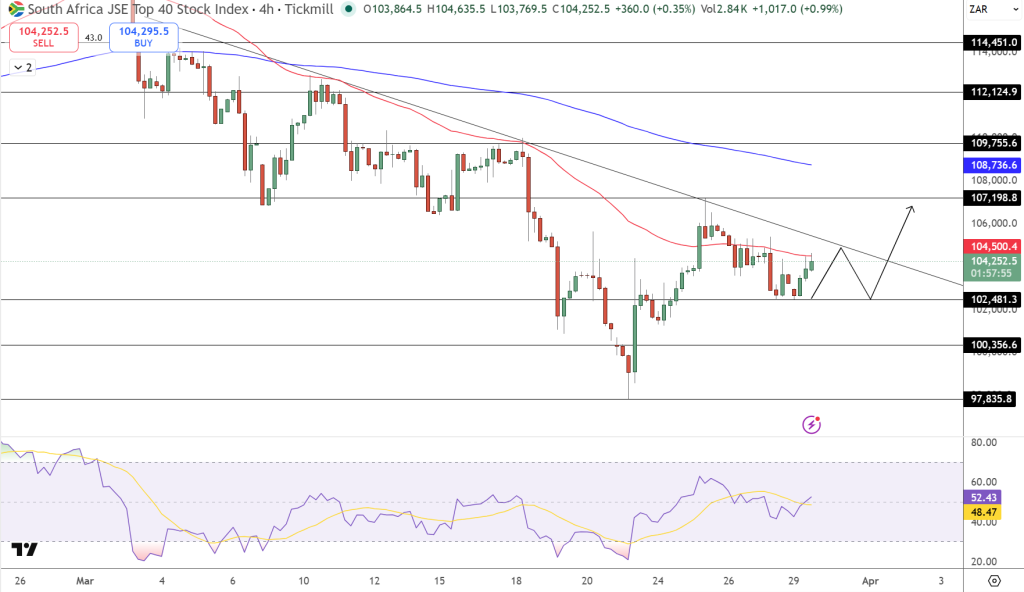
The 4-hour chart shows a market defending support against a ceiling of resistance.
After hitting a low near 97,835, the index recovered but is having trouble breaking above the descending trendline that has stopped every rally since early March. The 50-period moving average is flat just above the current price, which is neutral to slightly bearish. The 200-period average at 108,736 is still far away, showing the index remains in a corrective phase.
Key levels to watch this week: Immediate support is at 102,481. If the index falls below this, it could retest the important 100,000 level. On the upside, a clear move above 105,000 might trigger short-covering up to the 107,198 resistance zone. Analysts at FX Leaders say that if the index drops below 98,000, it could fall to the 92,000 area last seen in 2024.
Trade setup: Consider buying if there is a confirmed breakout above 105,000. The target is 107,200, with a stop set below 102,400.
The Mining Sector Split and the FATF Catalyst
The March rebalancing brought Pan African Resources (PAN) into the Top 40, replacing Mondi (MNP). This change makes the index more sensitive to precious metals. It could help if gold prices recover, but it also increases risk if the correction continues.
The sector is split. AngloGold Ashanti and Gold Fields are cushioned by the Rand-hedge effect. However, deep-level miners such as Sibanye Stillwater and Impala Platinum are dealing with higher operating costs because imported fuel prices have risen above $100 per barrel, which is squeezing their margins.
South Africa’s ongoing progress toward getting off the FATF grey list is a positive factor for the medium term. It encourages foreign direct investment and helps increase institutional flows into JSE-listed stocks. GDP growth is expected to reach 1.6% in 2026, helped by more reliable electricity and improvements at Transnet ports.
This Week’s Three External Catalysts
Monday, March 30: Powell speaks today. If his message is hawkish, it will strengthen the USD, put pressure on the Rand, and raise the risk of a SARB rate hike. All of these are negative for the JSE. If his tone is softer, it could ease pressure on emerging markets.
Wednesday, April 1: ADP and ISM Manufacturing PMI reports are released. These give an early look at the US economy. If the data is weak, it could reduce dollar strength and give the JSE some short-term relief.
Friday, April 3 (Good Friday): US Nonfarm Payrolls are released. Strong jobs data would mean a stronger dollar, a weaker Rand, and more hawkishness from the SARB, which could push the index below 102,400. If the jobs data is weak, it could bring relief to emerging market assets and possibly trigger a short-squeeze toward 107,198.
- Check out our free forex signals
- Follow the top economic events on FX Leaders economic calendar
- Trade better, discover more Forex Trading Strategies
- Open a FREE Trading Account
- Read our latest reviews on: Avatrade, Exness, HFM and XM

Related Articles

Sidebar rates

Related Posts
 Save
Save