Wall Street Jumps Up to 3.8% as Oil Falls on Hopes of War’s End
There is growing concern that the energy crisis could reignite inflationary pressures across the global economy.

Quick overview
- The war in the Middle East has caused significant volatility in global financial markets, although U.S. equities rebounded on optimism for a potential resolution.
- Oil prices have stabilized above $100 per barrel, with Brent crude futures experiencing substantial gains amid concerns of inflation.
- Despite the recent stock market rally, March was a negative month for major U.S. indexes, with declines of over 5%.
- Consumer confidence has slightly improved, but inflation expectations have risen, prompting concerns about potential interest rate hikes.
The war in the Middle East has triggered record volatility in global financial markets, although equities staged a strong rebound on the final trading day of the month as hopes grow that the conflict could soon come to an end. Oil prices, meanwhile, appear to have found a floor above $100 per barrel.
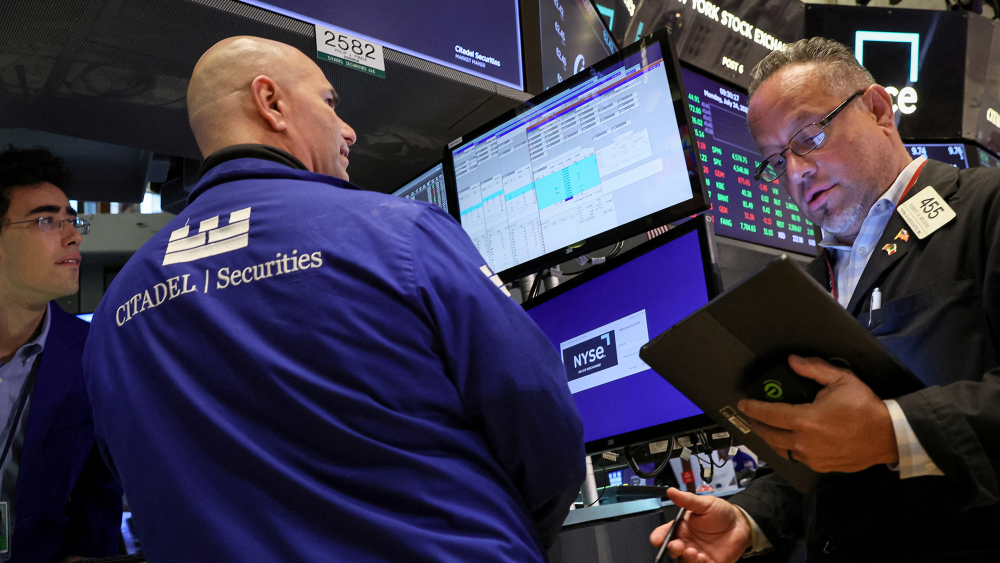
Major U.S. stock indexes surged on Tuesday, March 31, driven by optimism surrounding a potential de-escalation in the Middle East. The joint military operation by the United States and Israel against Iran took a more positive turn after a report suggested that President Donald Trump told advisers he would be willing to withdraw from the war even if the Strait of Hormuz is not fully reopened.
Against this backdrop, the Dow Jones Industrial Average rose 2.49% to 46,341.21 points. The S&P 500 gained 2.92% to 6,528.99 points, while the Nasdaq Composite jumped 3.83% to 21,590.63 points.
Despite the rally, March was a negative month for the main indexes. The Dow Jones fell 5.4%, the S&P 500 declined 5.1%, and the Nasdaq Composite dropped 4.84%.
Trump says war with Iran will not last “much longer”
The The Wall Street Journal reported that Trump may be willing to end the military campaign, which has lasted more than a month, even though Iran continues to maintain firm control over the strategic Strait of Hormuz.
Its effective closure for weeks triggered a sharp rise in oil prices and raised concerns about a potential global recession. Trump and his advisers reportedly assessed that a mission to reopen the strait would extend the conflict beyond its planned four-to-six-week timeline.
Instead, the president opted to intensify attacks on Iran’s navy and missile arsenal while pursuing a reduction in hostilities through diplomatic pressure on Tehran, according to the report, which cited administration officials. Washington would rely on its allies in Europe and the Persian Gulf to lead any operation in the strait if diplomatic efforts fail.
Trump later told the New York Post that the war would not last “much longer” and that the strait would reopen “automatically.”
However, Iranian state television reported that the Revolutionary Guard warned 18 U.S. technology companies — including Microsoft, Apple, and Alphabet Inc. — to expect attacks starting April 1.
Oil prices remain elevated
Brent crude futures for May delivery rose 5.1% to $118.55 per barrel. By contrast, the June Brent contract was little changed at $107.41 per barrel.
Brent is now on track for its largest quarterly percentage gain since the Gulf War.
Meanwhile, U.S. West Texas Intermediate futures rose 1.5% to $104.46 per barrel.
There is growing concern that the energy crisis could reignite inflationary pressures across the global economy. Those worries were reinforced by data released Tuesday showing consumer price growth in the euro area accelerated to 2.5% in March, up from 1.9% in February and above the medium-term 2% target set by the European Central Bank.
Gasoline prices in the United States also climbed above $4 per gallon for the first time since 2022, delivering a blow to consumers despite hopes that the country’s status as a net energy exporter would shield it from rising prices.
Similar inflationary pressures are emerging in other economies, fueling expectations that many central banks could consider raising interest rates in the coming months. That outlook has pushed government bond yields higher and weighed on equities.
Consumer confidence rises, but labor data weakens
The key consumer confidence index from The Conference Board rose slightly in March to 91.8, beating expectations.
However, amid the oil crisis, respondents’ average one-year inflation expectations jumped in March to their highest levels since August 2025.
Meanwhile, the latest JOLTS report from the U.S. Bureau of Labor Statistics showed 6.882 million job openings in February, slightly below January’s revised figure of 7.240 million and marginally under market expectations of 6.918 million.
The hiring rate also slipped to 3.1% in February, its lowest level since April 2020.
- Check out our free forex signals
- Follow the top economic events on FX Leaders economic calendar
- Trade better, discover more Forex Trading Strategies
- Open a FREE Trading Account
- Read our latest reviews on: Avatrade, Exness, HFM and XM

Related Articles

Sidebar rates

Related Posts
 Save
Save