AAPL’s Rally Under Threat as As Apple Stock Tumbles Toward Support
Apple’s stock continues to attract buyers even as leadership changes, supply-chain uncertainty, and uneven product reception test investor..
Quick overview
- Apple's stock has shown resilience, maintaining an upward trend despite recent market volatility and leadership changes.
- The company is navigating supply-chain challenges and trade tensions while focusing on its long-term business model and AI integration.
- Recent leadership transitions in Apple's AI division signal a strategic shift as the company aims to enhance its competitive edge in the AI landscape.
- Investor confidence remains supported by positive speculation regarding Apple's partnership with Intel for future chip manufacturing.
Live AAPL Chart
[[AAPL-graph]]
Apple’s stock continues to attract buyers even as leadership changes, supply-chain uncertainty, and uneven product reception test investor conviction.
Apple’s Uptrend Holds, Even as Sentiment Shifts
Apple (NASDAQ: AAPL) has maintained a steady upward trajectory since April, defying periodic bouts of market anxiety tied to trade tensions and evolving technology narratives. The stock pushed toward record territory near $288, reflecting continued confidence in Apple’s long-term business model. However, as December brought renewed skepticism toward large-cap technology and AI-related stocks, Apple has slipped roughly 5% from its highs and began the new week under pressure with a 1.5% decline on Monday.
Despite the recent pullback, Apple’s broader trend remains intact. Investors appear willing to tolerate short-term volatility, focusing instead on the company’s scale, balance sheet strength, and ability to navigate change across hardware, services, and emerging technologies.
Trade Tensions Spark Volatility—but Not a Breakdown
Apple briefly felt the impact of renewed U.S.–China trade tensions when tariff increases on Chinese imports rattled markets. Given Apple’s deep manufacturing ties to China, concerns quickly surfaced about higher costs and potential supply-chain disruption. The announcement triggered a swift selloff across the technology sector, with Apple caught in the downdraft.
The reaction proved short-lived. As diplomatic signals pointed toward renewed negotiations, markets stabilized and Apple shares recovered quickly. The stock resumed its broader uptrend and reclaimed lost ground, highlighting how quickly investors were willing to re-engage once the immediate risk appeared contained.
APPL Chart Daily – MAs Still Keeping the Trend Upward

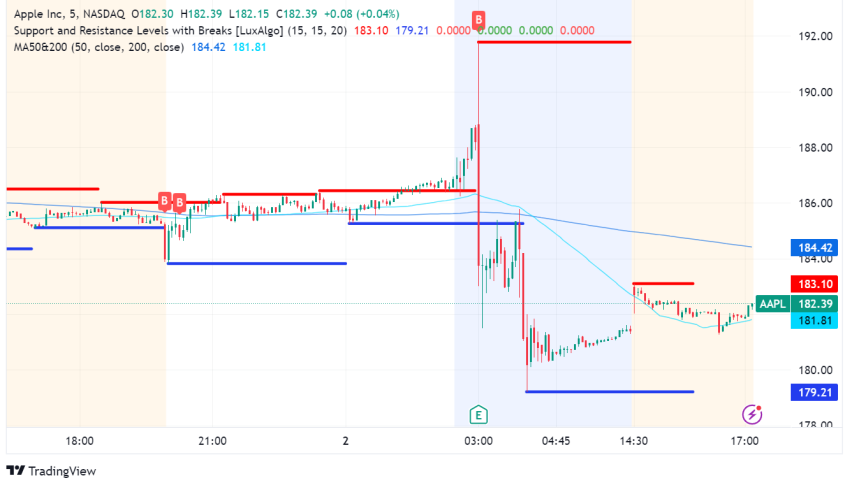
More recently, however, selling pressure has returned. Apple stalled near its highs last week and has since turned lower, drifting toward its 50-day moving average near $270. A decisive break below that level could expose further downside toward $260 or even $250, making the coming sessions technically significant.
Leadership Changes Mark a New Phase for Apple’s AI Push
Adding to the evolving narrative, Apple confirmed a major leadership transition within its artificial intelligence organization. John Giannandrea, senior vice president overseeing machine learning and AI strategy, will step into an advisory role before retiring in spring 2026. His exit represents a notable shift for a company valued at over $4 trillion and increasingly focused on next-generation AI integration.
To reinforce its leadership bench, Apple appointed Amar Subramanya as vice president of AI, reporting directly to Craig Federighi, senior vice president of Software Engineering. Subramanya will oversee Apple’s foundation models, AI research initiatives, and safety frameworks—areas central to the company’s future product roadmap.
Subramanya brings a deep technical background, having most recently served as a corporate vice president of AI at Microsoft. Prior to that, he spent 16 years at Google, where he led engineering efforts for the Gemini Assistant. His appointment signals Apple’s intent to sharpen execution as competition across the AI landscape accelerates.
Intel Partnership Speculation Lifts Long-Term Confidence
Positive supply-chain speculation also supported Apple’s stock late last month. Reports suggest Intel is making progress toward securing Apple’s next major foundry contract, potentially manufacturing future M-series chips using its advanced 18AP process technology.
According to industry sources, Apple expects updated process design kits in early 2026, which will determine whether Intel’s node meets its strict performance and efficiency requirements. If validated, large-scale production could begin by mid-2027, supplying chips for devices such as the MacBook Air, iPad, and Mac Mini.
The possibility of Apple diversifying its chip manufacturing footprint has been welcomed by investors, boosting confidence in the company’s long-term hardware flexibility while offering Intel a high-profile opportunity.
iPhone 17 Launch Fails to Ignite Enthusiasm
Not all developments have generated excitement. Apple’s September product event, which introduced the iPhone 17 and iPhone 17 Air, was met with a lukewarm response. While the devices featured refined design and improved battery efficiency, many viewed the updates as evolutionary rather than transformative.
Apple shares briefly rose during the presentation before reversing course and closing lower, reflecting disappointment over the absence of major feature breakthroughs or headline-grabbing AI enhancements.
A Solid Foundation, Awaiting the Next Spark
Apple’s core strengths remain firmly in place: a deeply entrenched ecosystem, resilient cash flows, and continued growth in services. Yet in the near term, trading conditions may remain uneven as investors weigh technical levels, leadership changes, and broader market sentiment.
While the longer-term outlook remains constructive, analysts suggest Apple may need a fresh catalyst—such as deeper AI integration or a more compelling product leap—to drive the next sustained leg higher.
- Check out our free forex signals
- Follow the top economic events on FX Leaders economic calendar
- Trade better, discover more Forex Trading Strategies
- Open a FREE Trading Account



 Save
Save