South African Rand Forecast: FED Confirms R17 Break in USD/ZAR, SARB Bulletin and CPI Inflation to Weight Further?
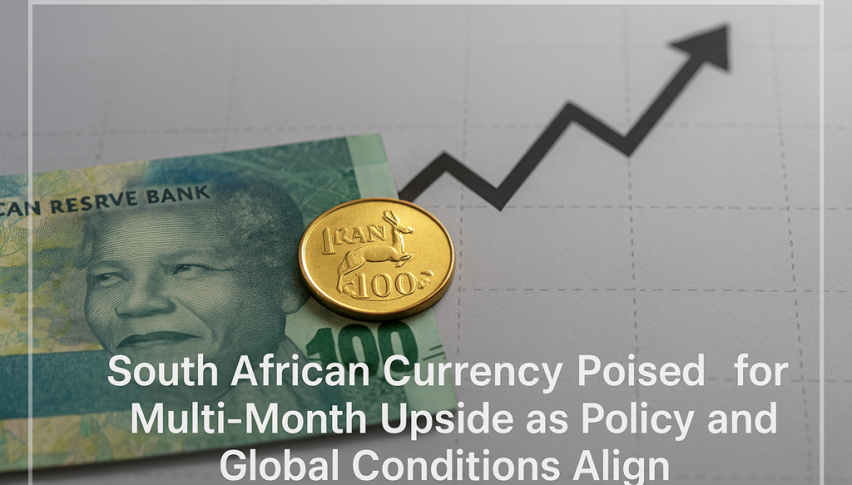
Due to favorable global trends, monetary easing, and local reforms, the South African rand is seeing a resurgence of strength.
Quick overview
- The South African rand is gaining strength due to domestic reforms and favorable global trends, falling below the R17 level against the U.S. dollar.
- Recent monetary easing and a softer U.S. dollar have shifted market sentiment, supporting the rand's recovery from earlier volatility near R20.
- Historical patterns suggest potential upside for the rand, with rising commodity prices and improved policy credibility reinforcing expectations for appreciation.
- The South African Reserve Bank's recent interest rate cut and a clear inflation target are creating a more predictable economic environment for investors.
Due to favorable global trends, monetary easing, and local reforms, the South African rand is seeing a resurgence of strength.
Rand Strengthens on Policy and Global Tailwinds
The South African rand (ZAR) has kicked off the new week with fresh momentum, falling decisively below the R17 level against the U.S. dollar and holding that move with conviction. This rebound reflects growing investor confidence in South Africa’s policy framework, where monetary policy, fiscal communication, and inflation strategy are increasingly aligned.
USD/ZAR Chart Daily – MAs Acting As Resistance

Earlier in the year, USD/ZAR faced extreme volatility, trading near R20, but another 25 bps FED rate cut and dovish policy and a softer U.S. dollar have helped shift market sentiment. Investors are now pricing in a more resilient macro backdrop, supporting the rand’s recovery.
Key Technical Levels Signal Strength
Daily Chart Dynamics: Previous attempts to breach the R17 level were brief, with prices rebounding toward the R17.50 resistance zone. Last week’s break was more decisive, with dollar weakness following the Fed’s 25-basis-point rate cut enabling the rand to gain further ground.
USD/ZAR Chart Monthly – The 100 SMA Is the Next Target

Weekly Chart Observations: The 20-week SMA is now pushing the pair lower, providing structural support for continued depreciation in USD/ZAR. The next targets on the downside are the 2023 lows near R16.70, with deeper support around R16.
This structural momentum suggests the rand is not just benefiting from short-term flows but may be entering a more sustainable period of strength.
Historical Patterns Point to Potential ZAR Upside
According to Bank of America (BofA) strategists, parallels with the rand’s 2002–2003 rally highlight the currency’s upside potential. Historical analysis shows a strong correlation between the ZAR and Australian dollar (AUD) in real terms, with a 0.84 correlation coefficient for purchasing power parity gaps relative to the U.S. dollar. Rising commodity prices and improved policy credibility reinforce expectations for a multi-month trend of appreciation.
Inflation Data and Macro Indicators in Focus
Upcoming Releases: November consumer inflation (ZACPIY=ECI) data is due December 17. The South African Reserve Bank (SARB) recently lowered its inflation target to 3% from a previous range of 3–6%, providing a clear anchor for price expectations.
Survey Insights: A Q4 survey of business leaders, trade unions, and analysts shows inflation expectations for 2026 have fallen sharply to 3.8% and 3.7% in 2027, down from 4.2% previously. Headline inflation currently stands at 3.6%, with forecasts indicating it is likely to remain stable.
Upcoming SA Data: Key upcoming releases include the SARB bulletin for Q3 and producer inflation (ZAPPIY=ECI), which will provide further clarity on domestic price trends.
Monetary Easing Marks a Strategic Turning Point
A pivotal moment came with SARB’s first interest-rate cut of the cycle, lowering the repo rate by 25 basis points. The unanimous vote by the Monetary Policy Committee reflected confidence that inflationary pressures are easing and that policy normalization can begin after an extended period of tightening.
Fiscal clarity also strengthened the macro picture. Finance Minister Enoch Godongwana’s endorsement of a 3% inflation target reduces uncertainty around price stability and improves coordination between the Treasury and SARB. For investors, the combination of easing rates and credible inflation management creates a more predictable environment, a rarity in recent years.
The upcoming Moody’s review adds another potential catalyst, with the market anticipating a possible outlook upgrade that could further encourage foreign inflows.
Outlook for USD/ZAR
With domestic reforms taking hold and global conditions remaining dovish, the rand’s structural advantage is clear. As long as USD/ZAR remains below the R17 threshold, downward momentum is likely to continue. Key support levels at R16.70 and R16.20 are now well within reach, while short-term rebounds may encounter resistance at moving averages tracking downward.
The convergence of structural reforms, macro stabilization, and a softer U.S. dollar gives the rand one of its strongest fundamental backdrops in years, setting the stage for a potentially extended multi-month trend.
- Check out our free forex signals
- Follow the top economic events on FX Leaders economic calendar
- Trade better, discover more Forex Trading Strategies
- Open a FREE Trading Account
- Read our latest reviews on: Avatrade, Exness, HFM and XM





 Save
Save