BTC Price Prediction: Bullish Activation on Tightening Supply, $80K Support and MSTR Build-up?
Despite ongoing volatility and near-term uncertainty, Bitcoin continues to attract buyers above $80,000, with improving structural dynamics

Quick overview
- Bitcoin is stabilizing above $80,000, with buyers actively defending this key support level amidst ongoing market volatility.
- The influence of Bitcoin's traditional four-year cycle is diminishing, as structural demand from institutions and regulatory clarity takes precedence.
- High-profile forecasts suggest Bitcoin could reach $200,000, driven by ongoing liquidity creation and institutional engagement.
- Despite near-term uncertainties, the overall market structure indicates resilience, with a potential upward trajectory towards $100,000.
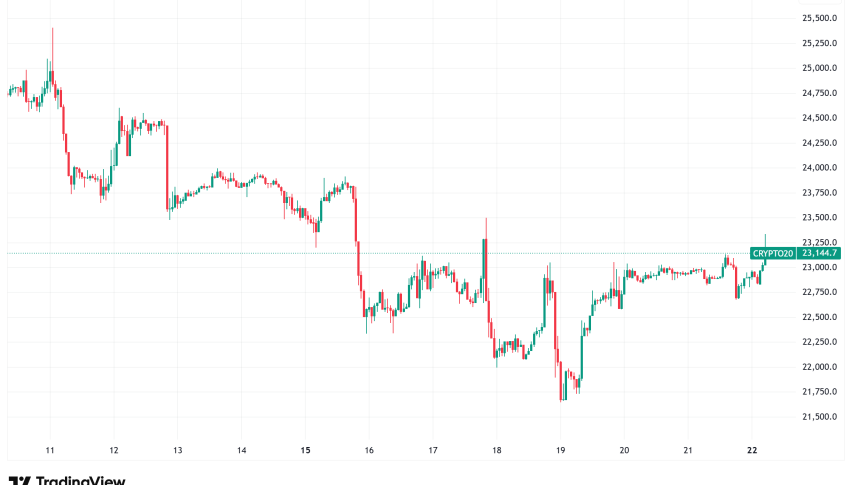
Live BTC/USD Chart

Despite ongoing volatility and near-term uncertainty, Bitcoin continues to attract buyers above $80,000, with improving structural dynamics keeping the $100,000 milestone firmly in focus.
Bitcoin Stabilises as Buyers Defend Key Support
Bitcoin has spent recent weeks consolidating after a turbulent period that shook confidence across the digital asset space. While short-term price action remains uneven, the broader picture suggests that Bitcoin is holding its ground more effectively than many headlines imply. The persistent defense of the support zone above $80,000 has become a defining feature of the current market, repeatedly drawing in buyers whenever price weakens.
This behaviour has reinforced the view that the market may be transitioning away from the sharp boom-and-bust cycles of the past. Instead of capitulation, pullbacks are increasingly being met with accumulation, particularly from longer-term participants.
The Four-Year Cycle Loses Its Grip
According to Bitwise Chief Investment Officer Matt Hougan, one of the most significant shifts underway is the fading influence of Bitcoin’s traditional four-year cycle. Historically, this cycle revolved around the halving, monetary conditions, and leverage-driven speculation. Hougan argues that these forces are no longer sufficient to define Bitcoin’s trajectory on their own.
In his view, structural demand — driven by institutional participation, regulatory clarity, and deeper liquidity — is replacing the speculative dynamics that once dominated the market. This transition suggests a more resilient and less volatile framework, even during corrective phases. Hougan expects Bitcoin to ultimately reach new all-time highs in 2026 as these long-term forces mature.
High-Profile Bullish Forecasts Add Conviction
Adding to the debate, BitMEX founder Arthur Hayes has put forward one of the most aggressive forecasts currently circulating in the market. Hayes believes Bitcoin could surge toward $200,000 before eventually retracing to form a higher long-term base above $124,000. His thesis centers on what he describes as the Federal Reserve’s “Reserve Management Purchases,” a policy mechanism he likens to a modern form of quantitative easing.
From Hayes’ perspective, ongoing liquidity creation continues to undermine fiat systems and indirectly accelerate Bitcoin adoption. While his timeline and price targets remain contentious, the broader implication is that monetary expansion remains a long-term tailwind for scarce digital assets.
Institutional Signals Remain Supportive
Institutional engagement continues to play a central role in shaping sentiment. Strategy’s executive chairman, Michael Saylor, recently reignited speculation with a cryptic message interpreted by many as a signal that further Bitcoin accumulation may be imminent. His company already holds over ₿671,000, representing one of the largest corporate Bitcoin reserves globally.
Such signals matter because they highlight the growing presence of deep-pocketed holders capable of absorbing volatility without forced liquidation. This contrasts sharply with earlier market cycles, when leverage-driven participants often amplified downturns.
A Turning Point After November’s Shakeout
November proved to be a pivotal month for Bitcoin and the broader crypto market. A sharp liquidation wave erased close to $1 trillion in total market capitalization, dragging Bitcoin briefly below the $81,000 level. Panic selling intensified as sentiment deteriorated, but the downside ultimately proved limited.
Buyers stepped in decisively near the $80,000 region, pushing prices back above $90,000 and restoring a degree of confidence. Since then, repeated tests of this support zone have been met with steady demand, suggesting that large players are comfortable accumulating at these levels.
Technical Structure Remains Constructive
From a technical standpoint, Bitcoin’s longer-term structure remains intact despite the volatility. On weekly charts, price briefly dipped below the 50-week Simple Moving Average, often associated with bullish market phases. However, sellers failed to extend losses, and the 100-week SMA absorbed the bulk of liquidation pressure.
BTC/USD Chart Weekly – Rebounding Off the 100 SMA

This level has emerged as a reliable anchor, reinforcing the idea that downside risk is being actively managed by buyers. Below that, the April low near $74,000 continues to define a critical long-term reference point.
BTC/USD Chart Monthly – The 20 SMA Still Holding

On the monthly timeframe, Bitcoin continues to trade above the 20-month Simple Moving Average, a level historically associated with accumulation during extended consolidations. While momentum remains subdued, the absence of new lower lows points to stabilisation rather than deterioration.
Macro Forces Shape Near-Term Direction
Macroeconomic developments remain central to Bitcoin’s near-term outlook. The Federal Reserve’s upcoming meeting is widely expected to deliver another 25-basis-point rate cut, a move that generally supports risk assets. However, the tone of forward guidance will be just as important as the decision itself.
Labour market data has reinforced expectations of a dovish stance. Recent reports showed job losses in ADP figures, elevated Challenger layoffs, and only modest payroll growth. Together, these indicators suggest a cooling labour market, giving policymakers greater flexibility to ease further if needed.
Markets are also closely watching developments in Japan, where potential policy adjustments by the Bank of Japan could ripple across global risk assets.
Mining Economics Add Subtle Pressure
Bitcoin’s current price near $92,000 sits close to the estimated average production cost of around $94,000. This proximity continues to strain high-cost mining operations, some of which may be forced to liquidate holdings to manage cash flow.
That said, analysts increasingly believe miners are no longer the dominant force driving Bitcoin’s price. Instead, institutional flows and long-term holders are playing a larger role, reducing the impact of miner-led selling on broader market direction.
Policy Shifts Create a Friendlier Backdrop
Political developments in the United States have further altered the crypto landscape. Following President Trump’s return to office, several restrictive policies have been rolled back, enforcement actions reduced, and a strategic Bitcoin reserve introduced. The advancement of stablecoin legislation has also provided greater regulatory clarity.
While digital assets were notably absent from the latest national security strategy, the broader policy environment appears more accommodating than in previous years. This shift supports the view that crypto is becoming embedded within the financial system rather than remaining on its fringes.
Outlook: Volatility Within a Resilient Structure
Bitcoin remains caught between short-term uncertainty and improving long-term fundamentals. The defence of the $80,000 support zone, growing institutional participation, and a more supportive macro backdrop all point toward resilience rather than fragility.
While near-term pullbacks remain possible, particularly around major data releases and central bank events, the broader structure continues to favour a move toward $100,000 over time. For now, Bitcoin appears to be consolidating strength — not breaking down — as the next phase of its evolution takes shape.
- Check out our free forex signals
- Follow the top economic events on FX Leaders economic calendar
- Trade better, discover more Forex Trading Strategies
- Open a FREE Trading Account




 Save
Save