South Africa Diesel and Petrol Price Cuts in January, but It Masks Deeper Economic Strains
Fuel prices are expected to drop for South African drivers at the beginning of 2026, but given the country's persistent economic...
Quick overview
- Fuel prices in South Africa are expected to decrease at the start of 2026, providing temporary relief to motorists after recent hikes.
- Diesel users will benefit the most, with projected cuts significantly larger than those for petrol, potentially lowering operating costs in transport-heavy sectors.
- The anticipated declines are driven by a stronger rand and lower international oil prices, which have reduced fuel import costs.
- Despite the welcome relief, ongoing economic uncertainties may prevent these price cuts from being a lasting trend.
Fuel prices are expected to drop for South African drivers at the beginning of 2026, but given the country’s persistent economic unpredictability, the relief may only last temporarily.
Fuel Prices Set to Fall in Early 2026
Fuel prices in South Africa are expected to decline broadly at the start of 2026, bringing some welcome relief to motorists after a volatile end to the previous year. The reductions follow December’s sharp fuel hikes and mark a reversal that should ease short-term pressure at the pumps.
Diesel users are positioned to benefit the most, with projected cuts significantly larger than those for petrol. This is likely to lower operating costs for transport-heavy sectors, including logistics, agriculture, and public transport.
What’s Driving the Expected Declines
According to the Central Energy Fund (CEF), the anticipated fuel price decreases are mainly the result of two factors. A stronger rand, which has appreciated from around R17.20/$ to roughly R16.50/$, while lower international oil prices, with US WTI crude easing from about $61 to $57 per barrel Together, these dynamics have reduced the cost of fuel imports, creating room for downward adjustments in local pump prices.
Scale of the Expected Fuel Price Cuts
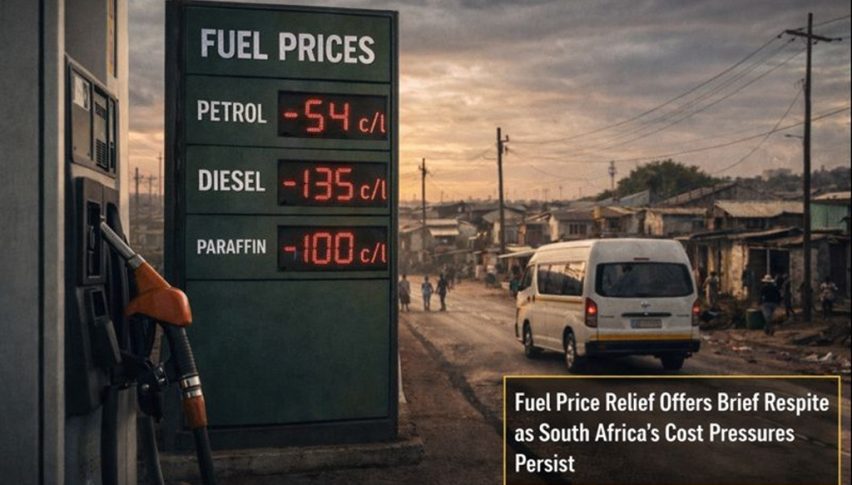
Latest CEF projections suggest that petrol prices could fall by roughly 49 to 54 cents per litre. Diesel prices may decline more sharply, by between R1.26 and R1.38 per litre, while illuminating paraffin is also expected to drop by around R1 per litre.
These reductions come after December’s increases of 29 cents per litre for petrol and up to 85 cents per litre for diesel.
Expected South African Fuel Price Adjustments – Start of 2026
Petrol 93 (ULP):
- Expected decrease of 59 cents per litre
Petrol 95 (ULP):
- Expected decrease of 64 cents per litre
Diesel 0.05% sulphur (wholesale):
- Expected decrease of 135 cents per litre
Diesel 0.005% sulphur (wholesale):
- Expected decrease of 147 cents per litre
Illuminating paraffin:
- Expected decrease of 108 cents per litre
Broader Impact Beyond Motorists
Lower fuel prices should provide short-term relief beyond private motorists. Reduced diesel costs can ease pressure on food prices, transport tariffs, and business input costs. Paraffin price cuts will also help lower-income households that rely on it for cooking and heating.
Caution Despite Welcome Relief
While the fuel price cuts are positive, they may not signal a lasting trend. Currency volatility, global oil market risks, and domestic fiscal pressures remain key threats. For now, motorists get some breathing room—but longer-term cost challenges still loom.
- Check out our free forex signals
- Follow the top economic events on FX Leaders economic calendar
- Trade better, discover more Forex Trading Strategies
- Open a FREE Trading Account





 Save
Save