Nvidia Stock NVDA Faces Reality Check as Geopolitics, CES Hype, CEO Selling Weigh
As the new year approaches, Nvidia is facing pressure from geopolitical concerns related to Venezuela, elevated expectations prior to CES...
Quick overview
- Nvidia faces increased pressure from geopolitical risks, high expectations ahead of CES, and insider selling, leading to a decline in investor confidence.
- The company's stock has struggled to maintain rebounds, indicating a shift in market sentiment from enthusiasm to caution as 2026 begins.
- Nvidia's upcoming CES presentation is overshadowed by high expectations and intensified competition, particularly from AMD.
- Despite strong operational performance, Nvidia's valuation is under scrutiny, with the market demanding proof of sustained growth rather than promises.
Live NVDA Chart
[[NVDA-graph]]
As the new year approaches, Nvidia is facing pressure from geopolitical concerns related to Venezuela, elevated expectations prior to CES, and fresh insider sales, all of which combine to undermine confidence,
Nvidia Stumbles as the Narrative Turns Less Forgiving
After a brief pause in negative headlines around U.S. export policy, Nvidia’s stock has resumed its downward trajectory, lagging many large-cap technology peers despite a generally constructive market tone. The renewed weakness reflects a growing investor reassessment of valuation, geopolitical exposure, and whether the pace of AI-driven spending can continue to justify Nvidia’s elevated expectations.
While artificial intelligence remains the dominant investment theme, Nvidia’s shares suggest that the market is becoming less willing to overlook risk. The stock’s inability to sustain rebounds has shifted sentiment from enthusiasm to caution, especially as 2026 begins with more questions than clarity.
CES Takes Center Stage—but Expectations Are Already High
Attention this week turns to Las Vegas, where Nvidia executives are set to appear at the CES consumer electronics show. CEO Jensen Huang is among the most anticipated speakers, scheduled to headline a press conference showcasing Nvidia’s latest platforms designed to drive productivity and innovation across industries.
In theory, CES should act as a catalyst. In practice, it risks reinforcing the problem Nvidia now faces: expectations are already stretched. Investors are no longer impressed by incremental improvements or expansive vision statements. With the stock under pressure, the market is demanding tangible reassurance that demand growth, margins, and competitive positioning can remain as strong as priced in.
The presence of AMD CEO Lisa Su on the same stage further sharpens comparisons, highlighting intensifying competition at a time when Nvidia’s valuation leaves little room for disappointment.
Insider Share Sale Raises Uncomfortable Timing Questions
Compounding the uneasy backdrop, Nvidia shares closed modestly higher on Friday after a company officer disclosed plans to sell stock. While the move was small in isolation, the timing has not gone unnoticed.
A Form 144 filing dated Jan. 2 revealed that Donald F. Robertson Jr., listed as an officer, intends to sell up to 80,000 Nvidia shares, valued at roughly $14.9 million. Insider sales do not automatically signal trouble, but when they occur near the start of a year in which the market is demanding proof—not promises—they carry extra weight
For a stock priced for near-perfection, even routine selling can amplify concerns that insiders may see limited near-term upside relative to risk.
Venezuela Tensions Add Another Layer of Uncertainty
Beyond company-specific issues, broader geopolitical developments are adding friction. Renewed tensions linked to Venezuela have revived concerns about global instability, energy markets, and the knock-on effects for supply chains and capital flows.
While Nvidia is not directly tied to Venezuela, heightened geopolitical stress tends to hit high-multiple growth stocks hardest. Any escalation that disrupts global trade, worsens diplomatic relations, or destabilizes emerging markets risks tightening financial conditions—an environment in which richly valued AI leaders typically struggle.
For Nvidia, already navigating export controls and regional sensitivities, this adds another variable investors must discount.
Policy Relief Proves Short-Lived
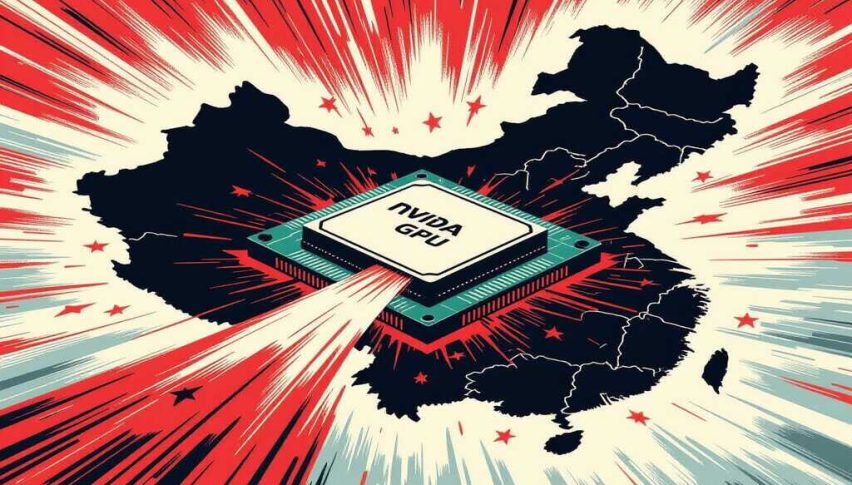
Nvidia briefly benefited earlier this month when U.S. President Donald Trump signaled a softer tone on semiconductor export restrictions, confirming that shipments of Nvidia’s H200 processors would be allowed to approved buyers in China. The announcement sparked a late rally and temporarily improved sentiment across the chip sector.
That relief quickly faded. What appeared to be a meaningful policy shift now looks more like a tactical concession than a durable change. Nvidia shares have since slipped again and remain roughly 25% below their early-November peak, underperforming several peers.
The episode reinforced a key concern: Nvidia’s fortunes remain highly sensitive to political decisions beyond its control.
Technical Signals Point to Fragile Momentum
From a technical perspective, Nvidia’s chart has weakened noticeably. The stock has fallen below its 20-week moving average, a level that previously acted as reliable support during pullbacks. That same average has now turned into resistance, rejecting recent recovery attempts.
NVDA Chart Weekly – The 20 SMA Has Turned Into Resistance

Momentum indicators have deteriorated, and market participants are increasingly discussing the risk of a deeper correction toward the 50-week moving average. While the long-term trend is not yet broken, short-term signals suggest sellers still have the upper hand.
For traders, this loss of technical support reinforces the view that Nvidia may need time—and lower prices—to reset expectations.
Exceptional Fundamentals, Relentless Valuation Pressure
There is little doubt that Nvidia’s operational performance remains exceptional. Recent earnings again exceeded expectations, with strong revenue growth, expanding margins, and guidance that confirmed ongoing demand for AI accelerators and data-center platforms.
However, the market’s focus has shifted. Nvidia’s dominance is no longer the debate—its valuation is. The stock reflects assumptions of sustained hypergrowth, continued pricing power, and minimal competitive erosion. Any sign that AI spending growth normalizes, or that customers become more selective, could trigger further multiple compression.
In this context, strong results are no longer enough; they are merely the minimum requirement.
Infrastructure Ambitions Add Risk Alongside Opportunit
Nvidia’s partnership with Brookfield Asset Management to develop up to $100 billion in AI infrastructure highlights its ambition to move deeper into the AI value chain. While strategically compelling, this shift introduces new risks, including capital intensity and exposure to infrastructure cycles.
For a company long prized for its asset-light model, this evolution complicates the investment case and raises execution questions at a time when investor tolerance for uncertainty is declining.
From Unquestioned Leader to Market Stress Test
Nvidia remains central to the global AI buildout, but the tone surrounding the stock has clearly changed. The market is no longer willing to rely on narrative momentum alone. With CES in focus, insider selling in the background, and geopolitical risks resurfacing, Nvidia is being held to a higher standard.
The long-term story may still be intact. In the near term, however, Nvidia’s stock reflects a market that is no longer captivated—only cautious.
- Check out our free forex signals
- Follow the top economic events on FX Leaders economic calendar
- Trade better, discover more Forex Trading Strategies
- Open a FREE Trading Account


 Save
Save