South African Rand Forecast: USD/ZAR to Slip to R15 in 2026, Then Stall
Even though authorities are still cautious about excessive currency strength, the South African rand has strengthened along with rising...
Quick overview
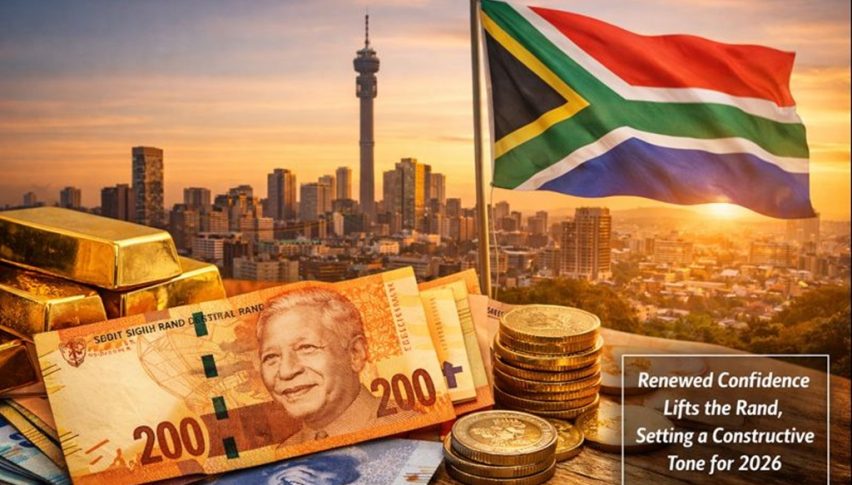
- The South African rand has strengthened due to surging precious metals and improved investor sentiment, setting a positive tone for 2026.
- Renewed confidence in South Africa's policy institutions and improved economic indicators have contributed to the rand's recovery.
- The rand's advance is supported by a favorable global backdrop, including a recent U.S. Federal Reserve rate cut that has eased pressure on emerging-market currencies.
- While the outlook for the rand is constructive, authorities are cautious about excessive appreciation to maintain export competitiveness.
Even though authorities are still cautious about excessive currency strength, the South African rand has strengthened along with rising precious metals and restored policy credibility, setting a positive tone for 2026.
Commodity Boom Reinforces the Rand’s External Position
The South African rand has entered the early stages of 2026 with renewed momentum, supported by a powerful rally across precious metals and a marked improvement in investor sentiment. Gold, platinum, and silver have all pushed to historic highs, enhancing South Africa’s terms of trade and reinforcing confidence in the country’s external balance.
As one of the world’s leading producers of precious metals, South Africa stands to benefit directly from elevated prices. Strong export receipts help narrow current account pressures and provide a natural tailwind for the currency. This dynamic has been especially relevant as global investors continue to seek exposure to hard assets amid geopolitical uncertainty and shifting monetary conditions.
USD/ZAR Chart Daily – MAs Acting As Resistance

Against this backdrop, USD/ZAR has moved decisively below the R17 level, a threshold that acted as a stubborn barrier for much of the past year. Unlike previous attempts, the latest break has been sustained, suggesting the move is underpinned by improving fundamentals rather than short-term speculative flows.
Rising Trust in Institutions Lifts Investor Sentiment
Beyond commodities, the rand’s recovery reflects a broader restoration of confidence in South Africa’s policy institutions. Investors have responded positively to signs of improved governance, greater fiscal discipline, and a more predictable macroeconomic framework.
The South African Reserve Bank (SARB) has played a central role in this shift. Its consistent commitment to price stability and clear communication has helped anchor inflation expectations, even during periods of global volatility. This credibility has been instrumental in attracting capital back into rand-denominated assets.
At the same time, growing confidence in government decision-making has reduced the political risk premium that previously weighed heavily on the currency. While challenges remain, the perception that policy direction is stabilising has encouraged a more constructive reassessment of South Africa’s risk profile.
Domestic Data Signals a More Balanced Economy
Recent economic indicators have reinforced the sense that macro conditions are improving. The SARB’s leading business cycle indicator rose 0.4% month-on-month in October, reversing the prior decline and pointing to firmer activity ahead.
Inflation dynamics have also remained supportive. November consumer inflation printed at 3.5% year-on-year, slightly below expectations and comfortably within the central bank’s target range. This confirms that price pressures are contained, giving policymakers greater flexibility to support growth without undermining credibility.
Together, these data points suggest that South Africa is moving toward a more balanced macro environment—one that is increasingly attractive to both domestic and foreign investors.
Global Monetary Shifts Add a Tailwind
The rand’s advance has coincided with a more favourable global backdrop. The U.S. Federal Reserve’s recent rate cut has softened the dollar, easing pressure on emerging-market currencies and improving global liquidity conditions.
As yield differentials stabilise, higher-yielding and commodity-linked currencies such as the rand have regained appeal. This effect has been amplified by strong performance in gold, silver, and platinum, which continue to benefit from safe-haven demand amid ongoing geopolitical tensions.
Earlier in the year, heightened uncertainty briefly drove USD/ZAR toward record highs near R20. The subsequent reversal underscores how sensitive the rand remains to shifts in global risk sentiment—but also highlights its capacity to recover when conditions align.
Technical Structure Signals a Shift in Trend
From a technical standpoint, recent price action suggests a meaningful change in momentum. On daily charts, USD/ZAR has slipped below key moving averages, which are now acting as resistance rather than support.
The pair closed last week near R16.50, representing a decline of roughly 17% from the April highs. Previous dips below R17 were quickly reversed, but the current move has shown greater follow-through, indicating that selling pressure is gaining traction.
USD/ZAR Chart Monthly – The 100 SMA Is the Next Target at R16

On longer-term charts, attention is turning toward the 100 monthly simple moving average as a potential medium-term reference point. Initial support has emerged near the R16.20 area, with stronger structural support closer to R16.00 should the trend extend.
Policy Coordination Strengthens the Foundation
Improved alignment between monetary and fiscal policy has been another important factor supporting the rand. The SARB’s first rate cut of the cycle was delivered with a unanimous vote, signalling confidence that inflation risks are manageable.
Finance Minister Enoch Godongwana’s explicit support for a 3% inflation target has further reinforced policy coherence. Clear coordination between the Treasury and the central bank reduces uncertainty and strengthens South Africa’s institutional credibility—an important consideration for long-term investors.
An upcoming Moody’s review could provide an additional catalyst, particularly if it reflects progress on structural reforms and macroeconomic stabilisation.
Why a Much Stronger Rand May Be Unlikely
Despite the improved outlook, upside for the rand is unlikely to be unlimited. Authorities have little incentive to allow excessive appreciation, as an overly strong currency could undermine export competitiveness and weigh on growth.
Market participants increasingly view the R15 area against the dollar as a natural ceiling rather than a target. While further gains remain possible, policymakers are likely to prefer a stable and competitive exchange rate rather than aggressive appreciation.
Outlook: Constructive, but Controlled
The rand enters 2026 on firmer footing, supported by surging commodity prices, restored policy credibility, and a more favourable global environment. These factors have combined to produce a recovery that appears more durable than previous rallies.
However, the path forward is likely to be measured rather than explosive. With authorities mindful of export competitiveness and global risks still elevated, the rand’s appreciation may be gradual and contained. Even so, the improved foundation marks a meaningful shift—one that positions the currency more favourably for the year ahead.
- Check out our free forex signals
- Follow the top economic events on FX Leaders economic calendar
- Trade better, discover more Forex Trading Strategies
- Open a FREE Trading Account
- Read our latest reviews on: Avatrade, Exness, HFM and XM

Related Articles


Sidebar rates

Related Posts
 Save
Save