INTC Stock Attempts Breakout as Intel Re-enters Spotlight on CES Innovation, Strategic Capital
With improved technical signals, a significant CES product launch, and Nvidia's strategic investment bolstering faith in the company's long
Quick overview
- Intel has entered 2026 with renewed momentum, driven by a successful CES product launch and Nvidia's strategic investment.
- The company's stock has rebounded significantly, reflecting improved investor confidence and a shift from defense to cautious recovery.
- Intel's new Core Ultra Series 3 processors, featuring advanced technology, are positioned to capitalize on the growing demand for AI-enabled personal computers.
- Nvidia's $5 billion investment enhances Intel's credibility and financial flexibility, supporting its long-term recovery strategy.
Live INTC Chart
[[INTC-graph]]
With improved technical signals, a significant CES product launch, and Nvidia’s strategic investment bolstering faith in the company’s long-term recovery, Intel has begun 2026 with newfound energy.
Intel Opens 2026 With Renewed Momentum
Intel has entered 2026 on a stronger footing after a challenging period of restructuring and strategic realignment. Shares have moved decisively higher, reclaiming important technical levels and pushing above 2025 highs as investor sentiment improves. The recent advance reflects a combination of better price action, renewed confidence in Intel’s product roadmap, and growing support from strategic partners.
After spending much of the past year stabilising its operations and resetting expectations, Intel now appears to be transitioning from defence to cautious recovery. Markets are increasingly reassessing the company’s competitive position as execution milestones begin to align with longer-term plans.
Share Price Rebound Signals Improving Confidence
Intel’s stock rebounded sharply from key technical support last week and has extended gains into the current week, suggesting renewed buying interest. The move higher follows a period of consolidation, during which selling pressure eased and longer-term investors began rebuilding positions.
With the stock now trading comfortably above several important moving averages, price action has shifted from fragile to constructive. The recovery is not being driven by speculation alone but is tied closely to tangible developments in Intel’s technology pipeline and capital structure.
CES Brings Intel Back Into Focus
The Consumer Electronics Show (CES) has served as a catalyst for renewed attention on Intel’s product roadmap. At the event, the company unveiled its Core Ultra Series 3 “Panther Lake” processors, marking a significant technological milestone.
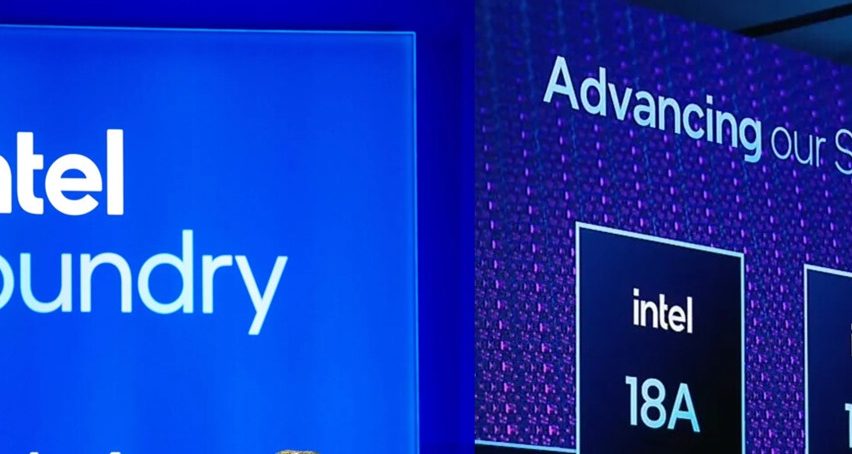
Panther Lake represents the first processors manufactured using Intel’s advanced 18A process node—a 1.8-nanometer-class technology designed to deliver substantial gains in performance and efficiency. Successful deployment of 18A is central to Intel’s multi-year manufacturing turnaround and is closely watched by both customers and competitors.
Intel highlighted meaningful improvements across key metrics, including multithreaded performance, graphics capability, gaming performance, and battery efficiency. The new Core Ultra X9 and X7 processors also feature Intel’s most advanced Arc Graphics to date, positioning the platform competitively in the emerging “AI PC” category.
AI PCs and the Race for Local Compute
AI-enabled personal computers were a dominant theme at CES, as the industry continues to shift toward running artificial intelligence workloads locally rather than relying exclusively on cloud infrastructure. This transition prioritises efficiency, lower latency, privacy, and improved user responsiveness.
Intel’s Panther Lake chips are designed to sit at the centre of this shift. Early industry feedback has focused on whether Intel can secure broad adoption across premium laptop lineups from major original equipment manufacturers. Investor attention has centred on OEM commitment levels, pricing discipline, and real-world performance.
Notably, while competitors including Nvidia and AMD also showcased AI-related innovations, market reaction was more muted for those names, with both stocks pulling back. In contrast, Intel benefited from lowered expectations and a clearer narrative around execution rather than ambition.
Nvidia’s $5 Billion Investment Reinforces the Turnaround Case
Adding to the improving outlook, Nvidia has finalised its previously announced $5 billion strategic investment in Intel. Through a private placement, Nvidia acquired approximately 214.8 million Intel shares at $23.28, resulting in an ownership stake of around 4%.
The transaction closed in late December following regulatory approval. While Nvidia does not receive board representation or special governance rights, the investment carries significant symbolic weight. As the dominant player in AI accelerators, Nvidia’s endorsement strengthens Intel’s credibility within the global semiconductor ecosystem.
For investors, the move signals confidence in Intel’s long-term relevance—not just as a chip designer, but as a manufacturing and platform partner.
Strategic Capital Improves Financial Flexibility
Nvidia’s investment adds to a growing list of strategic capital commitments supporting Intel’s transformation. These include $8.9 billion in U.S. government funding aimed at strengthening domestic semiconductor manufacturing, as well as a $2 billion investment from SoftBank.
Together, these funds materially improve Intel’s balance-sheet resilience and reduce execution risk as the company scales advanced manufacturing. With access to long-duration capital, Intel is better positioned to absorb near-term volatility while focusing on process leadership and product execution.
Technical Structure Turns Constructive
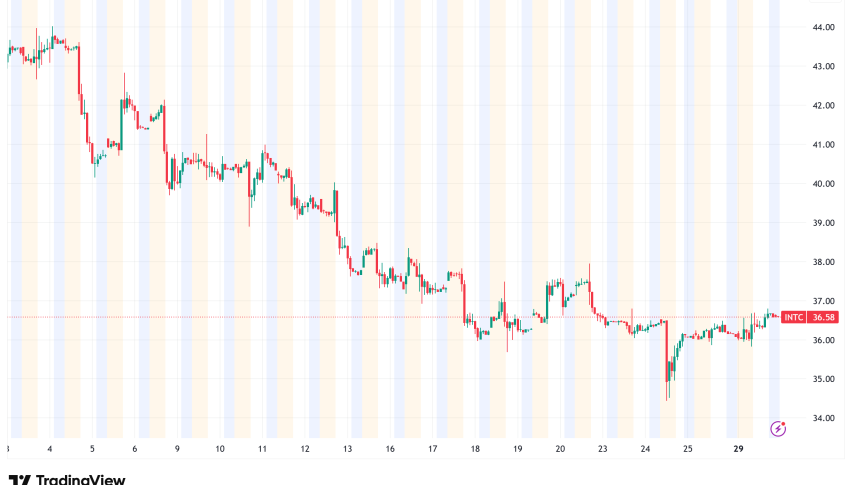
From a market-structure perspective, Intel’s chart has improved meaningfully. After consolidating through December, the stock has held above key weekly moving averages, which are now acting as support rather than resistance.
INTC Chart Monthly – MAs Hold As Support

Intel is up more than 7% on the day and roughly 10% on the week, approaching the psychologically important $45 level. A sustained break above that zone would bring the $50 area into focus, including the 2024 high near $50.35.
Importantly, Nvidia’s entry price sits well below current levels, reinforcing valuation support and underscoring the long-term nature of the strategic investment.
Outlook: Recovery Narrative Gains Structure
While Intel still faces execution risk in a highly competitive industry, early 2026 has delivered a clearer alignment between strategy, product delivery, and capital support. The company is no longer solely defined by past missteps but increasingly by its ability to stabilise, execute, and rebuild relevance.
If Panther Lake adoption gains traction and manufacturing milestones remain on track, Intel’s recovery narrative could continue to firm—albeit gradually—in a market that now demands proof over promises.
- Check out our free forex signals
- Follow the top economic events on FX Leaders economic calendar
- Trade better, discover more Forex Trading Strategies
- Open a FREE Trading Account


 Save
Save