Apple Stock AAPL Drops Toward $250 on JPMorgan Taking Apple Card and Slowing Services
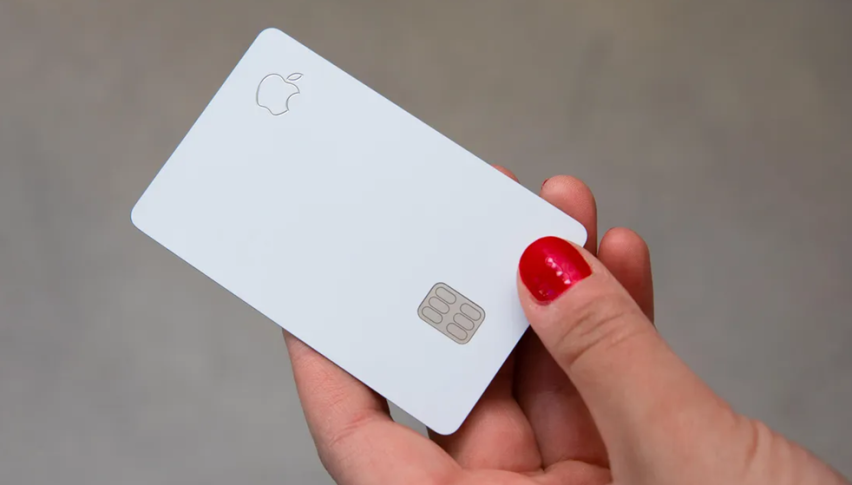
A cautious start to the year was exacerbated when Apple announced that Apple Card will move from Goldman Sachs to JPMorgan, which put...
Quick overview
- Apple stock has declined over 5% in early 2026 due to a combination of structural and external pressures.
- The transition of Apple Card from Goldman Sachs to JPMorgan Chase highlights a strategic shift in Apple's financial services management.
- Concerns about slowing growth in Apple's services business, particularly in the App Store and gaming sectors, are raising valuation questions among investors.
- Broader geopolitical risks and cautious supply-chain commentary are adding to the uncertainty surrounding Apple's market outlook.
Live AAPL Chart
[[AAPL-graph]]
A cautious start to the year was exacerbated when Apple announced that Apple Card will move from Goldman Sachs to JPMorgan, which put pressure on the company’s stock.
A Shaky Opening to the New Year
Apple has entered 2026 on noticeably weaker footing, with its shares retreating amid a convergence of structural and external pressures. After peaking at $286.50 in early December, Apple stock has steadily trended lower, slipping more than 1% on Thursday to around $255.70. The decline reflects a broader reassessment of Apple’s outlook rather than a single negative catalyst.
What had long been viewed as a defensive, high-quality compounder is now being evaluated through a more demanding lens. Investors are questioning whether Apple’s services-led growth story and brand resilience are sufficient to offset slowing momentum, supply-chain caution, and rising geopolitical uncertainty.
Apple Card Transition Highlights Strategic Change
One of the more tangible developments weighing on sentiment is the announcement that Apple Card will transition from Goldman Sachs to JPMorgan Chase. The handover is expected to take approximately 24 months, with Mastercard remaining as the payment network.
Apple described the move as an evolution of a product that has “transformed the credit card experience,” while JPMorgan emphasized its enthusiasm for future collaboration. The shift is expected to bring more than $20 billion in card balances onto Chase’s platform. However, JPMorgan also disclosed it expects to set aside roughly $2.2 billion in provisions for credit losses tied to the transaction.
While the change does not directly impact Apple’s near-term earnings, it underscores a broader recalibration in how Apple manages its financial services partnerships—an area investors increasingly monitor as services growth slows.
Early-Year Weakness Signals a Change in Mood
Apple’s shares fell roughly 5.5% over the first five trading days of the year, erasing some of the optimism that followed a strong close to 2025. The pullback suggests more than routine profit-taking; it points to a shift in market psychology.
Investors appear less willing to treat Apple as an automatic safe haven. Instead, the focus has turned toward growth durability, leadership priorities, and whether Apple’s valuation premium remains justified in a more selective market environment.
Services Growth Slows, Raising Valuation Questions
A central concern is the trajectory of Apple’s services business, long viewed as the company’s most reliable growth engine. UBS reiterated a Neutral rating this week, maintaining its $280 price target but flagging a meaningful slowdown in App Store growth.
According to UBS estimates, App Store revenue growth decelerated to roughly 7% in the December 2025 quarter, down from 12% in June and 10% in September. On a constant-currency basis, growth may have been closer to 5%, highlighting the role favorable FX trends played in recent results.
The bank also warned that the March 2026 quarter remains challenging despite easier year-over-year comparisons. For a segment that supports Apple’s high-margin narrative, even modest deceleration can materially impact investor confidence.
Gaming and China Add Structural Uncertainty
Within services, gaming has emerged as a persistent weak spot. Historically one of the App Store’s most lucrative categories, gaming has struggled to regain momentum. Continued softness into early 2026 would likely force further downward revisions to services expectations.
China represents another swing factor. Regulatory pressures, pricing dynamics, and evolving fee structures in international markets all introduce uncertainty. Together, these issues make Apple’s services outlook more complex and less predictable than in prior years.
Supply-Chain Commentary Turns More Cautious
Concerns around hardware demand resurfaced following commentary from Foxconn, Apple’s largest manufacturing partner. While Foxconn reported record fourth-quarter revenue overall, its smart consumer electronics segment—which includes iPhone production—posted a slight decline.
More importantly, Foxconn cautioned about a seasonal slowdown in information and communications technology products during the first quarter. Although seasonality is expected, the subdued tone unsettled investors already alert to signs of cooling iPhone demand.
Given the iPhone’s central role in driving ecosystem engagement, even incremental weakness carries outsized implications.
Geopolitics Add to the Overhang
Broader geopolitical risks have also re-entered the equation. Renewed tension surrounding U.S. policy toward Venezuela has contributed to a more cautious global backdrop. While Apple is not directly implicated, heightened geopolitical stress tends to weigh on global trade, emerging-market demand, and supply-chain stability.
Apple’s expansive international footprint leaves it exposed to indirect shocks, reinforcing investor sensitivity to political developments beyond the company’s control.
Leadership Optics and Market Perception
At a delicate moment for sentiment, attention has also turned to leadership optics. CEO Tim Cook disclosed a $2.95 million purchase of Nike shares in late December, involving 50,000 shares acquired just days before year-end.
While unrelated to Apple’s operations, the transaction drew attention due to its timing. In periods of heightened scrutiny, even peripheral headlines can influence perceptions of focus and stewardship.
Technical Structure Continues to Deteriorate
From a technical perspective, Apple’s chart has weakened meaningfully. The stock has fallen below both its 50-day and 100-day simple moving averages, with the $260 level failing to hold. This opens the door to $250 as a near-term psychological support area, with $220 emerging as a more distant risk if selling pressure intensifies.
AAPL Chart Daily – Heading for $250 First

The loss of these key levels has reinforced caution among momentum-oriented investors.
AI Leadership Transition Raises Execution Questions
Apple’s artificial intelligence strategy is also undergoing transition. The company confirmed that John Giannandrea, its senior vice president of machine learning and AI, will move into an advisory role ahead of his planned retirement in spring 2026. Amar Subramanya has been appointed as vice president of AI.
While leadership transitions are not uncommon, they introduce execution risk at a time when competitors are accelerating AI commercialization. Markets remain unconvinced that Apple’s AI roadmap will deliver near-term differentiation sufficient to offset slowing growth elsewhere.
Incremental Product Cycles Fail to Inspire
Recent product launches have not helped stabilize sentiment. The iPhone 17 and iPhone 17 Air were widely viewed as evolutionary rather than transformative updates. Shares briefly rallied after the September product event before reversing lower, signaling disappointment with the pace of innovation.
In a market increasingly rewarding visible technological leadership, incrementalism carries a higher penalty.
Conclusion: A More Demanding Market for Apple
Apple remains a highly profitable, globally dominant company, but the environment around it has changed. As 2026 begins, investors are demanding clearer growth visibility, stronger services momentum, and greater confidence in execution. Until those concerns ease, Apple’s stock may continue to face a more cautious and less forgiving market.
- Check out our free forex signals
- Follow the top economic events on FX Leaders economic calendar
- Trade better, discover more Forex Trading Strategies
- Open a FREE Trading Account
- Read our latest reviews on: Avatrade, Exness, HFM and XM


 Save
Save