HOOD Stock Heads to $100 Again – Will Support Hold as Valuation Debate Heats Up?
Robinhood shares remain under technical pressure after a steep November selloff, even as some analysts argue improving fundamentals could...

Quick overview
- Robinhood shares have faced significant pressure following a November selloff, dropping from around $150 to below $100.
- The stock's recovery attempts have been weak, with lower highs indicating ongoing investor caution amid broader market volatility.
- Upcoming earnings on February 10 are crucial, with analysts expecting improved quarterly EPS and revenue growth driven by new product launches.
- Despite technical weaknesses, some analysts believe Robinhood could see substantial upside if it maintains strong revenue growth and improves investor sentiment.
Robinhood shares remain under technical pressure after a steep November selloff, even as some analysts argue improving fundamentals could unlock significant upside over time.
Robinhood Struggles to Regain Momentum After November Selloff
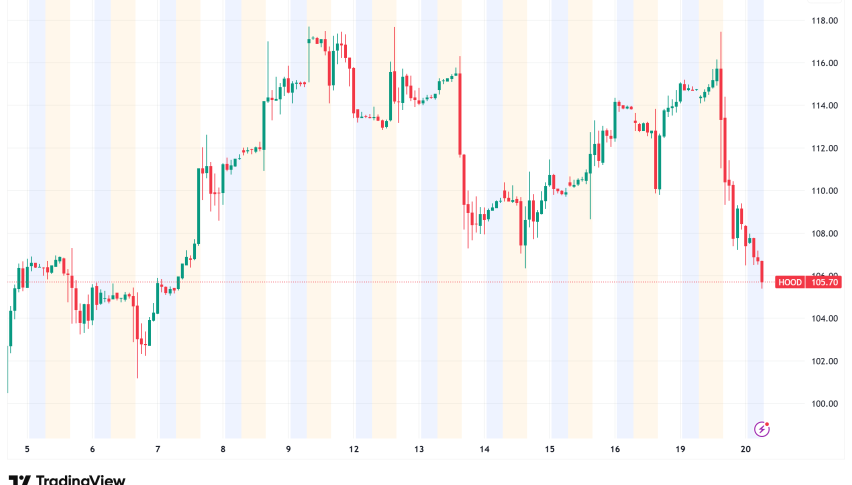
Robinhood Markets (NASDAQ: HOOD) suffered a sharp correction in November, sliding from roughly $150 to below $100 and erasing nearly one-third of its market value in a matter of weeks. While the stock managed to stabilize above the psychologically important $100 level, the rebound has lacked conviction. On Thursday alone, HOOD dropped another 8%, reinforcing the view that downside pressure remains dominant.
Despite avoiding a deeper breakdown, the stock’s recovery attempts have consistently failed, with each bounce producing lower highs. This pattern suggests investors are still cautious, especially as broader market volatility and risk-off sentiment weigh on growth-oriented fintech names.
Technical Picture Remains Fragile
From a technical perspective, Robinhood’s charts point to continued vulnerability. On the daily timeframe, the 50-day Simple Moving Average has flipped from support to resistance, followed by the 100-day SMA doing the same. After Thursday’s decline, the stock is now drifting toward the 200-day SMA near $100—a level that could become a critical test for near-term direction.
HOOD Stock Chart Daily – The Price Has Slipped Below MAs

The weekly chart echoes this cautious tone. While momentum indicators previously hinted at oversold conditions, the 20-week SMA has capped upside attempts. Failure to reclaim that level leaves the stock exposed to further consolidation or downside, especially if broader markets weaken.
HOOD Stock Chart Weekly – The 20 SMA Has Turned Into Resistance

Earnings in Focus as Investors Seek Confirmation
Attention is now turning to Robinhood’s upcoming earnings release, scheduled for February 10, when the company will report fourth-quarter and full-year 2025 results. Management, including CEO Vlad Tenev and incoming CFO Shiv Verma, will host a post-earnings call that could shape sentiment in the weeks ahead.
Analysts expect continued improvement. Consensus estimates call for quarterly EPS of around $0.58–$0.60, compared with $0.54 in the prior year. Full-year 2025 earnings are projected near $2.00 per share, nearly double the prior year’s result. Revenue is expected to climb more than 30% year over year to approximately $1.33 billion, supported by new product launches and sustained user engagement.
Strong Q3 Results Highlight Operational Progress
Robinhood’s most recent quarterly report provided evidence that the business is gaining operational traction. In Q3 2025, the company delivered EPS of $0.61, comfortably ahead of expectations, while net revenue surged 100% year over year to $1.27 billion.
Cryptocurrency trading played a central role, with crypto-related revenue jumping more than 300% to $268 million. Equity trading revenue also climbed sharply, rising 132% year over year, reflecting improved activity across the platform. These results helped reinforce the view that Robinhood’s diversified revenue model is beginning to mature.
The company also announced a leadership transition, with CFO Jason Warnick set to retire and Shiv Verma stepping into the role. Investors view this change as part of Robinhood’s evolution toward a more disciplined, earnings-focused fintech.
Bullish Valuation Case Gains Attention
Despite the stock’s technical weakness, a recent analysis from a Forbes contributor at Great Speculations suggested Robinhood could still have significant upside. The bullish case argues that if revenue growth remains strong, margins continue to expand, and investor sentiment improves alongside rising earnings, HOOD could potentially double over time, with a long-term target near $230.
For now, however, the market appears unconvinced. Until technical resistance levels are reclaimed and earnings growth translates into sustained price strength, Robinhood’s shares may remain caught between an improving fundamental story and persistent bearish pressure.
- Check out our free forex signals
- Follow the top economic events on FX Leaders economic calendar
- Trade better, discover more Forex Trading Strategies
- Open a FREE Trading Account




 Save
Save