Bitcoin Slides Below $70,000 as China Restricts US Treasury Holdings
On Monday, February 9, 2026, Bitcoin prices fell after China told its banks to cut back on US Treasury holdings. This move...

Quick overview
- Bitcoin prices fell on February 9, 2026, as China directed banks to reduce US Treasury holdings, leading to a global shift away from riskier assets.
- The rise in US Treasury yields has made Bitcoin less appealing to investors, pushing it closer to the $70,000 support level.
- Chinese regulators are encouraging a diversification away from dollar-denominated bonds, favoring hard assets like gold amid market volatility.
- Bitcoin's trading volume has decreased by 15%, indicating reduced interest from institutional traders as the market reacts to policy changes.
On Monday, February 9, 2026, Bitcoin prices fell after China told its banks to cut back on US Treasury holdings. This move led to a global shift away from riskier assets, pushing Treasury yields higher and making Bitcoin less appealing to investors.
Why is Bitcoin falling today?
Bitcoin is dropping mainly because US Treasury yields are rising after China’s recent actions. On Monday, Chinese regulators told banks to buy fewer US Treasuries and reduce what they already own, warning about “concentration risk” and market volatility. This has pulled money out of riskier markets, pushing Bitcoin closer to the $70,000 support level.
China’s Treasury Directive: A New Phase of Diversification
Chinese authorities have, for the first time, clearly told private and commercial banks to cut their $298 billion in dollar-denominated bonds. This order does not affect China’s official reserves, but it shows a move toward holding more hard assets.
DON'T PANIC SELL NOW ⚠️⚠️
We had a small overnight scare with a dip to 69k
But things haven't really changed.
Look at the daily chart, two indecision candles in a row.
Many retail stop-losses are placed in the 73-74k area.
Chances are that we at least revisit this… pic.twitter.com/RzVsnKCxqj
— Tryrex (@Tryrexcrypto) February 9, 2026
- Risk Mitigation: Officials warned that big swings in US yields could hurt bank balance sheets.
- Asset Reallocation: The People’s Bank of China (PBOC) still prefers gold, which recently went above $5,000 per ounce, as its main way to guard against global uncertainty.
Rising Yields and the “Risk-Off” Domination
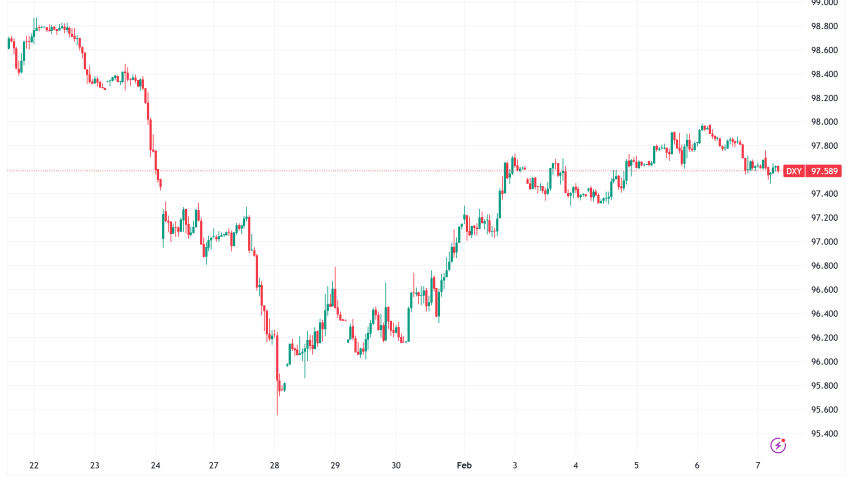
After the news, the 2-year US Treasury yield rose to 3.52%, and the 10-year yield jumped to 4.25%. In markets, higher yields pull down riskier assets. When government bonds pay more, investors are less likely to hold volatile assets like cryptocurrencies.
| Asset | Impact of Rising Yields |
| Bitcoin | Negative: High opportunity cost and reduced liquidity. |
| Equities | Negative: Higher borrowing costs for corporations. |
| US Dollar | Mixed: Pressure from Chinese selling vs. support from higher rates. |
| Gold | Positive: Demand as a non-dollar reserve asset. |
Technical Outlook: Bitcoin Volume Thins
Bitcoin (BTC) was recently trading around $70,350, down from a high of $72,206 earlier in the day. Fewer people are trading, as daily volumes have dropped by 15%.
CoinGlass data shows that institutional traders are pulling back:
- Total BTC Futures Open Interest: Fell 1% to $45.94 billion.
- CME Open Interest: Declined by 1.11%.
- Binance Open Interest: Dropped by 1.04%.
Summary for Investors
Bitcoin’s current drop is part of a bigger global shift in where money is going. As China moves away from US bonds, the resulting swings in US yields are making crypto investors cautious. Analysts say Bitcoin will likely keep reacting to big policy changes until the bond market settles down.
Pro Tip: Watch the $69,400 level closely. A sustained breakPro Tip: Keep an eye on the $69,400 level. If Bitcoin falls below this recent low and stays there, it could drop further toward $65,000.
- Check out our free forex signals
- Follow the top economic events on FX Leaders economic calendar
- Trade better, discover more Forex Trading Strategies
- Open a FREE Trading Account
- Read our latest reviews on: Avatrade, Exness, HFM and XM



 Save
Save