Daily Crypto Signals: Bitcoin Trapped in Capitulation Zone, Ethereum ETFs Signal Institutional Revival
Bitcoin remains mired in a capitulation zone, down 46% from its all-time high of $126,000, with on-chain data pointing to a potential bottom
Quick overview
- Bitcoin is currently in a capitulation zone, down 46% from its all-time high, with analysts predicting a potential bottom between $40,000 and $50,000 by late 2026.
- Ethereum is showing signs of recovery with $71 million in institutional inflows into Ether ETFs and a surge in DEX volumes, suggesting a possible rally towards $2,400.
- BlockFills has halted customer deposits and withdrawals due to market conditions, highlighting vulnerabilities in the institutional lending sector.
- The UK's HM Treasury has selected HSBC Orion for a pilot issue of digital government bonds, while BlackRock has entered DeFi by purchasing UNI tokens and launching a tokenized US Treasury fund.
Bitcoin BTC/USD remains mired in a capitulation zone — down 46% from its all-time high of $126,000 — with on-chain data pointing to a potential bottom between $40,000 and $50,000 in Q4 2026, while analysts warn that long-term holders are offloading at extreme rates not seen since the 2022 bear market. Meanwhile, Ethereum ETH/USD is showing tentative signs of recovery as $71 million in fresh institutional inflows into Ether ETFs, surging DEX volumes of $20 billion weekly, and BlackRock’s landmark entry into DeFi via Uniswap suggest that a near-term rally toward $2,400 may be building beneath the surface.
Crypto Market Developments
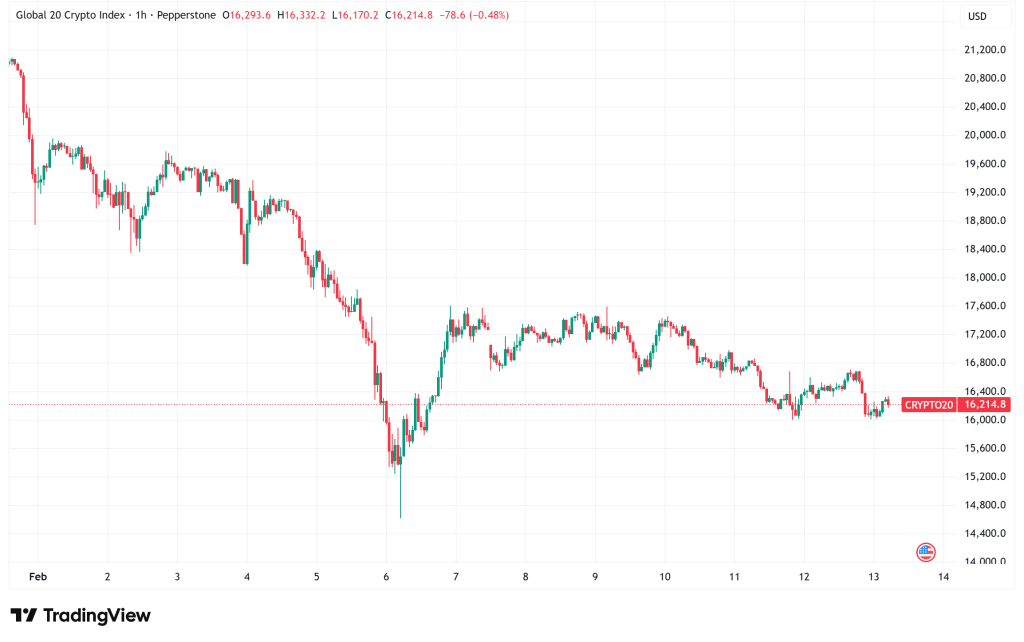
Following last week’s severe sell-off, which saw Bitcoin plummet 24% from over $79,000 to roughly $60,000, the larger cryptocurrency market is still reeling. BlockFills, a cryptocurrency liquidity platform that serves about 2,000 institutional clients with holdings of $10 million or more, confirmed that it halted customer deposits and withdrawals due to “recent market and financial conditions.” The fallout has revealed vulnerabilities throughout the institutional lending sector. Although the restriction is still in place, the platform, which handled over $60 billion in trading volume in 2025, says it is collaborating with investors to restore liquidity.
Despite short-term volatility, two significant events on the institutional infrastructure front suggest that long-term trust in the asset class will persist. In a major step toward the widespread adoption of distributed ledger technology by sovereigns, the UK’s HM Treasury selected HSBC Orion to enable a pilot issue of digital government bonds (gilts) through its Digital Gilt Instrument (DIGIT) program. Separately, the largest asset management in the world, BlackRock, made its first official foray into decentralized finance by buying an unspecified quantity of UNI governance tokens and launching its tokenized US Treasury fund, BUIDL, on the Uniswap exchange. Uniswap’s UNI token surged to $4.30 on trading volume, 461% higher than its 24-hour average, following the news.
Bitcoin Deep in Capitulation, Bottom Eyed for Late 2026
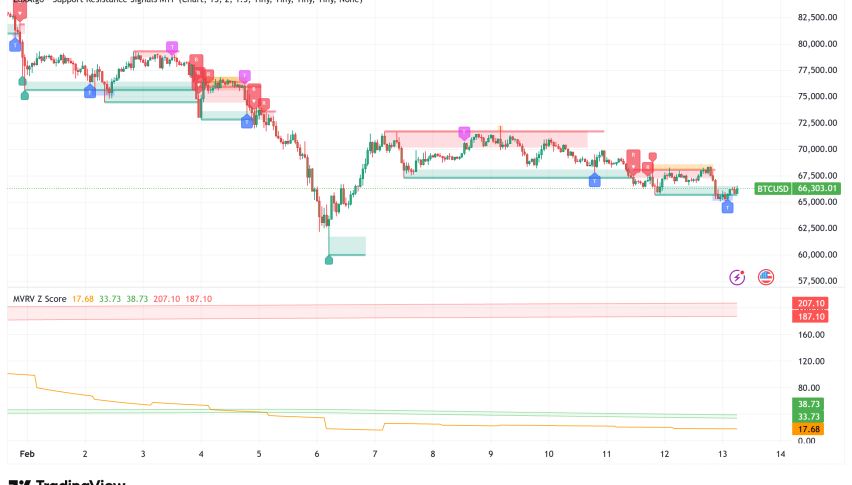
After sellers started selling again on Thursday, the price of bitcoin dropped from an intraday high of $68,300 to around $65,900. An alarming picture is painted by on-chain statistics: Glassnode data indicates that since February 6, when a single-day distribution increase reached 245,000 BTC — a cycle-relative peak — long-term investors have decreased their exposure by an average of 170,000 BTC per day. According to analyst GugaOnChain, CryptoQuant’s MVRV Adaptive Z-Score has dropped to -2.66, indicating that the market is “approaching the historical accumulation phase” while simultaneously confirming that Bitcoin “remains persistently in the capitulation zone.”
Where and when Bitcoin finds its floor is the current question. According to analyst Tony Research, a bottom between $40,000 and $50,000 is projected to occur between mid-September and late November 2026. Previous bear cycles in 2018 and 2022 recorded their lows about a year after the bull market peak, according to fellow analyst Titan of Crypto. Since Bitcoin hit its all-time high of $126,000 on October 2, 2025, the low would have occurred around October 2026. According to On-Chain College, which supports this timeline, Bitcoin’s Net Realized Loss hit $13.6 billion on February 7 — levels last observed during the bear market of 2022 — and historically, the loss peak has come around five months before the actual bottom, suggesting a possible trough around July 2026.
Ethereum’s Institutional Inflows and Surging DEX Volumes Hint at $2,400 Target
After failing to maintain its hold over the psychologically critical $2,000 threshold on Thursday, ether is currently trading at $1,930. The underlying parameters provide a more complex picture notwithstanding the price downturn. With assets under management stabilizing at $13 billion, US-listed Ether ETFs saw $71 million in net inflows between Monday and Tuesday, ending a three-day outflow streak. Institutional market-makers are still actively involved despite the general sell-off, as evidenced by the daily ETF trading volume of approximately $1.65 billion, which is more than the $1.5 billion daily average of the State Street Energy Select Sector SPDR ETF.
Additionally, on-chain activity is rebounding. In the seven days ending February 8, Ethereum’s DApp revenue hit $26.6 million, and the weekly DEX volume doubled to $20 billion from $9.8 billion the previous month. The difference between the two networks is getting smaller, even though Solana SOL/USD continues to lead in DApp revenue at $31.1 million per week and Ethereum’s Total Value Locked has decreased to $54.2 billion from $71.2 billion a month ago. Even when the price hit nine-month lows, the annualized ETH futures basis rate remained stable at 3%, below the 5% neutral threshold, indicating a moderate level of resilience in derivatives markets. Although a sustainable recovery might take a few more weeks for investor confidence to return, experts see a viable path toward a near-term rebound to $2,400 as institutional inflows are starting up again and network utilization is improving.
- Check out our free forex signals
- Follow the top economic events on FX Leaders economic calendar
- Trade better, discover more Forex Trading Strategies
- Open a FREE Trading Account
- Read our latest reviews on: Avatrade, Exness, HFM and XM




 Save
Save