South African Rand: Optimism as Policy Signals Improve, USD/ZAR Heads to R15
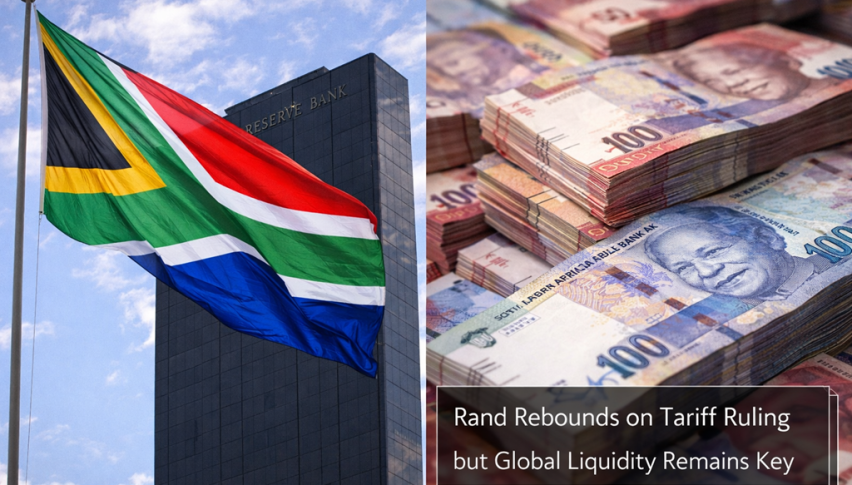
The South African rand has opened 2026 with surprising resilience, as global tariff developments, steady SARB policy, and reform momentum...
Quick overview
- The South African rand opened 2026 with resilience, benefiting from a softer U.S. dollar and stable commodity prices.
- Despite initial optimism, the rand's rally has been fragile, with significant volatility linked to global sentiment and commodity price swings.
- The South African Reserve Bank has maintained a cautious policy stance, keeping the repo rate unchanged to support inflation control.
- Recent domestic data, including a trade surplus and a sovereign rating upgrade, has bolstered confidence in the rand, though structural challenges persist.
The South African rand has opened 2026 with surprising resilience, as global tariff developments, steady SARB policy, and reform momentum provide cautious support despite persistent external risks.
Rand Opens 2026 Strong — But Volatility Quickly Returns
The South African rand began 2026 on firm footing, benefiting from a softer U.S. dollar, stable commodity prices, and renewed inflows into higher-yielding emerging market assets. By late January, USD/ZAR slipped below the R16 level, fueling optimism that the pair could extend toward the psychologically important R15 mark.
However, the rally proved fragile. Over the past two weeks, USD/ZAR rebounded above R16 twice, only for sellers to re-emerge and push the pair sharply lower again. The swift reversals highlight how sensitive the rand remains to global sentiment shifts and commodity price swings.
Last week, emerging-market currencies staged a broader recovery after the U.S. Supreme Court struck down President Donald Trump’s sweeping global tariffs in a 6–3 decision. An MSCI gauge of developing-nation currencies rose modestly, with Latin American currencies and the rand climbing to session highs shortly after the ruling.
The decision was viewed as marginally positive for emerging-market FX, largely because it underscored policy uncertainty in the United States and weighed on the dollar. For the rand, the softer greenback offered breathing room after earlier volatility.
Commodity Swings Drive Sharp Moves
The rand’s volatility has been closely linked to movements in precious metals, particularly gold. A sharp correction in gold earlier this year triggered a rapid reversal in USD/ZAR, pushing the pair toward R16.43 at one stage. As gold stabilized and rebounded, the rand recovered, pulling USD/ZAR back toward R16.
This tight correlation reflects South Africa’s export structure, where precious metals remain a crucial driver of trade balances and capital flows. When gold rallies, the rand typically benefits from improved export revenues and investor sentiment. Conversely, commodity selloffs often amplify downside pressure.
Recent geopolitical tensions and renewed safe-haven demand helped gold climb again, indirectly supporting commodity-linked currencies including the rand.
USD/ZAR Chart Daily – MAs Keeping the Pressure to the Downside

Technically, USD/ZAR briefly broke above R16.40 earlier in February, moving above its 20-day simple moving average (gray), which had been defining the pair’s downtrend in recent months. However, the 50-day moving average (yellow) acted as firm resistance. The rejection at this level triggered a reversal, pushing USD/ZAR back below the 20-day average and returning the broader downtrend into play, with the price losing last week below R16 again. This price behavior suggests that while volatility has increased, bearish momentum in USD/ZAR has not yet been decisively broken.
SARB Maintains Policy Discipline
On the domestic front, the South African Reserve Bank (SARB) has maintained a cautious stance. At its January 29 meeting, the central bank kept the repo rate unchanged, signaling confidence that inflation remains under control.
Headline inflation averaged 3.2% in 2025 — the lowest in over two decades — before ticking up modestly to 3.6% in December. While still comfortably within target, the slight rise reduces the urgency for immediate rate cuts.
SARB policymakers appear focused on preserving credibility and avoiding premature easing that could destabilize the currency. Domestic liquidity indicators show mixed signals: M3 money supply growth slowed slightly, while private-sector credit growth accelerated, indicating that borrowing demand remains resilient.
The central bank’s balancing act — anchoring inflation while supporting growth — has helped sustain investor confidence in South African assets.
Bond Markets Reflect Conditional Confidence
South Africa’s bond market has echoed this guarded optimism. The benchmark 2035 government bond yield declined approximately 9 basis points to around 8.165%, suggesting renewed foreign interest in local debt.
Lower yields typically reflect improved confidence in fiscal management and inflation stability. However, these inflows remain highly sensitive to global conditions. Emerging-market debt appetite often hinges on yield differentials relative to U.S. Treasuries.
Any resurgence in U.S. inflation or hawkish shifts from the Federal Reserve could strengthen the dollar and reverse capital flows, placing renewed pressure on the rand.
Trade Surplus and Ratings Boost Sentiment
Recent domestic data has further supported the currency. South Africa recorded a R37.7 billion trade surplus in November — its largest since March 2022 — driven largely by strong precious metals exports.
In addition, S&P Global Ratings upgraded South Africa’s sovereign rating to BB– in November, marking the first upgrade in two decades. The move reflected progress in fiscal consolidation and reform efforts.
The country’s removal from the European Union’s high-risk jurisdiction list, following its exit from the FATF grey list, has also improved perceptions of financial compliance and reduced reputational risk.
Together, these developments strengthen the structural case for medium-term rand stability.
Structural Challenges Persist
Despite progress, significant risks remain. Energy reliability concerns, logistics bottlenecks at ports and rail networks, and persistently high unemployment continue to constrain growth.
Uncertainty surrounding potential changes to AGOA trade preferences adds another layer of external risk. Any disruption to export access could undermine trade balances and investor confidence.
Global Liquidity Remains the Deciding Factor
Ultimately, the rand’s trajectory in 2026 may depend less on domestic reform momentum and more on global liquidity conditions. Softer U.S. yields and dollar weakness have supported emerging-market currencies, allowing USD/ZAR to retreat from 2025 highs near R20.
History shows such rallies can be fragile. A stronger dollar, renewed global risk aversion, or tightening financial conditions could quickly reverse gains.
Conclusion: The South African rand has started 2026 with encouraging resilience, supported by steady monetary policy, improved trade balances, and modest reform progress. However, volatility remains a defining feature. While domestic fundamentals have improved, the rand’s durability will ultimately hinge on global liquidity trends and commodity price stability.
- Check out our free forex signals
- Follow the top economic events on FX Leaders economic calendar
- Trade better, discover more Forex Trading Strategies
- Open a FREE Trading Account
- Read our latest reviews on: Avatrade, Exness, HFM and XM



 Save
Save