Bitcoin Stalls at $67K: Is $74,500 the Make-or-Break Level for a Bull Market Revival?
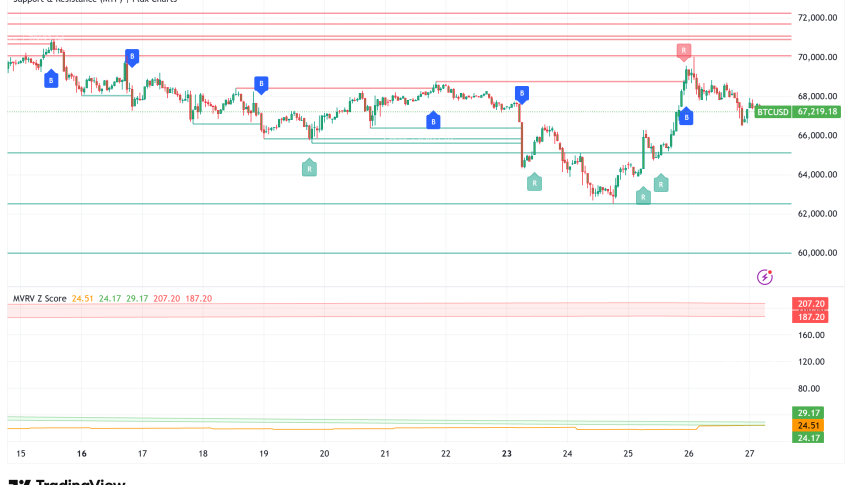
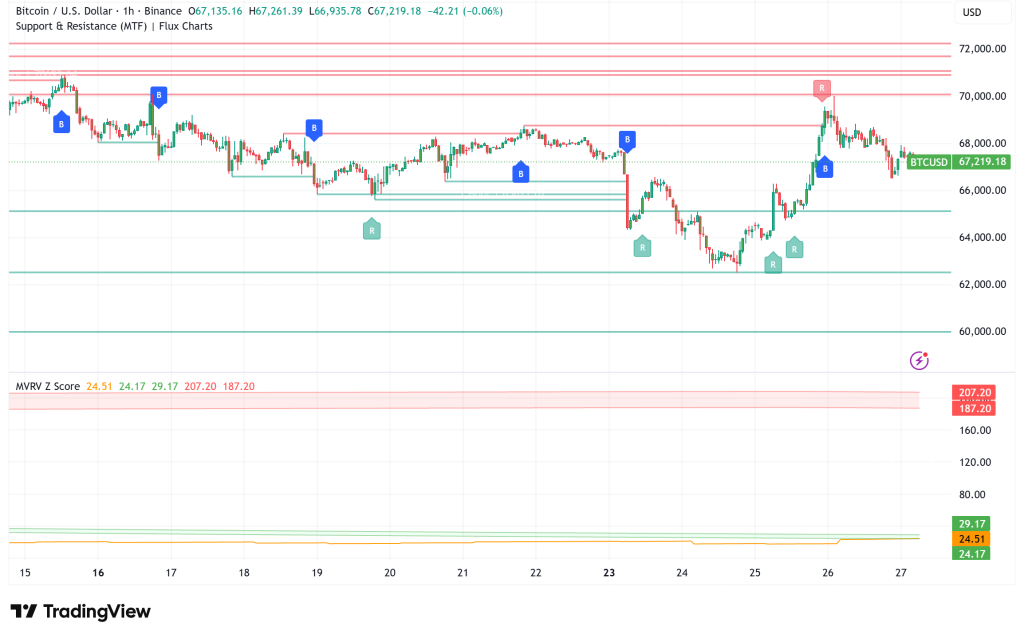
After hitting a local low of $62,400 on Tuesday, Bitcoin has recovered significantly, and as of this writing, it is trading above $67,000 at
Quick overview
- ETF demand is slightly decreasing, while Bitcoin's recent recovery from a low of $62,400 has brought it above $67,000.
- Despite positive inflows into Bitcoin ETFs, the futures market signals caution, with a low premium indicating bearish sentiment.
- On-chain data reveals a critical price level of $74,500, where many investors are currently at a loss, creating potential selling pressure.
- Broader macroeconomic issues and structural uncertainties continue to cloud Bitcoin's outlook, impacting its upward momentum.
ETF demand is easing at the margin, Bitcoin BTC/USD derivatives indicate deep-seated concern, and on-chain data puts the key battleground squarely around $74,500, the average cost basis of millions of investors currently sitting at a loss, despite a strong rebound from Tuesday’s $62,400 low.
Bitcoin’s Recovery Built on Shaky Foundations
After hitting a local low of $62,400 on Tuesday, Bitcoin has recovered significantly, and as of this writing, it is trading above $67,000 after a 7.45% rebound. The recovery followed two days in a row of positive inflows into US-listed Bitcoin ETFs, which brought in a total of $764 million. This helped to partially reverse the $1.2 billion in outflows that had occurred over the eight trading sessions prior.
But confidence is still brittle underneath. The futures market, which is frequently the most reliable real-time indicator of institutional attitude, is still displaying red flags that indicate traders see the rebound as shaky rather than revolutionary.
Bitcoin Derivatives Markets Still Mired in Fear: Premium and Skew Tell the Story
Two-month Bitcoin futures’ annualized premium over spot is currently around 2%, which is far less than the 5% threshold that often distinguishes bullish from neutral sentiment. Since January 31st, when Bitcoin gave up the $85,000 support level it had maintained for more than nine months in a row, this premium has been declining. The spot price has not rebounded with the appetite for leveraged long exposure.
In the meantime, professional traders are paying a high premium to protect themselves from additional declines, as evidenced by the 30-day options delta skew on Deribit, which is a measure of put-versus-call demand, standing at +14%. The skew in a neutral market would be between -6 and +6%. The current number indicates that fear, however lessened, is still the most prevalent market emotion, even if Tuesday’s rating of +28% indicated near-panic.
BTC/USD’s $74,500 Inflection Point: On-Chain Data Defines the Battleground
On-chain analytics may provide the most illuminating indication. For Bitcoin UTXOs that were between six months and two years old, a group that included the consolidation and breakout stages of the last cycle, the realized price is roughly $74,500. With an MVRV ratio of only 0.88, this sizable and powerful group of investors is staring at an unrealized loss overall as a result of Bitcoin trading below this level.
As holders want to sell close to their breakeven price, history demonstrates that when a significant cohort enters a loss, it generates significant distribution pressure. This group would return to overall profit with a strong, sustained recovery of $74,500, which would lessen sell-side pressure and possibly spur the subsequent leg higher toward the $100,000 liquidity zone.
On a shorter period, Bitcoin, on a daily close basis on Tuesday, effectively defended the realized price for holders aged 18 to 24 months at $64,200, maintaining a crucial support band and providing bulls with at least one positive piece of information. At the same time, the supply of long-term holders increased to a three-month high of 13.96 million Bitcoin, suggesting that experienced investors are opting for dormancy rather than distribution in spite of the volatility.
Macro Headwinds and Structural Uncertainty Cloud BTC’s Outlook
Complexity is increased by the larger context. A number of outstanding structural issues have coincided with Bitcoin’s 32% drop over the course of seven weeks, which started with the October 2025 crash that destroyed $19 billion in leveraged crypto positions. These include the argument over the security of quantum computing (which led to the creation of the post-quantum cryptography proposal BIP-360), Binance’s handling of the October liquidation cascade, and criticism of Jane Street’s delta-neutral ETF positioning.
Nvidia’s shares dropped 5% on Thursday despite great earnings, adding to the risk-off atmosphere. This indicates that even good fundamental data is having trouble lifting risk assets in the current climate, which immediately restrains Bitcoin’s upward momentum.
- Check out our free forex signals
- Follow the top economic events on FX Leaders economic calendar
- Trade better, discover more Forex Trading Strategies
- Open a FREE Trading Account
- Read our latest reviews on: Avatrade, Exness, HFM and XM

Related Articles



Sidebar rates

Related Posts
 Save
Save