Oil Prices Explode as Tankers Halt at Hormuz, WTI Eyes $100, Brent $120 Despite the OPEC Lift
After US-Israeli raids on Iran sparked concerns of a closure of the Strait of Hormuz, oil prices skyrocketed, resulting in one of the...
Quick overview
- Oil prices surged sharply following US-Israel strikes on Iran, with WTI crude opening near $75 per barrel and Brent crude approaching $82.
- The potential closure of the Strait of Hormuz, a critical oil transit corridor, has raised fears of significant supply disruptions.
- Tanker traffic through the strait has stalled, prompting concerns that prolonged blockage could lead to Brent prices exceeding $120 per barrel.
- OPEC+ is considering emergency production increases, but limited spare capacity may hinder efforts to stabilize prices amid escalating geopolitical risks.
After US-Israeli raids on Iran sparked concerns of a closure of the Strait of Hormuz, oil prices skyrocketed, resulting in one of the biggest price increases in recent memory.
Oil Gaps Higher After Weekend Escalation
Oil futures spiked dramatically over the weekend following the US-Israel strike on Iran, opening Monday with a significant gap higher. US WTI crude opened near $75 per barrel after closing at $67 on Friday, while Brent crude surged to almost $82 after finishing the previous session around $72.
With no signs of de-escalation, prices jumped as much as $10 per barrel when markets reopened. The move reflects not only immediate geopolitical risk but also mounting fears of a sustained supply disruption.
Strait of Hormuz: The Critical Chokepoint
At the center of the panic is the potential closure of the Strait of Hormuz, widely considered the world’s most important oil transit corridor. The U.S. Energy Information Administration has repeatedly described the strait as “one of the world’s most important oil chokepoints.”
The scale of its importance is staggering:
- Roughly 20 million barrels of oil per day — about one-fifth of global consumption — pass through the strait.
- Approximately 20% of global liquefied natural gas (LNG) trade, largely from Qatar, transits the same corridor.
- More than 80% of these energy flows are destined for Asian markets.
Any prolonged disruption would immediately ripple across global supply chains, freight markets, and inflation expectations.
WTI Oil Chart Weekly – Testing the 200 SMA

Tankers Halt as Shipping Freezes
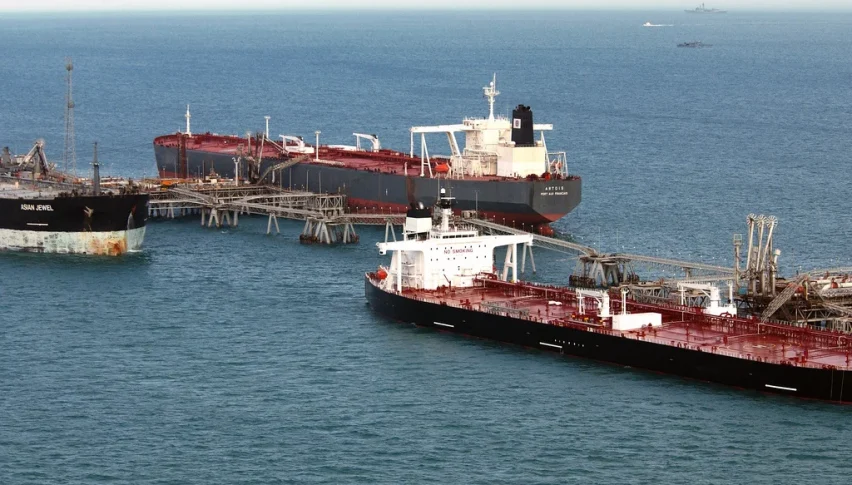
Reports indicate that tanker traffic through the strait has effectively stalled as shipping companies adopt precautionary measures. Oil tankers are reportedly building up near the waterway, but very few are moving through.
Market analysts warn that if the blockage becomes prolonged or formalized, the impact could be severe. UBS analysts suggest Brent spot prices could surge above $120 per barrel in the event of a material disruption.
The situation highlights how quickly geopolitical risk can translate into real-world supply constraints — and how sensitive energy markets remain to Middle Eastern developments.
Who Suffers Most?
A Hormuz blockade would immediately affect major energy importers. China, a key buyer of Iranian crude, would face significant exposure, alongside the United States and European economies dependent on stable global supply.
Ironically, Iran itself could suffer the greatest economic damage. Analysts have long described a full closure of Hormuz as “economic suicide” for Tehran, as it would effectively choke off its own primary revenue stream.
OPEC+ Emergency Talks
As of Sunday, March 1, 2026, OPEC+’s so-called “Voluntary Eight” members — led by Saudi Arabia and Russia — convened an emergency virtual summit to assess the crisis.
Before the strikes, the group was expected to announce a modest 137,000 barrels per day production increase for April. Now, discussions reportedly include a potential hike of 411,000 barrels per day or more.
However, analysts caution that spare capacity is extremely limited outside Saudi Arabia and the UAE. In the event of a full Hormuz blockade, incremental production increases may prove insufficient to stabilize prices.
Market at a Breaking Point
Oil markets are now pricing in a geopolitical risk premium not seen in years. Whether prices continue climbing toward $100 — or even $120 — will depend almost entirely on whether the Strait of Hormuz reopens to normal tanker flow.
For now, energy markets are trading not on fundamentals, but on fear.
- Check out our free forex signals
- Follow the top economic events on FX Leaders economic calendar
- Trade better, discover more Forex Trading Strategies
- Open a FREE Trading Account
- Read our latest reviews on: Avatrade, Exness, HFM and XM



 Save
Save