South African Rand: USD/ZAR Downtrend Faces Test as Strikes on Iran Lift the USD but Also Gold
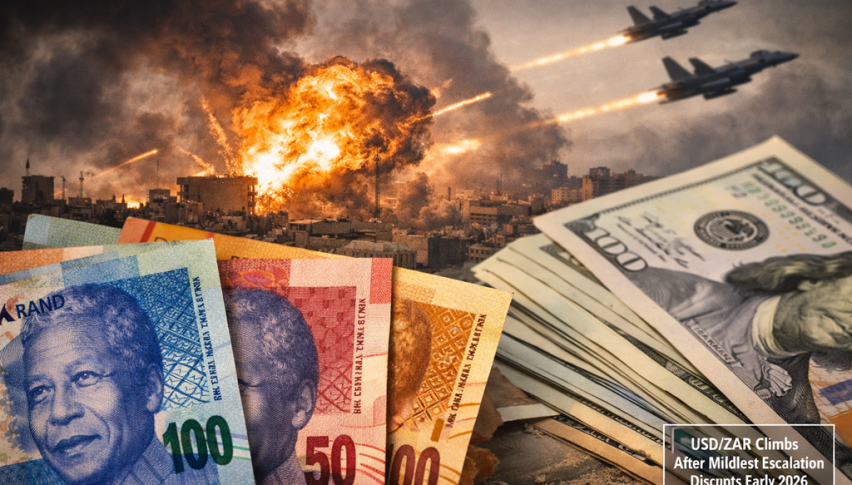
The South African rand began 2026 with surprising strength, but escalating US–Israel strikes on Iran have pushed USD/ZAR back above R16...
Quick overview
- The South African rand started 2026 strong but faced pressure as USD/ZAR rose above R16 due to escalating US-Israel strikes on Iran.
- Despite a stronger trade surplus and disciplined monetary policy from the SARB, geopolitical tensions have shifted investor sentiment towards safe-haven assets.
- The rand's performance is closely tied to commodity prices, particularly gold, which has seen volatility amid renewed safe-haven demand.
- While structural improvements have bolstered sentiment, persistent risks and global liquidity conditions will significantly influence the rand's trajectory.
The South African rand began 2026 with surprising strength, but escalating US–Israel strikes on Iran have pushed USD/ZAR back above R16 as global risk sentiment deteriorates.
Rand Resilience Faces a Geopolitical Reality Check
Despite ongoing global uncertainties, the South African rand entered 2026 with unexpected resilience. Reform momentum, disciplined monetary policy from the South African Reserve Bank (SARB), and a softer U.S. dollar helped stabilize sentiment toward emerging markets.
However, that stability was challenged on Monday morning when USD/ZAR climbed back above R16 following a sharp rebound in the dollar. The move came after coordinated US–Israel strikes on Iran intensified geopolitical risk and triggered a broad shift toward safe-haven assets.
Markets are no longer treating the conflict as a short-lived shock. Instead, investors are pricing it as a week-level geopolitical event with potentially wider implications for global liquidity, commodity prices, and emerging-market currencies.
Reuters reported that Iranian state media confirmed the death of Supreme Leader Ayatollah Ali Khamenei following the strikes. In parallel, President Donald J. Trump stated that “heavy and pinpoint bombing” would continue “as long as necessary,” reinforcing the perception of sustained escalation.
USD/ZAR Chart Daily – MAs Keeping the Pressure to the Downside

Technically, USD/ZAR briefly broke above R16.40 earlier in February, moving above its 20-day simple moving average (gray), which had been defining the pair’s downtrend in recent months. However, the 50-day moving average (yellow) acted as firm resistance. The rejection at this level triggered a reversal, pushing USD/ZAR back below the 20-day average and returning the broader downtrend into play, with the price losing last week below R16 again. This price behavior suggests that while volatility has increased, bearish momentum in USD/ZAR has not yet been decisively broken.
Domestic Data Sends Mixed Signals
Before the geopolitical shift, traders had been focused on local macroeconomic data to gauge the health of Africa’s largest economy.
Recent releases showed:
- M3 money supply growth slowed to 7.44% from 8.16% in December.
- Private sector credit growth rose to 8.83%, slightly above December’s 8.74%, though marginally below expectations.
- Trade balance recorded a R9.31 billion surplus in January, well above forecasts of R4.45 billion.
- Budget deficit widened to R69.69 billion for the month.
The stronger-than-expected trade surplus offered fundamental support to the rand, particularly as commodity exports remain central to South Africa’s external balance. However, fiscal pressures continue to constrain long-term optimism.
Tariff Developments and Emerging Market Relief
Earlier in February, emerging-market currencies gained modest relief after the U.S. Supreme Court struck down sweeping global tariffs proposed by President Trump in a 6–3 ruling.
The decision introduced policy uncertainty in the United States and weighed on the dollar, allowing currencies like the rand to recover. An MSCI gauge of developing-market currencies rose, with the rand climbing toward session highs.
That recovery underscored how sensitive USD/ZAR remains to shifts in global policy direction and dollar strength.
Commodity Swings Drive Currency Volatility
The rand’s trajectory continues to be closely tied to commodity markets, particularly gold. Earlier this year, a sharp correction in gold pushed USD/ZAR toward R16.43 before stabilizing as precious metals rebounded.
This correlation reflects South Africa’s export structure. When gold and other precious metals rise, export revenues improve, supporting trade balances and attracting foreign capital. Conversely, commodity pullbacks amplify downside pressure.
Renewed safe-haven demand linked to Middle East tensions has helped stabilize gold, offering some indirect support to the rand — though this has been partially offset by broader dollar strength.
SARB Maintains Credibility
The South African Reserve Bank has maintained a disciplined approach. At its January 29 meeting, SARB held the repo rate steady, signaling confidence that inflation remains contained.
Headline inflation averaged 3.2% in 2025 — the lowest level in over two decades — before rising modestly to 3.6% in December. While still within target, the uptick reduces urgency for rate cuts.
By preserving policy credibility and avoiding premature easing, SARB has reinforced investor confidence in local assets. The central bank’s balanced stance remains a key pillar of rand stability.
Bond Market Reflects Conditional Optimism
South Africa’s bond market has echoed cautious optimism. The benchmark 2035 government bond yield declined roughly 9 basis points to around 8.165%, reflecting foreign interest in high-yielding emerging-market debt.
However, these inflows remain highly sensitive to U.S. Treasury yields. Any resurgence in U.S. inflation or a hawkish Federal Reserve shift could quickly strengthen the dollar and pressure emerging-market currencies.
Structural Progress vs. Persistent Risks
Structural improvements have bolstered sentiment. South Africa previously secured a sovereign rating upgrade from S&P Global Ratings to BB– — the first in two decades — citing fiscal consolidation progress.
Additionally, removal from the European Union’s high-risk jurisdiction list following its exit from the FATF grey list improved perceptions of financial compliance.
Yet challenges remain. Energy reliability issues, logistics bottlenecks, and high unemployment continue to weigh on growth. Uncertainty surrounding AGOA trade preferences adds further external risk.
Global Liquidity Will Decide the Path
Ultimately, the rand’s performance in 2026 may depend less on domestic reform progress and more on global liquidity conditions.
A softer dollar and stable U.S. yields supported USD/ZAR’s retreat from 2025 highs near R20. But renewed geopolitical escalation has shifted the narrative. As safe-haven flows lift the dollar, emerging-market currencies face renewed pressure.
Conclusion: The South African rand has demonstrated notable resilience at the start of 2026, supported by reform momentum, trade surpluses, and credible monetary policy. However, the return of geopolitical instability has reminded markets how quickly global risk sentiment can override domestic fundamentals.
If Middle East tensions persist and the dollar strengthens further, USD/ZAR could remain above R16 and potentially test higher levels. For the rand, the battle between structural reform progress and global risk aversion is far from over.
- Check out our free forex signals
- Follow the top economic events on FX Leaders economic calendar
- Trade better, discover more Forex Trading Strategies
- Open a FREE Trading Account
- Read our latest reviews on: Avatrade, Exness, HFM and XM




 Save
Save