Silver Rebounds at $65 Support Again – Is It Time to Buy?
Silver has entered a highly volatile phase as central bank policy, geopolitical tensions, and energy prices converge to drive sharp and...
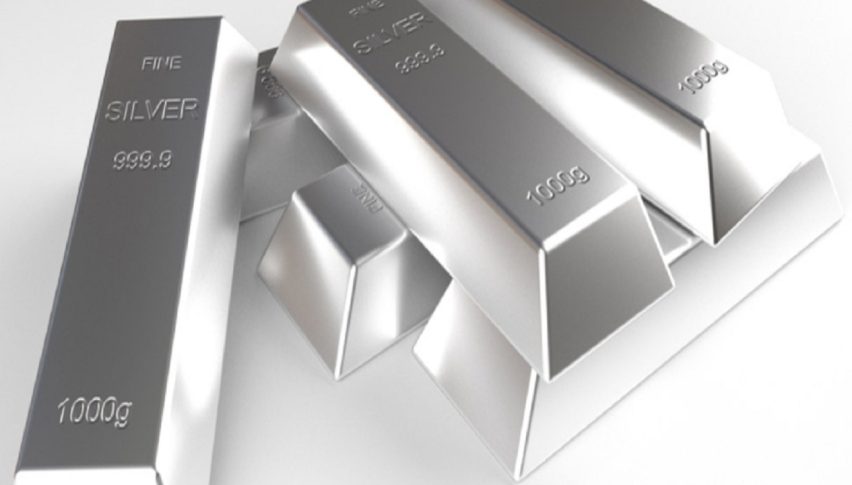
Quick overview
- Silver prices have entered a volatile phase due to central bank policies, geopolitical tensions, and fluctuating energy prices.
- Recent shifts in interest rate expectations have led to a broad selloff across various asset classes, impacting market sentiment.
- Despite a sharp decline from a peak of over $120 per ounce to around $60, silver's long-term outlook remains supported by strong demand fundamentals.
- The strength of the U.S. dollar has further pressured silver prices, complicating the market dynamics amid ongoing economic uncertainties.
Live SILVER Chart

Silver has entered a highly volatile phase as central bank policy, geopolitical tensions, and energy prices converge to drive sharp and unpredictable price swings.
Central Banks Spark Market Volatility
This week has proven pivotal for global markets, with the Federal Reserve setting the tone, followed closely by the Bank of England and European Central Bank. Expectations around interest rates shifted abruptly, triggering a broad-based selloff across multiple asset classes. Investors reacted to the possibility that central banks may maintain a tighter policy stance for longer than previously anticipated.
At the center of attention is Jerome Powell, whose policy signals are being closely dissected for clues about the future direction of monetary policy. The uncertainty has weighed heavily on sentiment, contributing to sharp intraday swings across commodities and equities alike.
Geopolitical developments have added another layer of complexity. President Trump reiterated his preference to avoid targeting energy infrastructure, while Benjamin Netanyahu confirmed that Israel acted independently in recent strikes on Iran’s gas facilities. Although he suggested the conflict could conclude sooner than expected, he also acknowledged the possibility of ground operations, a scenario that remains unpopular among the U.S. public.
Silver’s Rally Fades After Historic Surge
Silver has experienced an extraordinary rise and fall within a short period. Earlier this year, prices surged above $120 per ounce, driven by intense geopolitical tensions in the Middle East and a surge in safe-haven demand. At its peak, silver reached approximately $121.67 per ounce, reflecting strong investor appetite amid fears of prolonged instability.
However, the rally proved unsustainable. Prices reversed sharply, falling below $100 and eventually dropping to around $60, a level last seen in early February. This dramatic decline surprised many market participants who had expected geopolitical risks to continue supporting precious metals.
The pullback suggests that macroeconomic forces have overtaken geopolitical drivers in the short term. Rapid gains prompted profit-taking, while shifting expectations around interest rates and liquidity conditions accelerated the correction. Despite this, the $60 level is emerging as a key support zone, with buyers showing renewed interest at these levels.
Oil Prices Add to Inflation Pressures
The surge in energy prices has further complicated the economic outlook. West Texas Intermediate crude oil has climbed above $100 per barrel, raising concerns that inflation could remain elevated despite slowing growth.
Higher oil prices tend to feed through into transportation and production costs, reinforcing inflationary pressures across the global economy. At the same time, recent labor market data points to weakening momentum. The U.S. economy reportedly lost around 92,000 jobs in February, pushing unemployment up to 4.4%, while core inflation remains near 2.5%.
This combination presents a difficult challenge for policymakers. Central banks must balance the need to control inflation with the risk of slowing economic activity, a dynamic that continues to drive uncertainty across financial markets.
Technical Structure Signals Buyer Resilience
From a technical perspective, silver’s broader uptrend has not been invalidated. The break below $70 on Thursday was significant, but the decline was ultimately contained by key moving averages. Support emerged at the stronger buying interest around $60 area and the 100 SMA (red) on the daily chart helped as well.
That support has been holding after second attempt which suggest a base before the trend reversal. Buyers already stepped and silver rebounded sharply, climbing back above $70.
Silver Chart Daily – The 100 SMA Held As Support

Besides that, the trend still remains upward, with the 100 SMA acting as support. Key resistance levels now sit near $80, $100 and that is followed by the prior highs around $117–$121. On the downside, initial support is defined by the recent lows near $69 and $65.
Structural Demand Keeps Bullish Case Alive
Despite the recent volatility, silver’s longer-term outlook remains supported by strong underlying fundamentals. The Silver Institute continues to project a supply deficit, marking what could be the sixth consecutive year in which demand outpaces supply.
Physical investment demand is expected to rise significantly, with forecasts تشير to a 20% increase, reaching the highest levels in three years. Industrial demand, although slightly weaker, still provides a stable base for consumption, particularly as silver remains a critical component in various technologies.
These structural factors are keeping long-term investors engaged, with many viewing the recent decline as a potential buying opportunity rather than a fundamental shift in trend.
Dollar Strength Weighs on Prices
Another important factor influencing silver’s performance is the strength of the U.S. dollar. A stronger dollar typically reduces the appeal of commodities priced in dollars, making them more expensive for international buyers.
In recent sessions, dollar strength has compounded the downward pressure on silver, amplifying the impact of profit-taking and shifting rate expectations. The rapid pace of the earlier rally also left the market vulnerable to a sharp correction once momentum began to fade.
Conclusion: A Critical Turning Point
Silver now finds itself at a decisive moment. The combination of central bank policy uncertainty, geopolitical developments, and macroeconomic pressures has created a highly volatile environment.
While the $60 support level is holding for now, the next major move will likely depend on the direction of monetary policy and the evolution of global risks. Although short-term fluctuations may persist, the broader trend remains cautiously bullish, supported by structural supply constraints and resilient demand.
- Check out our free forex signals
- Follow the top economic events on FX Leaders economic calendar
- Trade better, discover more Forex Trading Strategies
- Open a FREE Trading Account
- Read our latest reviews on: Avatrade, Exness, HFM and XM

Related Articles
Sidebar rates

Related Posts
 Save
Save