Silver’s $120 Peak to $63 Pit: Is the Green Metal Crash a Multi-Year Trap or the Ultimate Entry?
The silver market is facing a rare and sudden sell-off. As of March 23, 2026, spot silver (XAG/USD) has dropped sharply...
Quick overview
- The silver market is experiencing a significant sell-off, with spot silver prices dropping nearly 27% this month, heading towards the $63 to $66 range.
- Rising oil prices and concerns about stagflation are driving investors away from silver and towards the US Dollar, as the Federal Reserve maintains high interest rates.
- The industrial demand for silver is declining due to increased energy costs, impacting its price as investors sell off paper silver to cover losses in other markets.
- Despite the current downturn, silver's long-term fundamentals remain strong, with a shortage in mining and potential opportunities for patient investors as the market stabilizes.
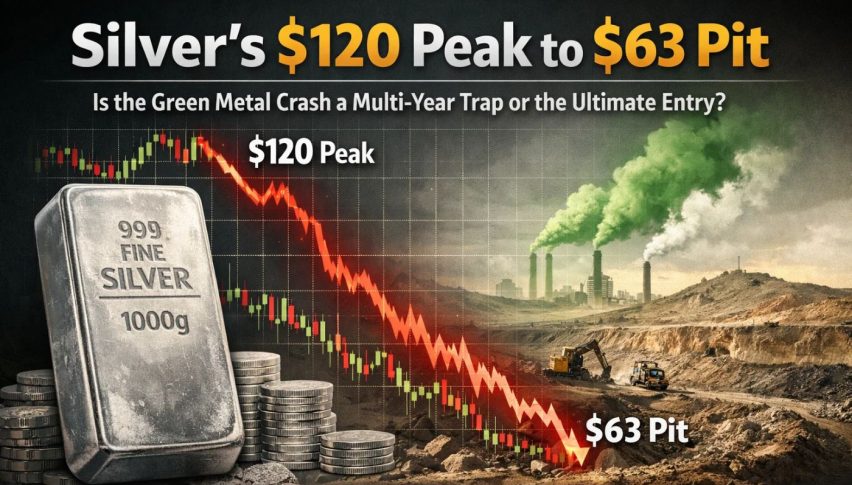
The silver market is facing a rare and sudden sell-off. As of March 23, 2026, spot silver (XAG/USD) has dropped sharply, heading toward the $63 to $66 range. This month alone, silver has lost almost 27% of its value, falling hard from its all-time high of $121 just weeks ago in January. After doubling in value over the past year, this steep correction has caught many retail investors off guard.
The main reason for this drop is a big change in how war and inflation are affecting markets. At first, the conflict between the US-Israel alliance and Iran pushed precious metals higher. Now, though, the side effects are hurting them. Rising oil prices, caused by threats in the Strait of Hormuz, have made global markets worry about stagflation. Instead of turning to silver for safety, investors are moving into the US Dollar because the Federal Reserve plans to keep interest rates high to fight energy-driven inflation. Since silver does not pay interest and is expensive to store, this situation is especially tough for the metal.
The Industrial Paradox: Why the Middle East War is Hurting Solar and Tech Demand
Silver is both a safe haven for investors and an important industrial metal. Right now, its industrial use is weighing on its price. As energy costs rise, the global push for green technology, especially solar panels and advanced electronics, is becoming more expensive. If industrial growth slows because of high energy prices caused by the war, demand for silver from the tech sector could drop a lot.
These worries have led to a big sell-off of paper silver on the COMEX. ETFs and hedge funds using leverage are selling to cover losses in other falling markets. This is a typical rush for cash, and because silver is so volatile, it is often the first asset sold to protect larger portfolios. Even though there is still a shortage of physical silver, the heavy selling of paper contracts is now setting the price.
Technical Breakdown: Can the $60 Support Line Hold the Line?
Looking at the technicals, the bull flag pattern has completely failed. Silver is now trading well below both its 50-day moving average ($80.28) and its 200-day moving average ($73.98). For professional traders, this is called a Death Cross, which usually means the market is shifting from a bull phase to a bear phase.
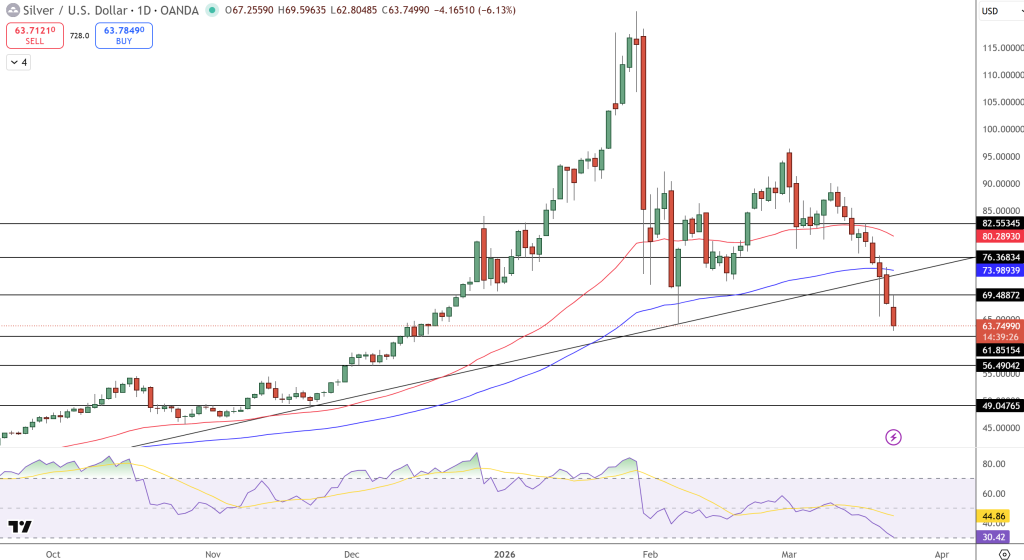
The Relative Strength Index (RSI) has dropped close to 30, which shows silver is very oversold. A short-term bounce back toward $69 is possible soon, but the easier path for prices is still downward. If silver falls below the $61.85 support level, it could quickly drop to $56.49. Analysts say that only a steady daily close above $69.48 would stop this downward trend and suggest the bottom has been reached.
The Silver Lining: Why the 2026 Secular Bull Case is Still Alive
Despite the recent crash, silver’s long-term fundamentals are still strong. Even now, silver is up almost 100% compared to last year. There is still a real shortage in silver mining, as we are not producing enough to meet the expected demand for 2026 and 2027. This is especially true as central banks keep moving away from reserves based mostly on fiat currency.
Many experienced analysts see this crash as a way to remove weaker investors from the market. The rapid price rise to $121 earlier in 2026 was probably not sustainable. By clearing out leveraged positions, the market is opening up opportunities that long-term institutional buyers are starting to notice. If the Middle East conflict settles or the Fed changes course due to a weaker job market, silver could rebound just as quickly as it fell. For patient investors, buying silver at $63 in a market that recently hit $120 could turn out to be a rare opportunity.
- Check out our free forex signals
- Follow the top economic events on FX Leaders economic calendar
- Trade better, discover more Forex Trading Strategies
- Open a FREE Trading Account
- Read our latest reviews on: Avatrade, Exness, HFM and XM

Related Articles
Sidebar rates

Related Posts
 Save
Save
