SMCI Stock Attempts Comeback on Memory Shortage After Legal Shock but $30 Test Remains
Super Micro Computer shares are attempting a rebound after a steep selloff, as strong revenue growth clashes with margin pressure and legal

Quick overview
- Super Micro Computer shares are attempting a rebound after a significant selloff due to legal issues involving co-founder Yih-Shyan 'Wally' Liaw.
- Despite a sharp decline earlier in the week, shares have risen approximately 8.5% in a single session, fueled by strong revenue growth and increased trading activity.
- The company reported second-quarter revenue of $12.68 billion, exceeding forecasts, but faces challenges with declining gross margins and profitability.
- While the semiconductor environment remains supportive, Super Micro must balance rapid growth with restoring profitability amid ongoing legal and margin pressures.
Super Micro Computer shares are attempting a rebound after a steep selloff, as strong revenue growth clashes with margin pressure and legal concerns.
Shares Rebound After Sharp Collapse
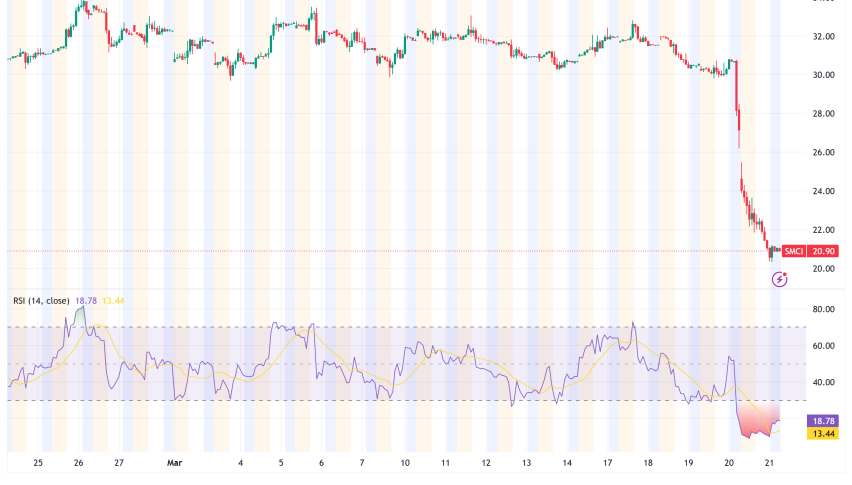
Super Micro Computer stock experienced a dramatic decline earlier this week, falling below $20 and losing more than 30% in just a few sessions. The selloff was triggered by legal developments involving co-founder Yih-Shyan “Wally” Liaw, who faces federal charges related to the alleged illegal export of AI servers using chips from NVIDIA to China.
The news significantly damaged investor confidence, prompting leadership changes within the company. Liaw stepped down from the board, while Super Micro placed several employees on administrative leave and appointed a new interim compliance officer.
Despite the shock, shares have rebounded this week, rising around 8.5% in a single session. Increased trading activity and options interest suggest renewed short-term optimism, although volatility remains elevated.
The broader semiconductor environment also remains supportive. Companies such as Intel and Advanced Micro Devices are reportedly raising CPU prices due to tight supply, reinforcing favorable industry dynamics.
Additionally, reports that Super Micro is exploring expansion into India with potential server manufacturing facilities have added to the positive momentum.
Strong Earnings Support Recovery
The rebound has been partly supported by stronger-than-expected financial results. Super Micro reported second-quarter revenue of $12.68 billion, well above forecasts of $10.34 billion, while non-GAAP earnings came in at $0.69 per share.
This performance reflects continued strength in demand for servers and data center infrastructure, driven by hyperscale and enterprise investment in artificial intelligence.
Memory Demand Drives Growth but Raises Questions
Super Micro remains well-positioned within the ecosystem, benefiting from surging demand for high-performance computing infrastructure. As enterprises expand data center capacity, the company continues to capture significant revenue growth.
However, this growth has come with trade-offs. Large-scale contracts with major customers often involve aggressive pricing, limiting profitability despite rising volumes.
While top-line momentum remains strong, investors are increasingly focused on whether the company can convert that growth into sustainable earnings.
Margin Pressure Remains a Key Concern
A major issue weighing on sentiment is declining profitability. Gross margins fell to 6.3%, down from 9.3% in the previous quarter, highlighting significant compression.
Operating margins have also declined sharply over recent years, raising concerns that the company is prioritizing scale over efficiency. In a competitive AI infrastructure market, customers appear to have increasing pricing power, further pressuring margins.
The latest results offered limited signs of stabilization, leaving investors cautious about the long-term outlook.
Conclusion: Super Micro’s recent rebound reflects improving short-term sentiment supported by strong earnings and robust AI demand. However, legal uncertainties and persistent margin pressure continue to cloud the bigger picture. The company now faces a critical balancing act—maintaining rapid growth while restoring profitability—if it hopes to sustain a meaningful recovery.
- Check out our free forex signals
- Follow the top economic events on FX Leaders economic calendar
- Trade better, discover more Forex Trading Strategies
- Open a FREE Trading Account
- Read our latest reviews on: Avatrade, Exness, HFM and XM

Related Articles

Sidebar rates

Related Posts
 Save
Save
