South African Rand: Will Oil Surge and Fed Policy Push USD/ZAR Toward R18?
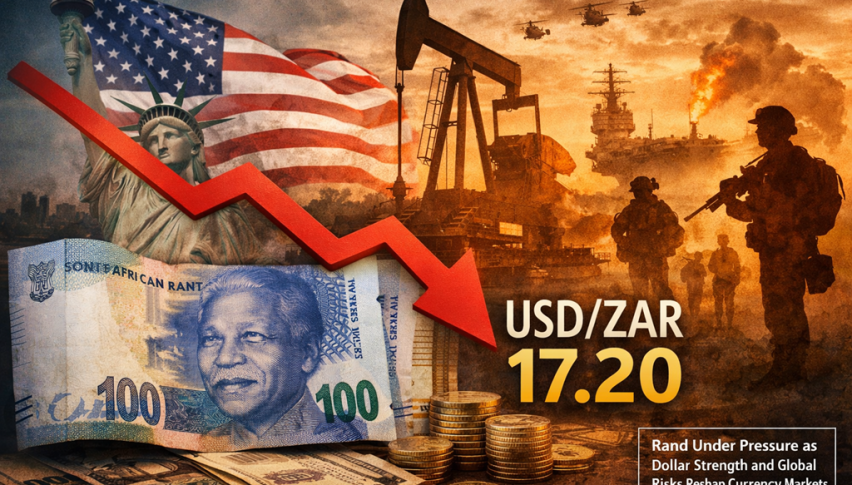
The South African rand faces mounting pressure as a stronger dollar, rising oil prices, and hawkish signals from the Federal Reserve...
Quick overview
- The South African rand is under pressure due to a stronger U.S. dollar, rising oil prices, and hawkish signals from the Federal Reserve.
- After starting 2026 strong, the rand has reversed course, with USD/ZAR now above R17 as investors shift towards safer assets.
- The South African Reserve Bank has kept interest rates steady at 6.75%, signaling potential hikes if inflation risks increase.
- Geopolitical tensions, particularly involving Iran, have led to higher oil prices, exacerbating inflation risks and worsening trade balances for South Africa.
Live USD/ZAR Chart

The South African rand faces mounting pressure as a stronger dollar, rising oil prices, and hawkish signals from the Federal Reserve reshape global currency dynamics.
Rand Reversal After Early-2026 Strength
The South African rand began 2026 on solid footing, with USD/ZAR falling into the mid-R15 range in January as global risk sentiment improved. However, that trend has reversed sharply in recent weeks.
The U.S. dollar has regained momentum, pushing USD/ZAR above R17, reflecting a broader shift toward risk aversion. Investors are increasingly rotating capital away from emerging markets and into safer assets, signaling that geopolitical risks are now seen as persistent rather than temporary.
South African Reserve Bank Holds Rates Steady
Amid rising global volatility, the South African Reserve Bank opted to keep interest rates unchanged. The repo rate remains at 6.75%, with the prime lending rate at 10.25%, following a unanimous decision by policymakers.
While expected, the central bank maintained a cautious tone, signaling that rate hikes remain possible if inflation risks intensify. This aligns with a broader global trend, as central banks pause to assess the impact of geopolitical tensions and inflationary pressures.
Federal Reserve Turns More Hawkish
A key driver behind dollar strength has been renewed hawkish messaging from the Federal Reserve. Although rates were left unchanged, recent projections and comments from Jerome Powell highlighted persistent inflation concerns.
- PCE inflation rising to 2.7%
- Core inflation also at 2.7%
- GDP revised to 2.4%
- Unemployment steady at 4.4%
Powell emphasized that inflation may remain elevated longer than expected, particularly with tariff pressures and rising energy costs. Markets now increasingly expect interest rates to stay higher for longer, strengthening the dollar and putting pressure on currencies like the rand.
Iran Conflict Fuels Oil Surge and Inflation Risks
Geopolitical tensions involving Iran have intensified market anxiety, particularly around energy supply disruptions. Concerns over the Strait of Hormuz have pushed oil prices sharply higher.
Brent crude rising above $105–$110
Higher inflation expectations globally
Increased costs for energy-importing economies
For South Africa, higher oil prices translate into rising import costs, worsening trade balances, and additional pressure on the rand.
Technical Analysis
Technically, we saw a bullish attempt in USD/ZAR which briefly broke above R16.40 earlier in February, moving above its 20-day simple moving average (gray), which had been defining the pair’s downtrend in recent months. However, the 50-day moving average (yellow) acted as firm resistance. The rejection at this level triggered a reversal, pushing USD/ZAR back below to the 20-day average, which turned into support.
USD/ZAR Chart Daily – MAs Keeping the Pressure to the Downside

The increased tensions, the jump in the USD and in Oil prices, has weakened the Rand and USD/ZAR soared higher and was testing the 200 daily SMA (purple) on Monday as USD/ZAR opened with a gap higher and now has moved above R17.
USD/ZAR Chart Monthly – Rebounding Off the 100 SMA

On the monthly chart, USD/ZAR seems to have bottomed at the 100 SMA (green) where it found support in the last two months. This month we’re seeing a rebound as the Rand weakens while the Dollar gains, but buyers are facing the 50 SMA (yellow) now. For the larger trend to resume, USD/ZAR would need to push above this moving average.
Military Developments Extend Uncertainty
Reports suggest that U.S. military operations could extend for weeks rather than resolve quickly. The deployment of assets such as the USS Tripoli reinforces expectations of a prolonged conflict timeline.
Even without a full-scale ground invasion, limited operations could sustain uncertainty, keeping financial markets on edge and reinforcing demand for safe-haven assets.
Signals Offer Limited Relief
There are tentative signs of diplomacy, with Pakistan reportedly offering to host U.S.-Iran talks. This could provide a potential off-ramp for tensions.
However, markets remain cautious. Any meaningful relief in oil prices or risk sentiment will likely require concrete progress, such as agreements on shipping routes or de-escalation measures. Until then, the geopolitical risk premium is expected to remain elevated.
Commodities Add Mixed Pressure on the Rand
Commodity dynamics are adding complexity to the rand’s outlook. While South Africa typically benefits from higher gold prices, recent weakness in gold has reduced that support.
At the same time:
- Rising oil prices increase import costs
- Trade balances come under pressure
- Inflation risks intensify
This combination creates a challenging environment, where traditional commodity support is offset by rising external vulnerabilities.
Outlook: Fragile Currency in a Risk-Driven World
The South African rand is increasingly being shaped by global forces beyond domestic control. A stronger U.S. dollar, elevated oil prices, and persistent geopolitical uncertainty continue to drive volatility.
Unless there is a meaningful easing in global tensions or a shift in monetary policy expectations, the rand is likely to remain under pressure. In the near term, currency direction will depend heavily on geopolitical developments, central bank signals, and the trajectory of global inflation.
- Check out our free forex signals
- Follow the top economic events on FX Leaders economic calendar
- Trade better, discover more Forex Trading Strategies
- Open a FREE Trading Account
- Read our latest reviews on: Avatrade, Exness, HFM and XM

Related Articles

Sidebar rates

Related Posts
 Save
Save