WTI Crude Oil Forecast: $102 Breach as Hormuz Risks a $150 Super-Spike – Powell and OPEC+ Decide the Next Move
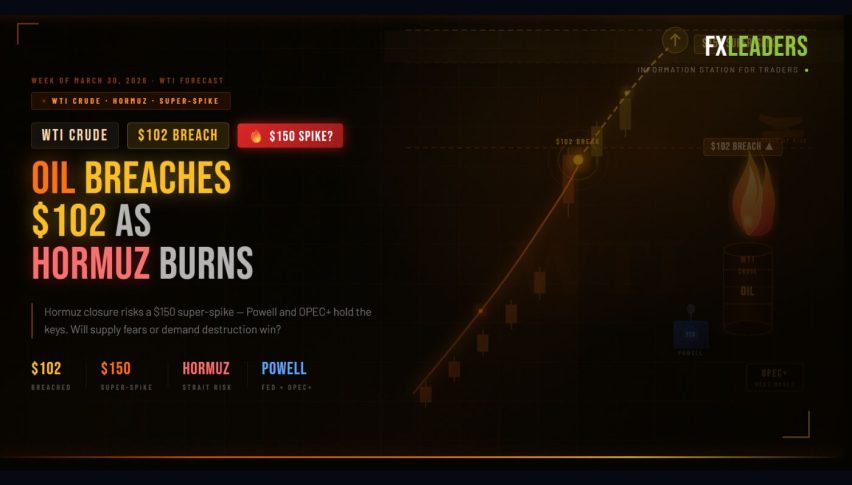
WTI crude is trading at $101 to $102 per barrel on March 30, 2026, marking its highest level since July 2022...
Quick overview
- WTI crude is trading at $101 to $102 per barrel, a 40% increase over the past month, driven by geopolitical tensions and supply disruptions.
- The closure of the Strait of Hormuz has significantly impacted oil flows, disrupting 21% of global oil consumption.
- Goldman Sachs has raised its Brent forecast to $85 for 2026 and warns that prices could exceed 2008 highs if disruptions continue.
- Key upcoming events, including Powell's speech and the OPEC+ meeting, could influence oil prices significantly in the near term.
WTI crude is trading at $101 to $102 per barrel on March 30, 2026, marking its highest level since July 2022 and a 40% increase over the past month. Goldman Sachs reports that a $14 to $18 per barrel geopolitical risk premium is now built into prices as the Strait of Hormuz remains effectively closed for a fifth week.
This week, Powell’s speech, the Nonfarm Payrolls report, and an OPEC+ meeting are all on the calendar. These three events could decide if $150 oil is a real possibility or just a headline.
Why WTI Has Surged 40% in Thirty Days
The crisis is unlike anything seen before. Since March 2, the Strait of Hormuz has been effectively closed to commercial shipping, disrupting about 17.8 million barrels per day of oil flows, which is 21% of global oil consumption. Iran has set up a yuan-based toll system that lets certain allied ships pass while blocking those linked to the West. Insurance premiums for ships heading to the Gulf have tripled since March 1, creating a blockade that military force has not achieved.
Supply disruptions are spreading throughout the region. On March 20, Iraq declared force majeure on all foreign-operated oilfields, taking about 4.5 million barrels per day—OPEC’s second-largest producer—out of reliable supply. US commercial crude stockpiles are now at multi-year lows. OPEC+ has said there will be no output increases before the third quarter of 2026.
Goldman Sachs has increased its 2026 Brent average forecast to $85, up from $77, and expects Brent to stay above $110 through April if disruptions continue. Goldman also warns that “Brent is likely to exceed its 2008 all-time high” if the Strait remains closed for a long time, which could push Brent close to $147 and WTI above $140. Chevron CEO Mike Wirth said at CERAWeek that “there are very real physical manifestations of the closure that I don’t think are fully priced into the futures curves.”
WTI Technical Analysis: The $106 Fibonacci Barrier and the Bull Channel
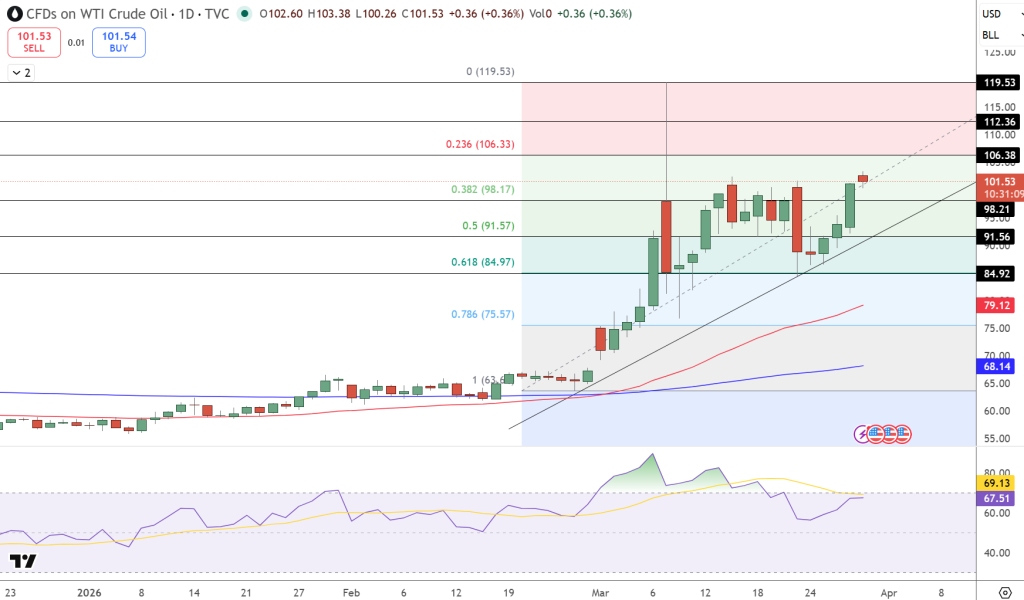
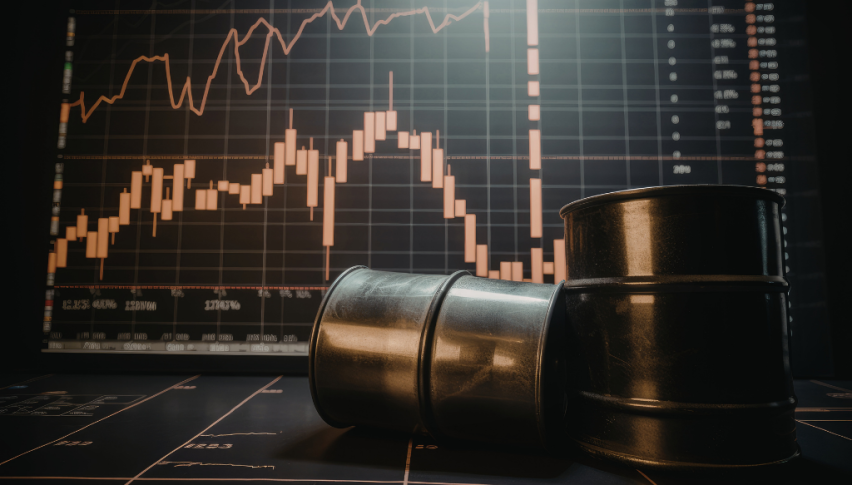
The daily WTI chart shows ongoing bullish momentum within an upward channel.
After rebounding from the $63 swing low, WTI has cleared multiple resistance levels decisively. The 50-day moving average at $79.12 sits well above the 200-day at $68.14, maintaining a bullish Golden Cross. RSI at 67 confirms strong buying pressure but is approaching overbought territory at 70 — suggesting a brief pullback toward $98 is possible before the trend resumes.
The next bullish target is the 0.236 Fibonacci retracement at $106.33, which matches historical supply zones. If WTI moves past this level and $112.36, then $119.53 becomes the next target.
Trade setup with a long bias: Buy on dips above $98 support, set a stop below $91.50, and target $106.33, then $112.
This Week’s Three Decisive Catalysts
Monday, March 30: Powell speaks today. If he signals a hawkish stance and points to oil-driven inflation, the dollar could strengthen and temporarily limit WTI’s rise. If he takes a softer tone and mentions growth risks, it would remove a key obstacle for crude prices.
Wednesday, April 1: EIA petroleum inventories are released. Last week, data showed a 6.2 million barrel build, which goes against the bullish supply story. Another build would limit price gains, while a draw would confirm the physical tightness highlighted by Goldman Sachs.
Friday, April 3 (Good Friday): US Nonfarm Payrolls are released. A weak report could raise recession fears and lower demand expectations, possibly causing a selloff toward $90. A strong report would support demand and likely speed up the move toward $106.
Sunday, April 5: The OPEC+ meeting takes place. The group will review voluntary output adjustments. If they signal production increases to cool prices and prevent demand destruction, it could be the most bearish event for WTI this week.
FAQ: WTI Crude Oil – Hormuz Crisis, $150 Risk, and Weekly Outlook
Why is WTI crude oil above $100 in March 2026?
The closure of the Strait of Hormuz has disrupted 17.8 million barrels per day, which is 21% of global seaborne oil. Iraq’s force majeure, OPEC+ production cuts, and the withdrawal of insurance from Gulf shipping have all removed supply buffers.
Goldman Sachs estimates that a $14 to $18 per barrel risk premium is now included in crude prices, compared to the pre-conflict Brent baseline of $71 to $76.
Could oil reach $150 per barrel?
Goldman Sachs warns that Brent could go above its 2008 all-time high near $147 if flows through the Strait stay low beyond mid-April. The Dallas Fed modeled a scenario where a two-quarter closure of Hormuz would lower global GDP by 1.3 percentage points, which would eventually reduce demand and limit the rally.
For oil to hit $150, the closure would need to last and spread to Saudi and UAE pipeline infrastructure.
What happens to oil prices if the Strait of Hormuz reopens?
Goldman Sachs expects WTI to fall to the low $70s by early June if flows through the Strait recover. The Dallas Fed predicts a sharp price drop to around $68 per barrel in the quarter after reopening.
However, Chevron’s CEO warned that even after reopening, it will take several weeks to get the right crude grades to the right places, so the risk premium would decrease slowly rather than all at once.
- Check out our free forex signals
- Follow the top economic events on FX Leaders economic calendar
- Trade better, discover more Forex Trading Strategies
- Open a FREE Trading Account
- Read our latest reviews on: Avatrade, Exness, HFM and XM

Related Articles
Sidebar rates

Related Posts
 Save
Save
