GBP/USD Price Analysis: Sterling Falls to 1.3250 as Iran Escalation Revives Stagflation Risk – NFP Decides the Next Move
GBP/USD fell back to 1.3250 on April 2 after reaching a weekly high of 1.3315. Recent comments from Trump...
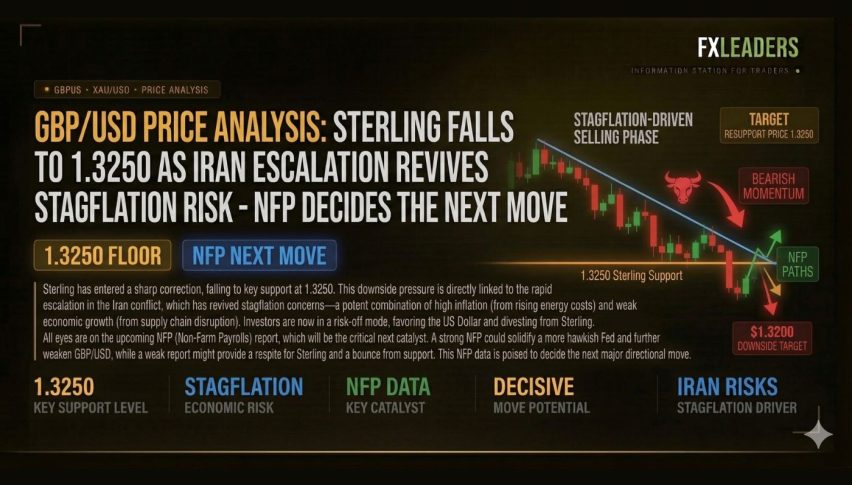
GBP/USD fell back to 1.3250 on April 2 after reaching a weekly high of 1.3315. Recent comments from Trump about a possible Iran timeline and new threats to Kharg Island have renewed concerns about oil-driven inflation. This has strengthened the dollar and left the pound vulnerable, since the UK is the most energy-dependent major economy.
Why the Pound Is the Most Vulnerable G10 Currency Right Now
Because the UK relies heavily on energy imports, the pound is hit hard by any news of rising tensions with Iran. According to Wikipedia’s economic data, UK inflation is expected to go above 5% in 2026, which would be the highest in Europe. Rising energy costs are already affecting industrial production, with UK chemical and steel manufacturers adding 30% surcharges to feedstock costs.
This situation puts the Bank of England in a classic stagflation trap. With rates at 3.75%, the BoE now matches the Fed, so sterling no longer gets support from a rate difference when the dollar is strong. Governor Bailey has warned that markets might be too optimistic about future rate hikes, since UK GDP growth is expected to be just 1.2% in 2026 and unemployment could rise to 5.5% in the second quarter. The BoE cannot raise rates much more without risking a deeper recession.
OCBC strategists summed up the situation: “Energy-driven stagflation risks are supporting the USD in the near term.” Goldman Sachs also warned that “the balance of risks has worsened” and that stagflation is “not fully priced” by markets. This has direct bearish implications for GBP/USD.
GBP/USD Technical Analysis: Below 200-SMA, Bears in Control
Technical analysis supports the overall bearish outlook.
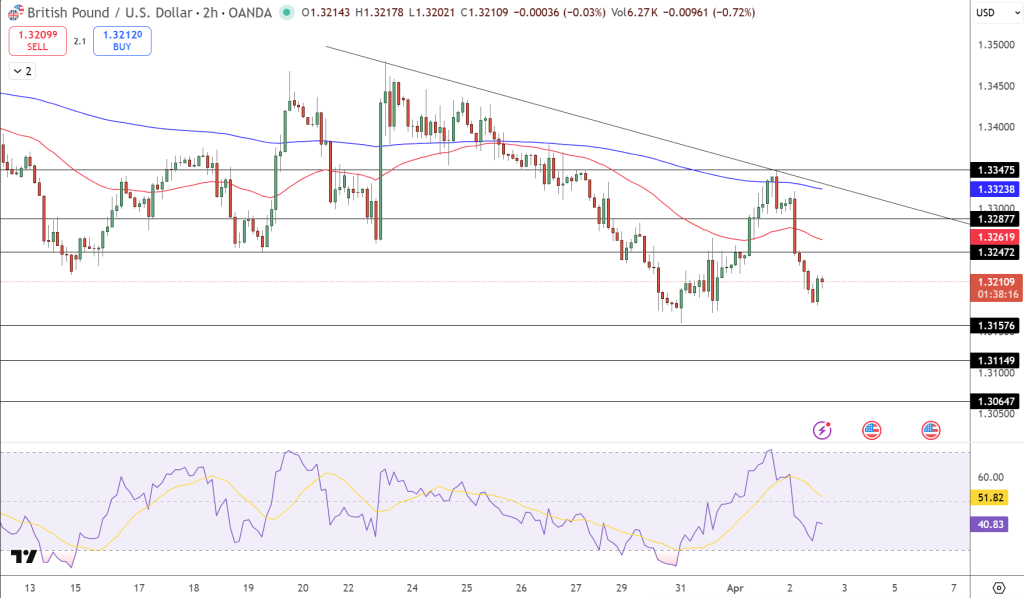
Since GBP/USD could not stay above 1.3300, attention has turned to the downside. The pair is now trading below its 200-period moving average on shorter timeframes. FXStreet analysis also shows the pair is below the falling 21- and 50-day SMAs, which adds to the downward trend.
Immediate support is at 1.3150 to 1.3200, which is a key Fibonacci retracement zone.
Key resistance: Key resistance is at 1.3350, which lines up with the descending trendline. The bearish momentum would only ease if the price breaks above 1.3350.
The RSI is near 40, showing that sellers are regaining control. The pair is not yet oversold, so there is still room for further declines.
If the NFP is strong and Iran tensions continue, GBP/USD could fall to 1.3060. If there is a ceasefire or a weak NFP, the pair could rally toward 1.3315 to 1.3350.
Friday’s NFP: The Single Catalyst That Can Move This Pair
Historically, April has been the best month for GBP/USD, with an average gain of 0.6% since 1971. However, StoneX research points out that this seasonal boost depends on real progress toward easing tensions in the Middle East before traders are willing to sell dollars.
The April 3 NFP report is the next key event. In February, the number was only 92,000, which was much lower than expected. If there is a third weak reading, it could increase recession fears, weaken the dollar, and help GBP/USD recover to 1.3315 to 1.3350. A strong result would support the idea of the Fed keeping rates higher for longer and could push the pair down to 1.3060.
FAQ: GBP/USD – Stagflation Risk, BoE Dilemma, and NFP Scenarios
Why is GBP/USD falling despite the BoE matching the Fed’s rate?
With the BoE at 3.75%, rates now match the Fed, so sterling no longer benefits from a rate difference. Because the UK relies more on energy imports, oil prices above $100 affect UK inflation more than US inflation, increasing the gap in growth. Investors are selling sterling because the UK is dealing with both higher inflation and weaker growth at the same time.
What does “stagflation” mean for GBP/USD?
Stagflation, which means rising inflation and slow growth, is the worst situation for the BoE. The bank cannot raise rates much without making the slowdown worse, and it cannot cut rates without letting inflation rise. This leaves the BoE stuck, removing a key support for sterling, and has often led to GBP underperforming in the past.
What is the GBP/USD forecast if NFP is weak on Friday?
If the NFP comes in below 100,000, it would raise concerns about a US recession, lower demand for the dollar as a safe haven, and could trigger a relief rally toward the 1.3315 to 1.3350 resistance area. Most forecasts expect GBP/USD to recover toward 1.36 to 1.40 in the second half of 2026, once the dollar’s Iran war premium fades. However, this would need either a ceasefire or clear signs that the Fed will ease policy.
- Check out our free forex signals
- Follow the top economic events on FX Leaders economic calendar
- Trade better, discover more Forex Trading Strategies
- Open a FREE Trading Account
- Read our latest reviews on: Avatrade, Exness, HFM and XM

Related Articles
Sidebar rates

Related Posts
 Save
Save
