JSE Top 40 Set for Strong Rebound as Oil Plunge and Trump Ceasefire Spark Relief Rally on April 8
The FTSE/JSE Top 40 Index ended April 7 at 107,203.32, falling 1.04% (1,128 points) after moving between 106,401 and 108,404...
Quick overview
- The FTSE/JSE Top 40 Index fell 1.04% to 107,203.32 due to high oil prices and a weaker Rand amid geopolitical tensions.
- A conditional ceasefire announced by President Trump led to a global market rally, with oil prices dropping significantly and boosting stock sentiment.
- Lower oil prices are expected to reduce import costs for energy-dependent sectors, potentially aiding the JSE's recovery.
- Key resistance levels for the Top 40 are identified, with analysts cautioning about potential market volatility if geopolitical tensions resume.
The FTSE/JSE Top 40 Index ended April 7 at 107,203.32, falling 1.04% (1,128 points) after moving between 106,401 and 108,404. The drop came as high oil prices above $110 and a weaker Rand, driven by US-Iran tensions and Strait of Hormuz issues, weighed on the market.
But after President Trump announced a conditional two-week ceasefire late on April 7, global markets rallied. Oil prices dropped 14 to 16%, while stocks and precious metals jumped. This could lead to a rebound when JSE trading resumes or in futures on April 8.
Why is the JSE Top 40 poised for a rebound?
Lower oil prices can reduce import costs and help margins for sectors that rely on energy. Less geopolitical risk also boosts market sentiment and takes some pressure off the Rand.
Ceasefire Eases Cost Pressures for South African Companies
The two-week truce pauses strikes, with Iran agreeing to restore safe tanker passage through the Strait of Hormuz. This key route had disrupted about 20% of global oil and gas flows.
Lower oil prices should help energy-dependent sectors by cutting import costs and supporting margins for both consumers and companies on the JSE. For resource-heavy stocks in the Top 40, lower energy costs are positive, but weaker commodity prices could limit the benefits.
Gold and platinum group metals (PGM) producers like AngloGold Ashanti, Gold Fields, Harmony, Impala Platinum, and Sibanye Stillwater could benefit from ongoing safe-haven demand and recent gains in these metals.
The South African Rand strengthened on the news, moving to about 16.40 to 16.80 against the US dollar as global risk aversion faded. While a stronger Rand may limit gains for exporters, better sentiment and lower fuel costs should help the broader market recover.
Major companies like Naspers, Prosus, Richemont, British American Tobacco, Anheuser-Busch InBev, and banks such as FirstRand, Standard Bank, and Absa usually drive the index. Sasol is also important because of its links to energy and chemicals.
Technical Analysis: Top 40 Breaks Key Resistance
Looking at the four-hour chart, the Top 40 has moved above the 110,019 resistance level and is now trading near 110,800. This continues the pattern of higher lows since the rebound from 97,835. The price is above the rising trendline and has moved back above the 50-period moving average near 107,229, while testing the 200-period average around 108,404, which used to act as resistance.
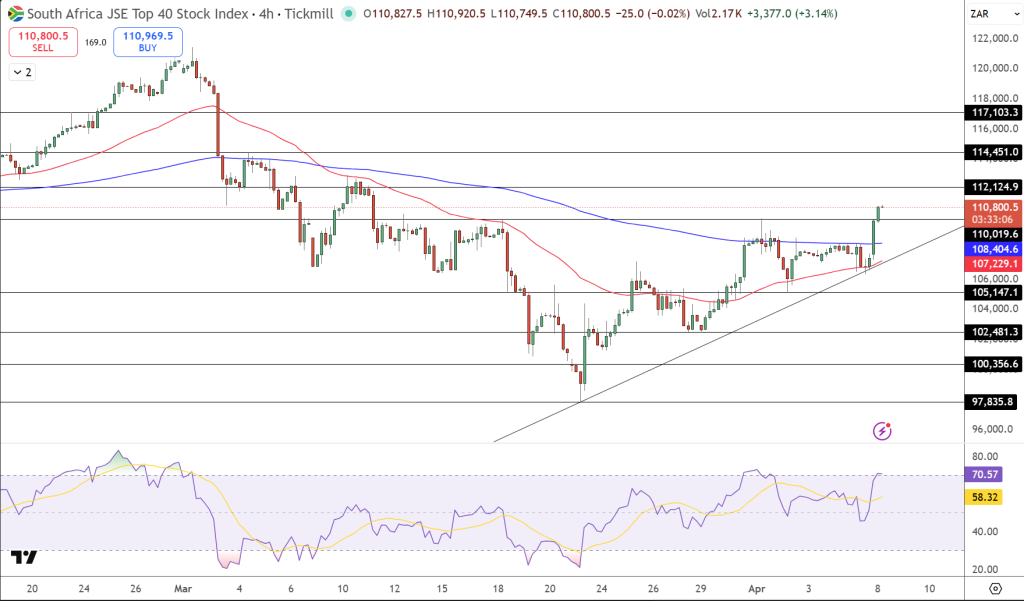
Key JSE Top 40 Levels to Watch (April 8, 2026)
| Immediate Resistance | 112,124 | Next upside target |
| Major Resistance | 114,451 | Further extension zone |
| Key Support | 110,000 – 109,000 | Broken resistance now support |
| Deeper Support | 106,000 | Ascending trendline |
The Relative Strength Index (RSI) is now at 70, showing strong buying interest, but the market may be a bit overbought and could pause or pull back in the short term. Staying above 110,000 and the rising trendline keeps the positive outlook in place.
Three Key Developments Likely to Shape JSE Performance
- Whether safe tanker passage through the Strait of Hormuz is maintained during the two-week period
- Changes in the Rand and shifts in global prices for gold, platinum, and oil
- Progress in ceasefire talks, possibly involving Pakistan, and the overall appetite for risk in emerging markets
Short-Term Relief Rally, But Caution Remains
In the short term, the ceasefire reduces the risk of further conflict, and the big drop in oil prices should help South African stocks by lowering costs. Analysts see resistance near 109,000 to 109,500, with support around 106,000.
The index has performed well, gaining about 38 to 43% over the past year, but it is still below its 2026 highs near 121,000.
Looking further ahead, growth in the private sector and continued investment should support the market. However, the JSE is still closely linked to commodity cycles, global risk trends, and the Rand. If the truce fails or Hormuz issues persist, volatility could return.
- Check out our free forex signals
- Follow the top economic events on FX Leaders economic calendar
- Trade better, discover more Forex Trading Strategies
- Open a FREE Trading Account
- Read our latest reviews on: Avatrade, Exness, HFM and XM

Related Articles

Sidebar rates

Related Posts
 Save
Save
