Crypto Scam Types

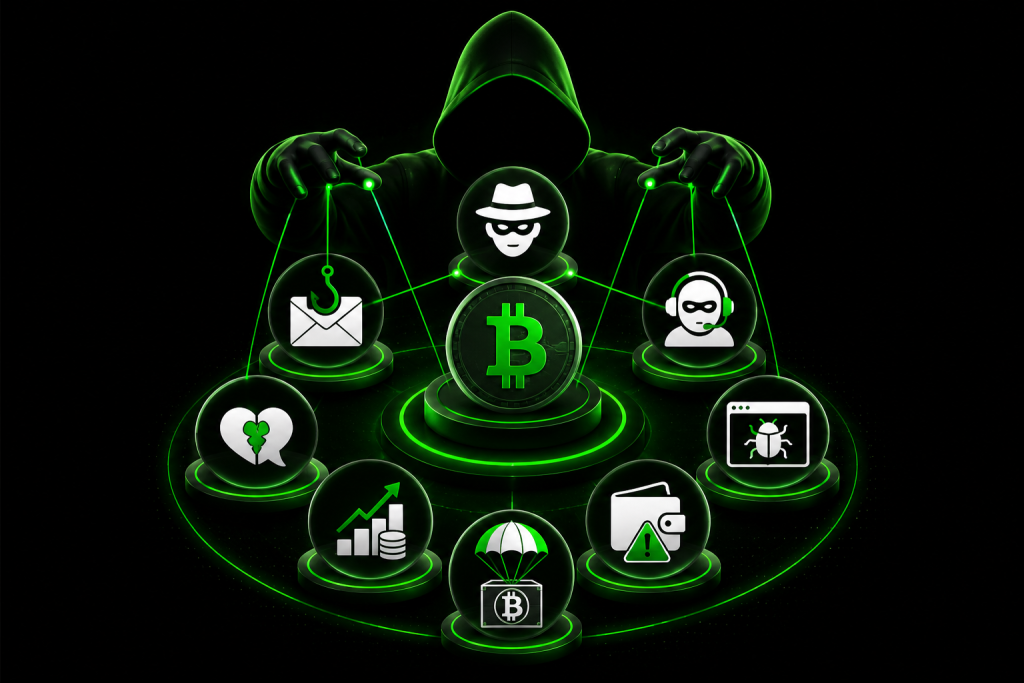
Cryptocurrency has reshaped the financial landscape by offering a decentralized, fast, and globally accessible way to transfer value. It has empowered individuals to take control of their finances without relying on traditional banks or intermediaries. However, this same freedom has also created an environment where crypto scams can thrive. As the crypto industry grows, so does the number of fraudsters looking to exploit new and inexperienced users.
For beginners, understanding crypto scams is not just helpful – it is essential. Many people enter the crypto space focused on profits, trading strategies, or new technologies, but overlook the importance of security and awareness. This guide provides a comprehensive, easy-to-understand breakdown of the most common crypto scam types, how they work, why they succeed, and how you can avoid becoming a victim.
 | Minimum Deposit: $100 Regulated by: CBI, BVI, FSC, ASIC, FSCA, JFSA, FFAJ Crypto: Yes |
What Is a Crypto Scam?
A crypto scam is a fraudulent scheme designed to trick individuals into giving away cryptocurrency, personal information, or access to their digital wallets. Unlike traditional scams, crypto fraud often combines psychological manipulation with advanced technological tactics.
 | Minimum Deposit: $10 Regulated by: ASIC, BaFin, CMA, CySEC, DFSA, FCA, SCB 73-89 % of retail investor accounts lose money when trading CFDs Crypto Yes (only CFDs) |
Why Crypto Scams Are So Effective
Crypto scammers succeed because they deliberately design their schemes to exploit both human behaviour and the technical structure of cryptocurrency systems. Several factors make crypto scams particularly effective:
- Irreversible blockchain transactions
- Anonymous or difficult-to-trace identities
- Global access to potential victims
- Limited regulation in some regions
- Technical complexity for beginners
- Emotional manipulation and social engineering
One major factor is the irreversible nature of transactions. In traditional banking systems, users can sometimes reverse or dispute fraudulent payments. In crypto, however, once funds are sent, the network typically cannot recover them. This creates an ideal environment for scammers to operate.
Another key factor is anonymity. While blockchain transactions are transparent, wallet owners are not always identifiable. Crypto Scammers take advantage of this by using fake names, fake profiles, and communication channels that are difficult to trace.
The global accessibility of cryptocurrency also increases the risk. Anyone with an internet connection can participate, which allows scammers to target victims across different countries and legal systems. This global reach makes enforcement and recovery far more difficult.
In addition, crypto technology can be overwhelming for beginners. Concepts such as private keys, seed phrases, decentralised finance (DeFi), and smart contracts are not always easy to understand. Scammers exploit this lack of knowledge to mislead users and gain trust.
Finally, scammers rely heavily on emotional manipulation. They trigger fear, urgency, greed, and trust to influence decisions. Whether they create panic about account issues or excitement about quick profits, they push victims into acting quickly without proper verification.
Crypto Scammers vs Scam Victims
| Factor | How Scammers Exploit It | Impact on Victims |
| Irreversible Transactions | Convince users to send crypto directly to scam wallets | Funds are usually impossible to recover |
| Anonymity | Use fake identities, profiles, and wallet addresses | Makes tracing scammers difficult |
| Global Accessibility | Target users across multiple countries | Complicates law enforcement and recovery |
| Technical Complexity | Exploit confusion around wallets, keys, and blockchain processes | Beginners become easier targets |
| Emotional Manipulation | Create urgency, fear, or promises of quick profits | Victims make rushed decisions |
| Limited Regulation | Operate through unregulated platforms or fake exchanges | Reduces consumer protection |
 | Minimum Deposit: $25 Regulated by: FSC, MISA Crypto: Yes |
Investment Scams
Investment scams are among the most widespread forms of crypto fraud and often lead to significant financial losses. Scammers pose as professional traders, brokers, or investment firms and promise high returns with little to no risk. Common warning signs of crypto investment scams include:
- Guaranteed or “risk-free” profits
- Pressure to invest quickly
- Fake testimonials or trading screenshots
- Unlicensed investment platforms or brokers
- Promises of unusually high daily or weekly returns
- Difficulty withdrawing funds
- Requests for additional “release” or “tax” fees
- Communication only through social media or messaging apps
These scams usually begin with an attractive offer. The scammer presents themselves as an experienced expert, often showing fake trading results, edited screenshots, or fabricated testimonials to appear credible. They may reach out to victims through social media, messaging apps, or even dating platforms.
Once they build trust, they encourage the victim to invest a small amount first. In some cases, they display fake profits on a dashboard to make the platform look legitimate. This encourages the victim to invest more money over time. A typical crypto investment scam often follows this pattern:
- Initial contact through social media, WhatsApp, Telegram, or dating apps
- Promises of fast profits or exclusive investment opportunities
- Small initial deposit to build trust
- Fake platform dashboards showing impressive returns
- Pressure to increase the investment amount
- Withdrawal restrictions or unexpected fees
- Sudden loss of communication from the scammer
However, when the victim tries to withdraw their funds, the scammer introduces obstacles such as unexpected fees, identity verification delays, or technical problems.
Eventually, the crypto scammer cuts off all communication and disappears with the funds. These scams work effectively because they closely imitate real investment processes and exploit people’s desire to grow their wealth quickly.
 | Minimum Deposit: $10 Regulated by: Globally regulated with multiple licences from respected financial regulators. Crypto: Yes |
Phishing Scams
Phishing scams are designed to steal sensitive information such as usernames, passwords, and private keys by impersonating legitimate crypto companies or services. They often begin with fake emails, messages, or notifications that appear to come from trusted exchanges or wallets, warning users about urgent account issues, suspicious activity, or security risks. These messages usually contain links to counterfeit websites that closely mimic real platforms, sometimes with only small spelling differences in the URL, and they may ask users to enter login details, two-factor authentication codes, or recovery phrases. Scammers also use fake customer support accounts on social media or messaging apps, create panic through urgent warnings or countdown timers, and may even offer fake rewards, security upgrades, or account verification prompts to increase pressure.
Once a user follows the instructions and enters their information, the scammers capture it and gain access to their accounts or wallets. In more advanced cases, victims are tricked into revealing full recovery phrases, which gives attackers complete control over their crypto assets. These scams rely heavily on visual imitation and emotional manipulation, making them convincing even to experienced users if they do not carefully verify the source and take time to confirm the legitimacy of any request before responding.
 | Minimum Deposit: $50 Regulated by: CySEC, ASIC, FSA, SVG, FSCA Crypto: Yes |
Fake Websites and Applications
Fake crypto platforms are designed to look like legitimate exchanges, wallets, or trading apps, often copying names, logos, and branding to trick beginners into trusting them. They are usually promoted through ads, social media, or search engines, and may initially appear normal by showing fake trading activity or artificial profits to build confidence. However, they are easy to identify if you look closely for warning signs such as:
- Recently created websites with little or no company history
- Lack of proper licensing or regulatory information
- Poor or non-existent customer support and unverified contact details
- Promises of guaranteed returns, bonuses, or unrealistic profits
- Fake reviews, testimonials, or influencer endorsements
- Withdrawal restrictions, delays, or unexpected fees
- Apps or websites imitating well-known crypto brands
- Pressure tactics are pushing users to deposit quickly or add more funds
Once users deposit money, scammers often escalate their tactics by showing fake dashboards, manipulated account balances, referral rewards, or “account managers” offering expert advice. The real issue usually appears when withdrawal is requested, as the platform may block payments, demand additional deposits, or stop responding entirely before eventually disappearing, leaving victims unable to recover their funds.
 | Minimum Deposit: $5 Regulated by: FSC Crypto: Yes (not available under CySEC (EU) or DFSA (MENA). |
Giveaway Scams
Giveaway scams are especially common on social media, where scammers target users who are hoping for quick and easy profits. These scams typically promise to double or multiply any cryptocurrency sent to them.
In a typical case, scammers post messages claiming that a well-known celebrity, influencer, or company is running a limited-time crypto giveaway. They instruct users to send a specific amount of cryptocurrency to a wallet address, promising that they will receive a larger amount in return.
To make the scam appear more believable, fraudsters often add fake comments, edited screenshots, or fabricated testimonials from users who supposedly received rewards. These elements are designed to create the illusion that the giveaway is legitimate and successful.
In reality, no rewards are ever sent back. Once users transfer their funds, the money goes directly to the scammer and is permanently lost.
 | Minimum Deposit: $0 Regulated by: FSCA, FSA, FCA, FSC, CMA Crypto: Yes |
Rug Pull Scams
Rug pulls occur when developers create a cryptocurrency project, attract investors, and then abruptly abandon the project after collecting funds. These scams are especially common in new token launches and decentralized finance projects.
At the beginning, the project may appear legitimate, complete with a professional website, marketing campaigns, and a detailed roadmap. Investors are drawn in by the potential for high returns.
As more people invest, the value of the token increases. At a certain point, the developers withdraw liquidity or sell off their holdings, causing the price to collapse. Investors are left with worthless tokens, while the creators disappear with the funds. Common warning signs include:
- Anonymous or unverified development team
- Unrealistic promises of extremely high or fast returns
- Locked liquidity that cannot be independently verified
- Sudden hype driven by aggressive marketing or influencers
These scams highlight the importance of doing thorough research before investing in any new crypto project. If a project lacks transparency or relies heavily on hype rather than verifiable fundamentals, it is often safer to avoid it altogether.
 | Minimum Deposit: 20 USD (Cent) Regulated by: FSA, FSC, FSCA, CMA, ASIC Crypto: Yes |
Pump and Dump Schemes
Pump and dump schemes involve artificially inflating the price of a cryptocurrency to attract unsuspecting investors. Scammers usually begin by buying a large amount of a low-value or low-volume coin, positioning themselves to profit once the price increases.
They then aggressively promote the coin across social media platforms, online forums, and messaging groups. These promotions often include exaggerated claims about massive future gains, fake news, or supposed insider information designed to create excitement and urgency among potential buyers.
As more people start buying into the hype, the price of the cryptocurrency rises quickly. Once it reaches a peak driven by this artificial demand, the scammers sell off their holdings. This sudden sell-off causes the price to crash sharply, leaving late investors with significant financial losses while the scammers walk away with profits.
 | Minimum Deposit: $10 Regulated by: FSCA, FSC, FSA Crypto: Yes |
Romance Scams
Romance scams are among the most emotionally damaging types of crypto fraud because they exploit trust, emotional connection, and long-term relationship building. In these cases, scammers spend time developing a personal relationship with the victim through dating apps, social media platforms, or messaging services.
Over time, the scammer builds trust and introduces cryptocurrency as a “safe” or “high-return” investment opportunity, often claiming insider knowledge or a guaranteed trading system. Because the relationship feels real, victims are gradually persuaded to send money or invest without suspicion. Common signs include:
- Requests to move conversations off dating platforms to private messaging apps
- Claims of guaranteed crypto profits or “exclusive” investment opportunities
- Reluctance or refusal to meet in person or do video calls
- Pressure to send money, invest quickly, or keep the relationship secret
Eventually, as more funds are sent, the scammer disappears and cuts off all contact, leaving victims with both financial loss and emotional distress. These scams rely on emotional manipulation rather than technical deception, making them particularly difficult to detect early.
 | Minimum Deposit: $5 Regulated by: FSC, CySEC, ASIC Crypto: Yes |
Blackmail and Extortion Scams
Blackmail scams involve scammers threatening victims with the release of sensitive, private, or embarrassing information unless a payment is made, usually in cryptocurrency. These messages often claim that the scammer has hacked the victim’s device, accessed personal files, or obtained compromising material.
In most cases, these threats are completely false and are designed purely to create fear and panic. The scammer’s goal is to pressure the victim into acting quickly without verifying the claims. They often set strict deadlines and insist that payment is the only way to prevent the supposed information from being released.
The most effective response to these scams is to ignore them completely. Engaging or replying can encourage further contact or additional threats, while scammers typically move on when they realize the victim is not responding.
| Minimum Deposit: $100 Regulated by: CBI, BVI, FSC, ASIC, FSCA, JFSA, FFAJ Crypto: Yes |
Fake Customer Support Scams
Fake support scams involve fraudsters pretending to be official customer service representatives from legitimate crypto platforms. They often contact users directly through social media, messaging apps, or by replying to public posts where someone is asking for help.
Once contact is made, the scammer typically offers “assistance” to resolve an account issue, but their real goal is to steal sensitive information such as login credentials, private keys, or recovery phrases. In some cases, they direct users to fake websites that closely mimic real platforms to capture this data. Common signs include:
- Unsolicited messages claiming to be from “support” agents
- Requests for passwords, private keys, or recovery phrases
- Links to unfamiliar or slightly altered websites
- Pressure to act quickly to “secure” or “recover” an account
Legitimate support teams will never ask for private keys or full passwords, and any request for this information is a clear sign of fraud. If something feels suspicious, it is always safer to verify support channels directly through the official website rather than responding to messages.
| Minimum Deposit: $10 Regulated by: ASIC, BaFin, CMA, CySEC, DFSA, FCA, SCB 73-89 % of retail investor accounts lose money when trading CFDs Crypto Yes (only CFDs) |
SIM Swap Scams
SIM swap scams target the security of mobile devices by exploiting weaknesses in mobile carrier verification processes. In these attacks, scammers manipulate or deceive a mobile service provider into transferring a victim’s phone number to a SIM card that they control.
Once they gain access to the phone number, they can intercept SMS-based authentication codes, password reset links, and security notifications. This allows them to bypass two-factor authentication and take control of sensitive accounts, including crypto wallets and exchange profiles, often leading to unauthorized fund transfers.
In many cases, victims first notice warning signs such as a sudden loss of mobile signal or inability to send and receive calls or messages, only realizing later that their number has been compromised and their accounts may already be under attack. Immediate action with carrier and account recovery services is critical to minimize damage and restore secure access quickly, now urgently.
| Minimum Deposit: $25 Regulated by: FSC, MISA Crypto: Yes |
Malware and Clipboard Hijacking
Malware scams involve installing malicious software on a user’s device, often without their knowledge, through fake downloads, unsafe links, or compromised software. Once installed, this malware can secretly monitor activity, steal sensitive data, or interfere with crypto transactions in the background.
One particularly dangerous technique is clipboard hijacking, where the malware silently replaces a copied crypto wallet address with one controlled by the attacker. When the user pastes the address, everything appears correct, but the transaction is actually redirected to the scammer’s wallet. Common signs include:
- Downloads from unofficial or suspicious websites
- Unexpected device slowdowns or unusual background activity
- Antivirus or security software is being disabled without permission
- Copied crypto addresses change when pasted
These attacks are especially dangerous because they operate silently and rely on users trusting what they see on their screen. To reduce risk, users should only download software from trusted sources and always double-check wallet addresses before confirming any transaction.
| Minimum Deposit: $10 Regulated by: Globally regulated with multiple licences from respected financial regulators. Crypto: Yes |
Job and Employment, Fake ICOs, Airdrop, and Cloud Mining Scams
Job scams have become increasingly common in the crypto space and typically involve fake employment opportunities that require users to complete simple tasks related to cryptocurrency. At a later stage, victims are often asked to deposit funds to access additional tasks, unlock supposed earnings, or secure their position. Once the payments are made, the promised income never materialises, and the scammers eventually disappear.
Fake ICO scams work by launching fraudulent crypto projects designed to attract early investors. These projects often look convincing at first, featuring professional websites, detailed roadmaps, and aggressive marketing campaigns. However, once enough funds have been raised, the project is abruptly abandoned, and the creators vanish with the invested money.
Airdrop scams involve distributing free tokens to users to attract attention and build engagement. While some legitimate airdrops do exist, scammers exploit this concept by sending fake tokens that encourage users to interact with malicious smart contracts. When users attempt to claim, swap, or transfer these tokens, they may unknowingly grant access to their wallets.
Cloud mining scams promise users passive income through cryptocurrency mining without the need to own or maintain hardware. Victims are encouraged to invest in mining contracts with the expectation of regular returns. In reality, many of these operations are entirely fake or non-functional, resulting in little to no actual earnings for investors.
| Minimum Deposit: $5 Regulated by: FSC, CySEC, ASIC Crypto: Yes |
A Comparison of Common Crypto Scam Types
| Scam Type | How It Works | Common Tactics | What Victims Lose | Key Warning Signs |
| Investment Scams | Scammers pose as traders or investment firms promising high returns | Fake profits fake dashboards social media outreach pressure to invest | Deposited cryptocurrency or fiat money | Guaranteed returns, urgency, withdrawal problems, fake testimonials |
| Phishing Scams | Fake messages and websites steal login credentials or wallet keys | Fake emails urgent security alerts malicious links impersonated support | Account access, passwords, private keys, recovery phrases | Suspicious URLs, urgent warnings, requests for sensitive data |
| Fake Crypto Platforms | Fraudulent exchanges or apps imitate real trading platforms | Fake branding manipulated trading data referral bonuses fake support agents | Deposited funds and any additional payments made | Poor transparency, withdrawal issues, no regulation, disappearing websites |
| Minimum Deposit: $50 Regulated by: CySEC, ASIC, FSA, SVG, FSCA Crypto: Yes |
How to Recognize a Crypto Scam
Recognizing a crypto scam comes down to spotting patterns rather than relying on a single warning sign. One of the biggest red flags is the promise of guaranteed profits or “risk-free” returns, since real markets never eliminate risk. Scammers also rely heavily on urgency, pressuring users to act quickly by claiming limited-time offers or account threats, which is designed to prevent careful thinking or research.
Any request for sensitive information such as private keys, passwords, or recovery phrases is another major warning sign, as legitimate platforms will never ask for them. Lack of credibility is also important to consider, especially when a platform or individual cannot be verified, has little history, or appears anonymous, along with issues like withdrawal problems, hidden fees, or unusual payment demands. Key warning signs include:
- Guaranteed profits or “risk-free” investment claims
- Pressure to act immediately or miss out on an offer
- Requests for private keys, passwords, or recovery phrases
- Unverified, anonymous, or low-history platforms or individuals
- Withdrawal issues, hidden fees, or unusual payment requests
Ultimately, scams are built on emotional manipulation – whether through excitement, fear, or pressure – so slowing down and verifying information is one of the most effective protections. If something feels suspicious or too good to be true, it is usually safer to step away and double-check before taking any action.
| Minimum Deposit: $5 Regulated by: FSC Crypto: Yes (not available under CySEC (EU) or DFSA (MENA). |
How to Protect Yourself
Protecting yourself in the crypto space begins with choosing reputable and well-established platforms, as these typically have stronger security measures and a proven track record. Just as important is safeguarding your private keys and recovery phrases – these should never be shared or stored in easily accessible places, as they provide full control over your funds.
Adding extra layers of security, such as two-factor authentication, can significantly reduce the risk of unauthorized access. Wherever possible, use authentication apps instead of SMS-based codes, as they offer stronger protection. Keeping your devices secure with updated software and avoiding public Wi-Fi when accessing your accounts can also lower your exposure to threats.
It is equally important to verify website URLs carefully and avoid clicking on suspicious links, especially those received through emails or messages. Taking the time to research platforms, read independent reviews, and confirm legitimacy before investing can prevent many common mistakes. Staying informed about evolving scam tactics and maintaining a cautious, skeptical mindset will go a long way in protecting both your funds and your personal information.
| Minimum Deposit: $0 Regulated by: FSCA, FSA, FCA, FSC, CMA Crypto: Yes |
In Conclusion
You might also like:
- AvaTrade Review
- Pepperstone Review
- Elev8 Review
- Exness Review
- FISG Review
- XM Review
- HFM Review
- PU Prime Review
- IUX Review
- FBS Review
Frequently Asked Questions
What is a crypto scam?
A crypto scam is a fraudulent scheme that tricks individuals into sending cryptocurrency, sharing sensitive information, or giving access to their digital wallets. These scams often combine technical deception with psychological manipulation to exploit victims.
Why are crypto scams so common?
Crypto scams are common because transactions are usually irreversible, scammers can remain anonymous, and the global nature of cryptocurrency makes enforcement difficult. In addition, many beginners lack experience, making them easier targets.
Can crypto transactions be reversed if I get scammed?
In most cases, no. Once a cryptocurrency transaction is confirmed on the blockchain, it cannot be reversed. This is why prevention and awareness are so important.
What is the most common type of crypto scam?
Investment scams are among the most common. These involve scammers promising high or guaranteed returns to convince victims to send funds, which are then stolen.
How do phishing scams work in crypto?
Phishing scams trick users into entering their login details or private keys on fake websites that look like legitimate platforms. Once the information is entered, scammers gain access to the victim’s account.
What is a rug pull in cryptocurrency?
A rug pull happens when developers create a crypto project, attract investors, and then suddenly abandon it after taking the funds. This often leaves investors with worthless tokens.
Are crypto giveaways real?
Most crypto giveaways that require you to send funds first are scams. Legitimate giveaways do not ask for payment to participate, especially not with promises of doubling your money.
How can I tell if a crypto platform is fake?
Warning signs include difficulty withdrawing funds, lack of verifiable information, anonymous teams, and unrealistic promises. Always research platforms thoroughly before investing.
What should I do if someone asks for my private keys?
You should never share your private keys or recovery phrases with anyone. Any request for this information is a clear sign of a scam.
How can beginners protect themselves from crypto scams?
Beginners can protect themselves by using reputable platforms, enabling strong security measures like two-factor authentication, avoiding suspicious links, and taking time to research before making any investment decisions.
 ABOUT THE AUTHOR
See More
ABOUT THE AUTHOR
See More


Sidebar rates

