South Africa’s GDP Growth Hits 3-Year High, But Long-Term Challenges Persist
SA's GDP posts record growth, yet faces long-term hurdles with sub-2% forecast.

Quick overview
- South Africa's economy has experienced its fastest growth in three years, driven by sectors like manufacturing and mining.
- Despite positive GDP figures, concerns about sustainability persist due to high unemployment and inequality, as noted by COSATU.
- The South African Reserve Bank's monetary policy will be crucial in shaping market stability amid fluctuating economic conditions.
- Afreximbank warns of potential long-term stagnation, forecasting an average GDP growth of just 1.9% over the next decade.
Live USD/ZAR Chart

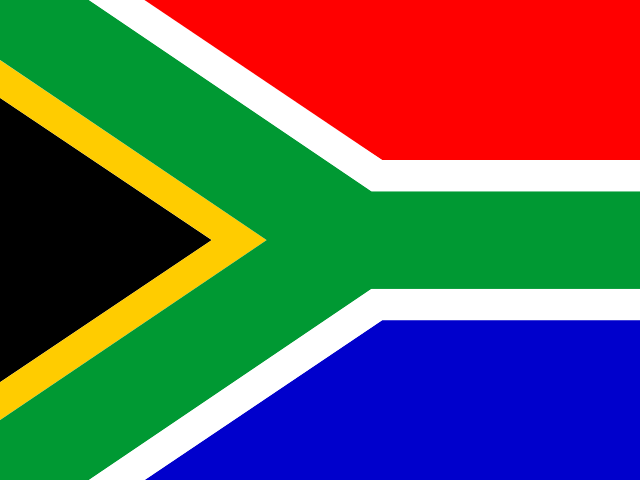
South Africa’s economy has posted its fastest growth in three years, yet underlying challenges suggest a rocky road ahead.
Behind the Headline
According to Moneyweb, South Africa’s GDP growth recently reached a peak not seen in three years, signaling a momentary rebound for the nation’s economy. The latest figures from Statistics South Africa highlight a significant uptick in economic activity, driven by key sectors such as manufacturing and mining. However, this growth spurt comes amidst broader concerns about sustainability.
The Congress of South African Trade Unions (COSATU) remains skeptical despite the positive data, questioning the long-term viability of this growth. Their concerns stem from structural issues within the economy, including high unemployment rates and persistent inequality.
South Africa Market Angle
The South African Reserve Bank (SARB) plays a crucial role in shaping the economic landscape, with its monetary policy decisions closely watched by investors. The recent GDP figures could influence SARB’s stance on interest rates, potentially impacting the rand and the Johannesburg Stock Exchange (JSE).
The rand has shown volatility in response to economic data, while the JSE could see increased activity as traders adjust their portfolios to leverage growth opportunities. Given the current global economic environment, the SARB’s decisions will be pivotal in maintaining market stability.
Contrary Angle
Despite the recent economic uptick, the Afreximbank has warned that South Africa might face a decade of sub-2% growth, with GDP expected to average just 1.9%. This forecast highlights the potential for prolonged economic stagnation, contradicting the current optimistic growth numbers.
Such projections cast doubt on the sustainability of the recent economic gains and underscore the need for comprehensive reforms to address deep-rooted issues within the economy.
Why Traders Should Care
Traders need to remain vigilant as South Africa’s economic dynamics evolve. The mixed signals from recent growth figures and long-term forecasts suggest a complex landscape for the rand. Fluctuations in the currency could present both risks and opportunities for forex traders, particularly in the USD/ZAR pair.
Moreover, the JSE’s performance may be influenced by both domestic economic policies and external factors such as global market trends. Traders should keep a close watch on SARB’s policy announcements and economic indicators to navigate this challenging environment effectively.
Conclusion
While South Africa’s GDP growth offers a glimmer of hope, the underlying challenges indicate that the path to economic stability is fraught with hurdles. As the nation grapples with these complexities, traders must stay informed and agile to capitalize on emerging opportunities in this evolving market.
- Check out our free forex signals
- Follow the top economic events on FX Leaders economic calendar
- Trade better, discover more Forex Trading Strategies
- Open a FREE Trading Account
- Read our latest reviews on: Avatrade, Exness, HFM and XM

Related Articles

Sidebar rates

Related Posts
 Save
Save