Dow Jones Hits Weekly Record as Bond Yields and Oil Prices Ease
Despite easing concerns, Brent crude still rose 1.5% on Friday to $104.11 per barrel, although it finished the week down nearly 5%.

Quick overview
- Easing pressure in the bond market and a decline in oil prices contributed to a rise in U.S. equities on Friday.
- The Dow Jones Industrial Average set a new weekly closing record, rising 0.58% to 50,579.70.
- Investor sentiment improved as diplomatic developments between the U.S. and Iran progressed, despite ongoing concerns about inflation.
- Consumer sentiment fell to a record low of 44.8 in May, with many respondents citing elevated prices as a negative impact on their finances.
Easing pressure in the bond market and a weekly decline in oil prices helped lift U.S. equities on Friday, while investors continued to monitor developments in the Middle East and signals from the Federal Reserve.
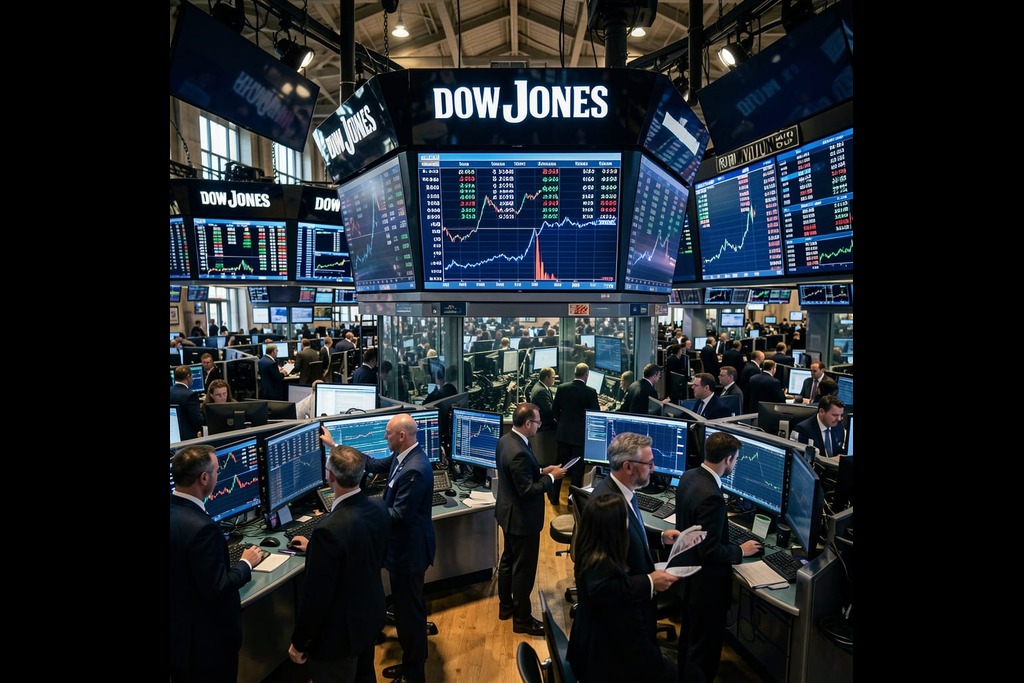
U.S. stocks advanced on May 22, capping a positive week as Treasury yields retreated and energy prices moderated. Markets navigated a volatile stretch shaped by diplomatic developments in the Middle East and earnings reports from major corporations, including NVIDIA (-2%) and Walmart (-0.7%).
The Dow Jones Industrial Average rose 0.58% to 50,579.70, setting a new weekly closing record. The S&P 500 gained 0.36% to 7,472.73, while the Nasdaq Composite added 0.19% to close at 26,343.97.
A Week Defined by Bond and Oil Volatility
U.S. equities began the week under pressure as a sharp selloff in global bond markets pushed benchmark yields to multi-year highs.
The yield on the 10-year U.S. Treasury climbed to its highest level in more than a year, while the 30-year Treasury yield reached levels not seen since 2007. The bond selloff reflected growing expectations that major central banks may need to raise interest rates further to contain inflationary pressures fueled by higher energy prices amid the conflict involving Iran.
At the same time, minutes from the Federal Reserve’s April meeting showed that most policymakers believe additional rate hikes could be necessary if inflationary pressures linked to the energy sector persist. Markets are now fully pricing in a 25-basis-point rate increase from the Fed before year-end.
Some analysts argue that monetary policy may already be leaning too aggressively toward guarding against labor-market weakness, even as inflation risks remain elevated.
Diplomatic Signals Improve Market Sentiment
Investor sentiment improved during the second half of the week as bond-market volatility eased and oil prices retreated from recent highs.
Diplomatic developments between the United States and Iran also supported risk assets. Iran’s foreign minister held talks with Pakistani officials, with Pakistan once again acting as a mediator between Washington and Tehran.
According to Iranian media reports and Reuters, negotiations are focused on narrowing differences surrounding proposed peace arrangements. U.S. Secretary of State Marco Rubio said there were “encouraging signs” of progress but cautioned against excessive optimism.
Despite easing concerns, Brent crude still rose 1.5% on Friday to $104.11 per barrel, although it finished the week down nearly 5%.
U.S. Consumer Sentiment Falls to Record Low
Another key market development was the release of the latest consumer sentiment survey from the University of Michigan.
The index fell to 44.8 in May from 49.8 in April, marking the lowest reading on record.
“Consumer sentiment declined for a third consecutive month as supply disruptions in the Strait of Hormuz continue to push gasoline prices higher,” said Joanne Hsu, director of the university’s Surveys of Consumers.
The survey also showed that 57% of respondents reported that elevated prices were negatively affecting their personal finances, up from 50% the previous month.
Meanwhile, one-year inflation expectations edged up to 4.8% in May from 4.7% in April, while long-term inflation expectations climbed to 3.9%, remaining well above levels typically considered consistent with price stability.
- Check out our free forex signals
- Follow the top economic events on FX Leaders economic calendar
- Trade better, discover more Forex Trading Strategies
- Open a FREE Trading Account
- Read our latest reviews on: Avatrade, Exness, HFM and XM

Related Articles
Sidebar rates

Related Posts
 Save
Save