Standard Bank Outage Can’t Stop the JSE: SBK Share Price March to R300 and Above
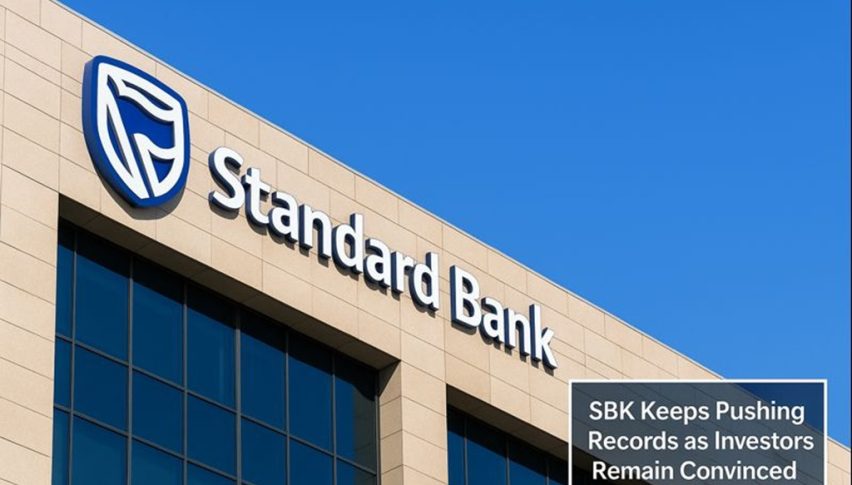
Standard Bank’s return to record share price levels has revived investor optimism, but operational disruptions, execution risk, and long...
Quick overview
- Standard Bank's share price has reached record levels, indicating renewed investor confidence despite underlying operational and strategic risks.
- The recent leadership transition and operational disruptions highlight potential execution risks that could impact future performance.
- While the bank's earnings consistency is commendable, it faces challenges in a maturing market with limited growth opportunities.
- Expansion into new markets and digital transformation efforts introduce both opportunities and vulnerabilities that investors may be underestimating.
Standard Bank’s return to record share price levels has revived investor optimism, but operational disruptions, execution risk, and long-term strategic pressures continue to cloud the outlook beneath the surface.
Record Share Price Returns, but Confidence Remains Fragile
Standard Bank Group (JSE: SBK) has climbed back to all-time highs, signaling renewed confidence from investors after a brief pullback earlier in the year. However, the rally comes at a time when unresolved operational and strategic risks remain firmly in place. While markets have largely brushed aside recent disruptions, the pace and enthusiasm of the rebound suggest that optimism may be running ahead of fundamentals.
The recovery has been aided by a more stable macroeconomic backdrop in South Africa and consistent earnings delivery, yet the speed at which concerns have been dismissed raises questions about how resilient confidence truly is if conditions deteriorate.
Technical Strength Persists, but Valuation Leaves Little Room for Error
After retreating in September, Standard Bank shares reversed higher and reached a new record of R283.4 on Monday. Technically, the trend remains intact, with the stock holding above its long-term moving averages. The monthly 20-period simple moving average has once again acted as support, continuing a pattern that has held since 2020.
SBKJ Monthly Daily – The 20 SMA Still Acting As Support

That said, strong technical structure does not eliminate downside risk. Years of higher highs and higher lows have pushed valuations toward levels that assume continued flawless execution. Any disappointment—whether from earnings, regulatory pressure, or operational missteps—could expose how little margin for error now exists.
SBKJ Chart Monthly – The 20 Is Also Acting As Support Here

Growing speculation about a move toward R300 reflects confidence, but also highlights how one-sided sentiment has become.
Leadership Transition Adds Uncertainty at a Critical Juncture
The approval of David Hodnett as CEO of Standard Bank South Africa marks a significant leadership shift at an important moment. While Hodnett brings deep experience in risk management and governance, transitions at this level inevitably introduce uncertainty. Execution risk increases when strategic priorities evolve, particularly as the group approaches the later stages of its SBG 2028 strategy.
With long-serving CEO Sim Tshabalala and CFO Arno Daehnke expected to conclude their leadership terms at the end of the current cycle, the bank faces a delicate balancing act. Maintaining operational continuity while preparing for leadership renewal is rarely seamless, and investors may be underestimating the challenges involved.
System Outage Exposes Operational Fragility
Recent confidence has also overlooked a notable operational disruption. Standard Bank experienced an outage that limited customer access to online and mobile banking platforms. The issue, linked to software provider Sage, resulted in delayed transactions and temporarily prevented new customers from opening accounts.
While the service disruption was resolved relatively quickly and had no immediate impact on the share price, it highlighted the vulnerability of the bank’s increasingly digital infrastructure. As institutions push aggressively toward technology-driven models, even short outages can erode trust, damage reputation, and raise concerns about system resilience.
Markets may have moved on, but the incident serves as a reminder that operational risk remains a persistent threat.
Earnings Consistency Masks a Maturing Growth Profile
Standard Bank’s earnings record remains solid, with average annual EPS growth of roughly 16% over the past three years. However, this consistency is increasingly being achieved in a maturing domestic market with limited organic growth opportunities.
Dividend stability and disciplined cost management have supported investor confidence, but future growth targets under the SBG 2028 framework—headline earnings growth of 8% to 12% and ROE of 18% to 22%—leave little room for macroeconomic setbacks. In a higher-rate, slower-growth environment, sustaining these metrics may prove more challenging than current valuations imply.
The reaffirmed dividend payout ratio of 45% to 60% also constrains capital flexibility should conditions worsen.
Large Transactions Bring Exposure Alongside Prestige
Standard Bank’s role in financing Vodacom’s R11.5 billion acquisition of a 30% stake in Maziv has been widely praised. As Africa’s largest fibre-infrastructure deal, it reinforces the bank’s credentials in complex transaction structuring.
Yet large-scale infrastructure deals also bring concentration risk and long-duration exposure. Regulatory approval took four years, underscoring the complexity involved. While the deal enhances the bank’s profile, it also ties capital to projects with long payback periods and sensitivity to regulatory and execution delays.
Success in structuring does not guarantee risk-free outcomes.
Expansion in Ethiopia Adds Opportunity—and Uncertainty
Standard Bank’s re-licensing in Ethiopia places it at the forefront of the country’s financial liberalization, but the move is not without risk. Ethiopia remains a market with evolving regulation, political sensitivity, and currency constraints.
Being first confers strategic advantage, but it also exposes the bank to policy shifts and execution challenges that are difficult to hedge. Expansion into frontier markets can enhance long-term growth, but it can also amplify volatility during periods of stress.
Digital Transformation Cuts Costs but Raises New Risks
The aggressive reduction of Standard Bank’s ATM network reflects the accelerating shift toward digital banking. While the move lowers costs and improves efficiency, it also increases reliance on technology platforms—magnifying the impact of outages, cyber threats, and system failures.
Efforts to expand digital payment infrastructure in underbanked areas are commendable, but they also require ongoing investment and robust security. The transition may improve margins over time, yet it introduces a different category of risk that markets often underestimate during strong equity rallies.
Global Ambitions Increase Strategic Complexity
Standard Bank’s integration with China’s Cross-Border Interbank Payment System (CIPS) enhances its global reach and reduces reliance on Western-dominated payment networks. However, deeper alignment with alternative global financial systems also exposes the bank to geopolitical and regulatory complexity.
As global trade becomes increasingly fragmented, navigating competing financial ecosystems could introduce unforeseen compliance and operational challenges.
Bottom Line: Strength on Display, Vulnerabilities Ignored
Standard Bank’s return to record highs reflects genuine strengths—earnings resilience, strategic reach, and leadership in African finance. But beneath the rally lies a growing list of risks: operational fragility, leadership transition, execution pressure, and exposure to complex markets.
For now, investors appear willing to overlook these concerns. Whether that confidence proves durable will depend on how the bank performs when conditions are less forgiving.
- Check out our free forex signals
- Follow the top economic events on FX Leaders economic calendar
- Trade better, discover more Forex Trading Strategies
- Open a FREE Trading Account
- Read our latest reviews on: Avatrade, Exness, HFM and XM

Related Articles



Sidebar rates

Related Posts
 Save
Save