Oil Surges 8.1%, Hits more Than One-Year High Amid Middle East War
South Korea is considering releasing crude from its strategic reserves to supply domestic industries, while India is exploring new routes.
Quick overview
- International oil prices surged up to 13% due to disruptions in the Strait of Hormuz following Iranian retaliatory attacks.
- Brent Crude futures reached $82.37 per barrel, the highest since January 2025, while West Texas Intermediate climbed to $75.33.
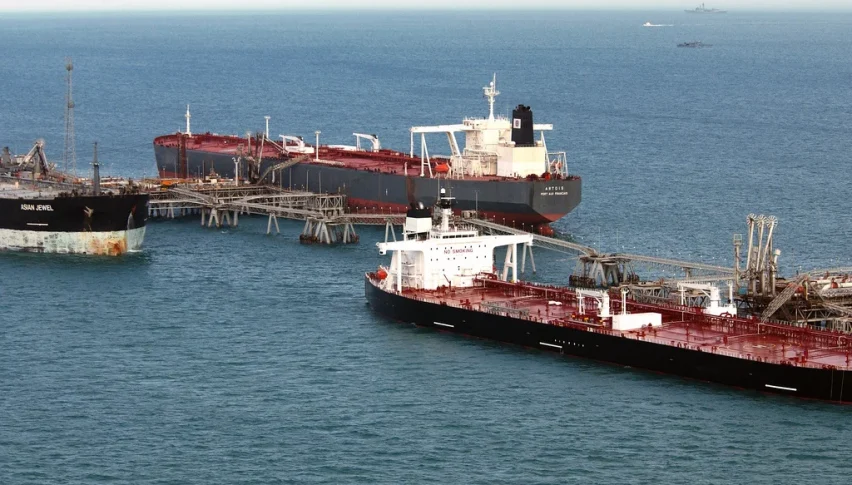
- The Strait of Hormuz, a critical oil shipping route, saw over 200 vessels anchored due to the conflict, with significant damage to oil tankers.
- Asian economies are activating contingency plans, including releasing strategic reserves and exploring alternative maritime routes.
International oil prices soared as much as 13% on Monday after maritime traffic through the strategic Strait of Hormuz was severely disrupted by Iranian retaliatory attacks following initial strikes by Israel and the United States that reportedly killed Iran’s Supreme Leader, Ali Khamenei.

In that context, Brent Crude futures jumped to $82.37 per barrel — their highest level since January 2025 — before trimming gains to close up 8.1% at $78.36.
Meanwhile, West Texas Intermediate (WTI) climbed to an intraday high of $75.33, marking a surge of more than 12% — its largest since June — before easing to settle at $71.99, up 7.4%.
Hormuz: the world’s energy chokepoint
The escalation followed sustained exchanges of attacks that damaged oil tankers and severely disrupted shipments through the Strait of Hormuz, the narrow waterway linking the Persian Gulf with the Arabian Sea between Iran and Oman.
Under normal conditions, roughly one-fifth of global oil demand flows through this corridor, including exports from Saudi Arabia, the United Arab Emirates, Iraq, Iran and Kuwait. The strait is also a key route for vessels carrying diesel, jet fuel and gasoline to major Asian markets such as China and India.
More than 200 vessels — including oil tankers and liquefied natural gas carriers — were reported anchored outside the strait, according to shipping data. Three tankers were damaged and one sailor was killed in Sunday’s attacks.
Markets acknowledge the severity of the conflict, though for now it remains a geopolitical crisis rather than a systemic one. However, a prolonged closure of the strategic passage could trigger supply shortages for key Asian importers, adding further upward pressure on prices.
Asia weighs reserves and alternative routes
Amid the risk of extended disruptions, several Asian economies have begun activating contingency plans. South Korea is considering releasing crude from its strategic reserves to supply domestic industries, while India is exploring alternative maritime routes.
Despite the initial spike, prices pared some gains during the Asian session. Analysts noted that markets had already priced in a geopolitical risk premium amid the growing likelihood of open conflict.
So far this year, Brent is up more than 19%, while WTI has gained around 17%.
- Check out our free forex signals
- Follow the top economic events on FX Leaders economic calendar
- Trade better, discover more Forex Trading Strategies
- Open a FREE Trading Account
- Read our latest reviews on: Avatrade, Exness, HFM and XM

Related Articles
Sidebar rates

