USOIL Surges 8%+ to $104–$105 as US-Iran Talks Collapse and Blockade Announced – $110 Next?
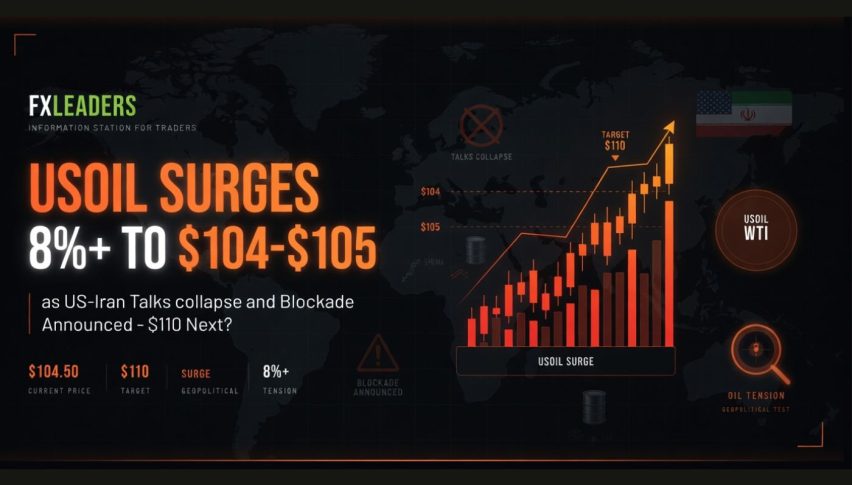
On April 13, 2026, WTI crude oil is trading between $104.20 and $104.90 per barrel, up about 8% in today’s session with highs near...
Quick overview
- WTI crude oil is trading between $104.20 and $104.90 per barrel, up about 8% due to stalled US-Iran peace talks.
- Concerns over global oil supply disruptions have increased following the US announcement to block ships to and from Iranian ports.
- The market is experiencing a significant 'war premium' as geopolitical tensions rise, impacting oil prices.
- Upcoming economic data and OPEC's monthly report will be crucial for future supply and demand forecasts.
On April 13, 2026, WTI crude oil is trading between $104.20 and $104.90 per barrel, up about 8% in today’s session with highs near $105.63. Brent crude is also up, gaining roughly 7% to about $102 per barrel.
Why Oil Is Surging Today
Over the weekend, US-Iran peace talks in Islamabad stalled or broke down. This setback has renewed worries about long-lasting disruptions to global oil supplies. The US also said it will start blocking ships to and from Iranian ports on Monday, adding to concerns about supply shocks.
The Strait of Hormuz, which handles about 20% of the world’s seaborne oil, is still mostly restricted, with only a few tankers moving through. There’s no guarantee that normal flows will resume soon, and analysts say it could take months for supply chains to get back to normal because of insurance, logistics, and other challenges.
This is a big change from earlier in the week, when hopes for a ceasefire had pushed prices down to the mid-$90s.
Recent Price Context
Earlier, oil prices dropped as tensions eased, but now a significant “war premium” is back. So far this year, WTI has swung wildly—jumping above $110 to $119 during intense conflict, then falling sharply, and now rebounding strongly. In 2026, the market has faced its biggest disruption ever, with more than 10% of global supply offline at times.
Key Drivers & Outlook
- Geopolitics (Dominant Factor): Geopolitics is the main driver right now. The failed talks and the US blockade have shifted market expectations toward tighter supply. If tensions rise again, prices could go even higher, but any diplomatic progress would probably limit further gains.
- Supply & Demand: On the supply and demand side, U.S. crude inventories are up, but the main focus is still on global shortages caused by the Hormuz disruptions. In Asia, demand has already dropped because of higher energy prices.
- Upcoming Catalysts: Looking ahead, OPEC’s monthly report is expected today and will be watched for new demand and supply forecasts. Other key data this week includes the US PPI on April 14, China’s first-quarter GDP on April 16, and possible comments from the Federal Reserve.
Technical Analysis
On the 4-hour chart, WTI is trying to recover after a sharp drop from $117.60. The sell-off brought prices down to the $91 to $97 demand zone, where buyers started to come back in.
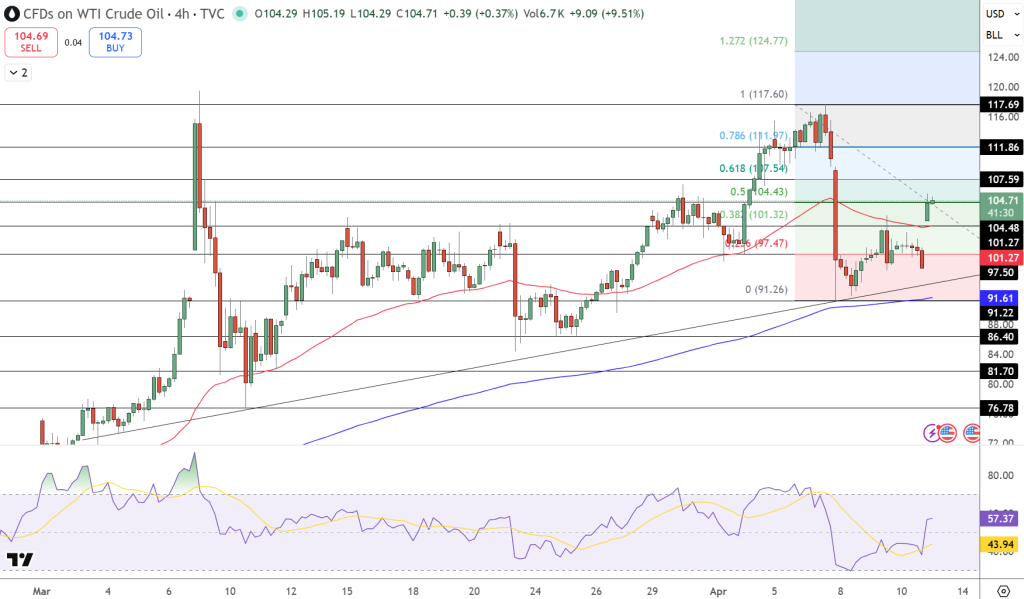
Now, the price is testing the $104 to $105 area, which matches the 0.5 Fibonacci level and serves as a key pivot near the short-term trendline. The 50 EMA is flattening around $101 to $102, and the 200 EMA near $91.60 offers stronger support.
The RSI has bounced back from oversold levels and is now around 55 to 57. This shows momentum is improving, but there isn’t a strong bullish breakout yet.
Key Levels:
- Resistance: $105 → $107.50
- Support: $101 → $97.50
Forecast: The outlook is neutral to bearish if prices stay below $105. If there’s a clear breakout above $107.50, momentum could turn bullish, with targets at $111.80 and possibly $117.60.
- Check out our free forex signals
- Follow the top economic events on FX Leaders economic calendar
- Trade better, discover more Forex Trading Strategies
- Open a FREE Trading Account
- Read our latest reviews on: Avatrade, Exness, HFM and XM

Related Articles
Sidebar rates

Related Posts
 Save
Save
