Micron Surges 9% Toward $500 as AI Memory Super-Cycle Defies Market Norms
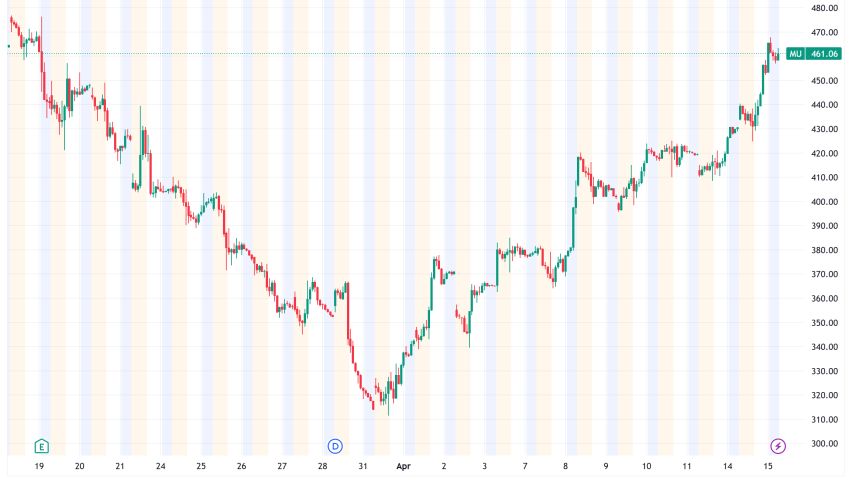
Micron Technology (NASDAQ: MU) had one of its best days in a long time on Tuesday, with shares rising more than 9% to close at $465.66.
Quick overview
- Micron Technology's stock surged over 9% to close at $465.66, nearing its 52-week high, and gained almost 20% over the week.
- Analysts believe the memory market is entering a structural upcycle driven by high demand for AI workloads, moving away from traditional boom-and-bust cycles.
- Micron's high-bandwidth memory capacity is sold out until 2027, with projections of a 40% sales increase by fiscal 2028, prompting bullish analyst ratings.
- Despite the optimism, some analysts express caution regarding Micron's capital expenditure needs and potential impacts on free cash flow.
Micron Technology (NASDAQ: MU) had one of its best days in a long time on Tuesday, with shares rising more than 9% to close at $465.66. This brought the chipmaker close to its 52-week high of $471.34 and capped off an amazing week in which it gained almost 20%.
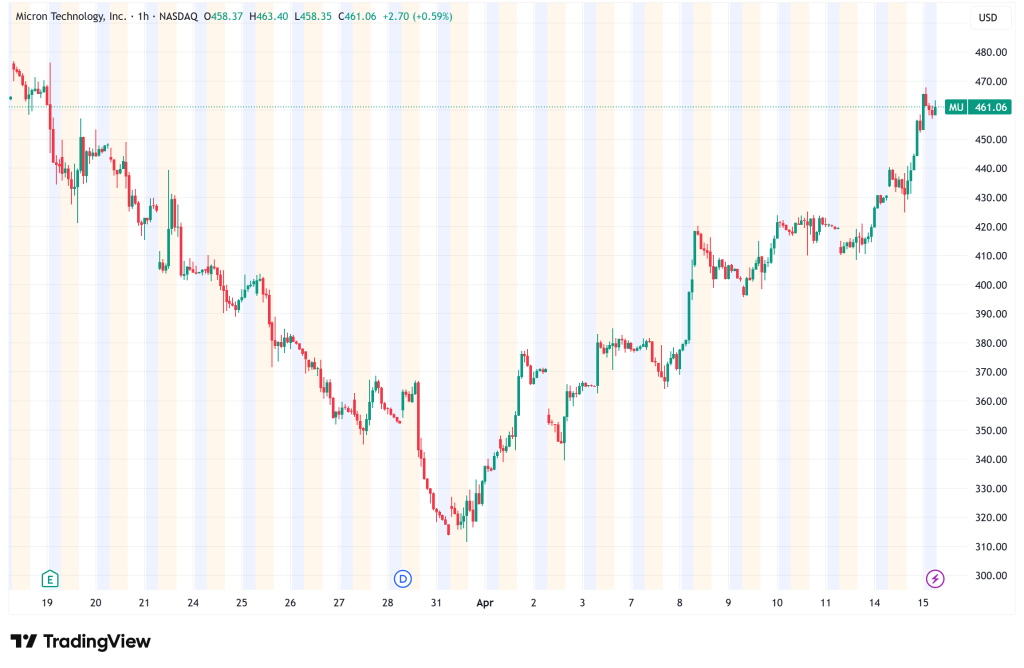
The rise is part of a larger trend of investors moving back into growth firms that are exposed to AI as bond yields fell after inflation data came in lower than expected and oil prices fell. But for Micron, the enthusiasm goes beyond general market trends. More and more analysts think that the memory market is entering a structural upcycle that has never happened before.
Micron’s Rally: A Different Kind of Cycle
Wall Street analysts say that the memory business may be moving away from its traditional boom-and-bust cycle, where times of tight supply give way to painful gluts. Artificial intelligence is to blame, or at least the cause.
AI workloads need a lot of high-performance memory, and that need doesn’t seem to be going away anytime soon. At the same time, adding new manufacturing capacity is still costly and slow, which keeps supply under check even as prices rise.
Timothy Arcuri, an analyst at UBS who is one of the best analysts tracked by TipRanks, stated it simply: “a super-cycle that will likely defy traditional analytical norms.” His talks with hyperscalers and original equipment manufacturers show that there is a high need for long-term supply agreements that include volume commitments, prepayments, and fixed pricing bands. This suggests that customers are putting supply security ahead of short-term cost benefits.
Capacity Sold Out Through 2027
Many people didn’t realize how tight the supply picture really is. Micron’s high-bandwidth memory (HBM) capacity is now sold out until 2027, which is longer than the company’s own previous projection of 2026. Research firm Lynx Equity boosted its price target on Micron to a Street-high $825. DDR5 and LPDDR5 capacity are both limited in the same ways, and Micron is said to be in talks to give important clients 2028 supplies.
Lynx Equity thinks that Micron’s sales might go up by 40% in fiscal 2028, which is much more than what most people think will happen, which is that sales would stay the same or go down. The company advised people to acquire a lot of stock before the next earnings season.
Micron (MU) Stock Outlook: Bullish Analyst Consensus
The larger group of analysts is fully behind the bull case. There are 25 Buy ratings and only 3 Holds for Micron, therefore the opinion is that it is a Strong Buy. The average price objective from analysts is currently $543.20, which means there is about a 19% upside from where we are today.
Arcuri at UBS boosted his own target from $510 to $535 and expects earnings per share of around $135 for calendar 2027, which is far higher than the Street estimate of about $103. He also thinks that Micron’s tangible book value will be about $180 per share by this time next year, and the company will have more than $100 billion in cash on its balance sheet.
KeyBanc kept its Overweight rating and $600 target, saying that Micron’s long-term supply agreements with hyperscale customers have gotten better. These agreements include pricing floors and upfront payments, which give Micron more visibility into its revenues across the cycle.
A Note of Caution
Not everyone is happy. Erste Group cut Micron’s rating to Hold because they were worried that the company’s need for a lot of expenditure to grow its capacity could hurt its free cash flow. BTIG also said that the creation of a new ETF focused on DRAM could be a hint that the memory trade is nearing its end after a big run.
On April 10, Micron’s Executive Vice President and Chief Business Officer Sumit Sadana sold 24,000 shares for $10.1 million, or about $421 per. This move, although not necessarily pessimistic on its own, is worth mentioning in light of the overall excitement.
What’s Next for Micron Stock?
The market’s decision is apparent for now. The case for MU is still strong since AI infrastructure spending isn’t slowing down, memory supply is still tight, and Micron has signed long-term client agreements that level out the cycle’s usual ups and downs. The next earnings report will show if the stock can keep going toward the higher analyst targets. This will depend on if the super-cycle thesis is still true.
- Check out our free forex signals
- Follow the top economic events on FX Leaders economic calendar
- Trade better, discover more Forex Trading Strategies
- Open a FREE Trading Account
- Read our latest reviews on: Avatrade, Exness, HFM and XM

Related Articles



Sidebar rates

Related Posts
 Save
Save