U.S. Congress Pushes Bill to Prevent Bailouts Like Argentina’s
Some members of Congress opposed the deal, arguing it could represent an attempt to influence Argentina’s democratic process.

Quick overview
- The report criticizes Donald Trump's use of the Treasury's Exchange Stabilization Fund to support Javier Milei's government, suggesting it was ideologically driven and aimed at influencing Argentina's elections.
- It calls for congressional approval for future ESF actions to prevent discretionary use and potential electoral interference.
- The CRS report highlights the significant size of the 2025 Argentina bailout, marking it as one of the largest foreign operations in ESF history.
- Concerns are raised about the limited capacity of the ESF, which could hinder its effectiveness in stabilizing the dollar amidst large-scale interventions.
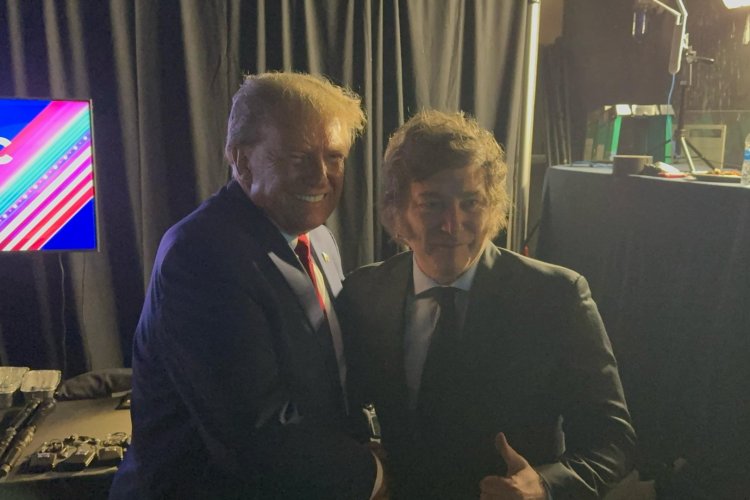
The report criticized the use of the Treasury’s Exchange Stabilization Fund (ESF) by Donald Trump in support of Javier Milei’s government, arguing it was driven by “ideological reasons” and aimed at “improperly influencing” Argentina’s elections.
It warns that, going forward, such actions should require congressional approval to avoid discretionary use.
Late Friday, the U.S. Congressional Research Service (CRS), a nonpartisan body within Congress, issued a restricted-circulation report titled “Treasury’s Exchange Stabilization Fund.” In it, analysts Marc Labonte and Rebecca Nelson outline why the 2025 bailout of Argentina—carried out under President Donald Trump—should be regulated by law to prevent its use for political purposes or electoral interference abroad. At the core of the criticism is the alleged misuse of U.S. taxpayer funds.
The Treasury’s Exchange Stabilization Fund has historically allowed for rapid deployment with minimal restrictions, enabling interventions without prior congressional approval. However, the Argentina case—the first of its kind since 2002—sparked significant controversy. According to the report, lawmakers are now considering whether to impose stricter oversight and require legislative authorization for future operations.
A Rare and Controversial Intervention
According to the CRS report, the ESF was created in 1934 primarily to support the value of the U.S. dollar. While it has been used in various contexts—including domestic interventions during the 2020 pandemic—its use in Argentina marked one of the largest foreign operations in its history.
“The largest ESF credit operation with a foreign government, adjusted for inflation, was with Mexico during the 1995 peso crisis. The second largest was a $20 billion agreement with Argentina in 2025,” the analysts noted. The deal involved the U.S. Treasury committing to purchase Argentine pesos in exchange for U.S. dollars.
Argentina drew $2.5 billion from the swap in October 2025 and repaid it by December of the same year. However, as of the February 2026 ESF report, the agreement remains in place.
Some members of Congress opposed the deal, arguing it could represent an attempt to influence Argentina’s democratic process. The report highlights these concerns as a key driver behind the push for new legislative safeguards.
Concerns Over Fund Capacity
The report also raises concerns about the limited size of the ESF and the implications of large-scale interventions. As of February 2026, the fund held approximately $23.5 billion in U.S. Treasury securities and $4.3 billion in foreign currencies and assets.
Given its finite size, a single large operation—such as the Argentina agreement—can tie up a substantial portion of its liquid resources. Moreover, the ESF remains relatively small compared to the scale of global foreign exchange markets, potentially limiting its effectiveness in fulfilling its original mandate of stabilizing the dollar.
The findings add momentum to ongoing discussions in Congress over whether to formalize stricter rules governing the use of the ESF, particularly in foreign interventions with potential political implications.
- Check out our free forex signals
- Follow the top economic events on FX Leaders economic calendar
- Trade better, discover more Forex Trading Strategies
- Open a FREE Trading Account
- Read our latest reviews on: Avatrade, Exness, HFM and XM

Related Articles
Sidebar rates

Related Posts
 Save
Save