SA Economy Surges 3%, Faces Decade of Sub-2% Growth Risk
South Africa posts a 3% economic surge, but faces a daunting decade with GDP growth predicted to average below 2%.
Quick overview
- South Africa's economy has achieved a 3% GDP growth, the fastest in three years, driven by manufacturing and mining sectors.
- Despite this growth, concerns about wealth disparity and job creation persist, as highlighted by the Congress of South African Trade Unions (COSATU).
- Afreximbank warns of a potential decade of sub-2% growth, indicating that the current surge may not be sustainable due to structural issues.
- Traders should be cautious, as the rand's volatility and the South African Reserve Bank's monetary policy will significantly impact market dynamics.
Live USD/ZAR Chart

South Africa’s economy has sprinted to its fastest growth in three years, posting a 3% expansion. Yet, looming concerns about a prolonged sluggish period cast a shadow over this achievement.
Behind the Headline
According to Moneyweb, South Africa’s economy has experienced a remarkable upswing, marking a 3% GDP growth in recent months. This is the fastest pace seen since 2023, driven by a surge in key sectors such as manufacturing and mining. However, not all stakeholders are celebrating. The Congress of South African Trade Unions (COSATU) has expressed disappointment, highlighting the disparity in wealth distribution and job creation as critical issues still plaguing the nation.
South Africa Market Angle
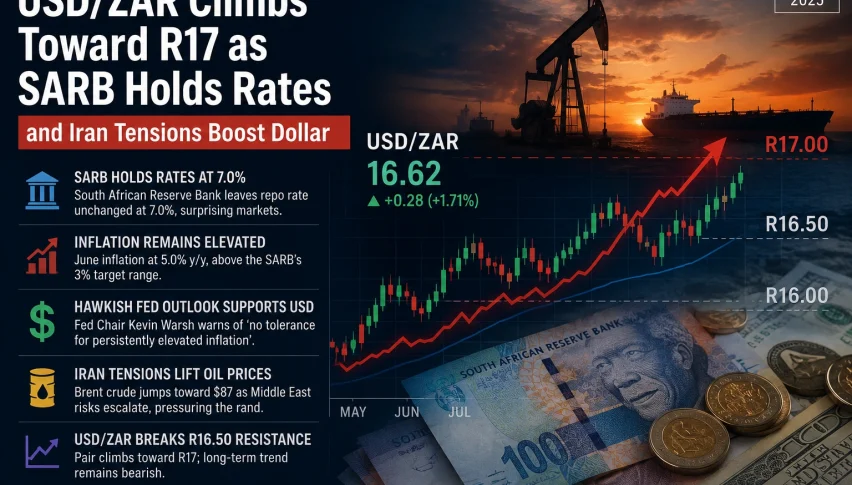
The South African Reserve Bank (SARB) faces a complex landscape as it navigates monetary policy amidst this growth spurt. The rand remains volatile, reflecting the global risk sentiment and internal economic challenges. The Johannesburg Stock Exchange (JSE) has responded positively to the growth data, yet traders remain cautious given the mixed signals from international markets and domestic policy implications. The SARB’s stance on interest rates will be crucial in maintaining the balance between fostering growth and controlling inflation.
Contrary Angle
Despite the optimistic GDP figures, Afreximbank warns that South Africa could be staring down a decade of sub-2% growth, with GDP projected to average only 1.9%. This forecast suggests that the current growth surge might be an anomaly rather than a trend, exacerbated by structural issues such as high unemployment and persistent power supply challenges. As reported by businessreport.co.za, these underlying factors could significantly undermine long-term economic prospects.
Why Traders Should Care
For traders, the current economic climate in South Africa presents both opportunities and risks. The rand’s fluctuating value against major currencies such as the US dollar provides trading opportunities, particularly for those adept at navigating volatility. Additionally, the JSE’s reaction to economic data points to potential investment avenues, although traders should remain vigilant for any policy shifts by the SARB that could influence market dynamics. Understanding these elements is crucial for strategic positioning in the forex and equities markets.
Conclusion
While South Africa’s recent GDP growth is a positive sign, the potential for a subdued economic future cannot be ignored. Traders must weigh the immediate opportunities against the longer-term risks, staying informed on both domestic policy developments and broader global economic trends. The interplay between growth and stability will define the trading landscape in the coming years.
- Check out our free forex signals
- Follow the top economic events on FX Leaders economic calendar
- Trade better, discover more Forex Trading Strategies
- Open a FREE Trading Account
- Read our latest reviews on: Avatrade, Exness, HFM and XM

Related Articles
Sidebar rates

Related Posts
 Save
Save