Micron Faces (MU) Bloodbath: Sector Rotation and Samsung Toward Major Support at $425
Some analysts have cooled their near-term excitement due to peak multiples, even though Micron's fundamentals remain robust.
Quick overview
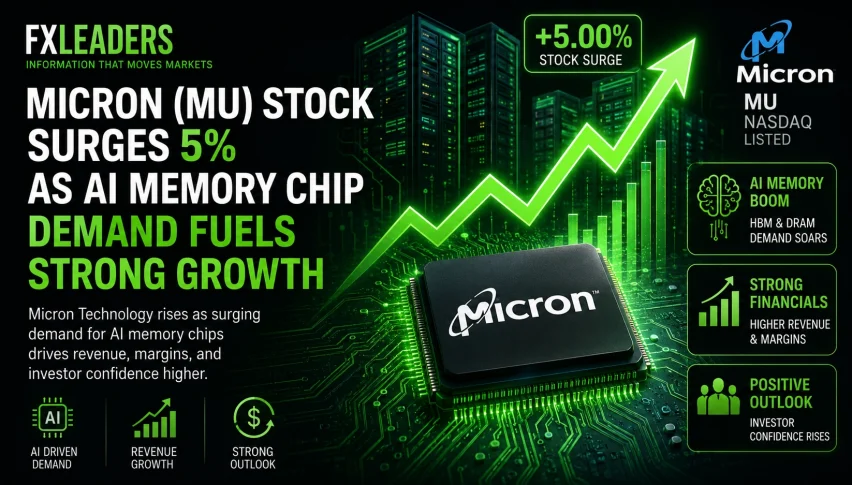
- Analysts have tempered their enthusiasm for Micron due to peak multiples, despite strong fundamentals.
- Citi has lowered its price target for Micron from $510 to $425 while maintaining a 'Buy' rating, citing potential multiple compression.
- The recent sell-off in memory chipmakers is attributed to concerns over Alphabet's TurboQuant AI memory compression algorithm, which may reduce demand for Micron's products.
- Despite reporting record earnings, Micron's stock saw a significant drop as investors took profits after a prior surge.
Some analysts have cooled their near-term excitement due to peak multiples, even though Micron’s fundamentals remain robust.

Citi trimmed its price target from $510 down to $425 (while keeping a “Buy” rating), pointing out that while earnings beats will likely continue over the coming quarters, they may be offset by multiple compression as the market prices in the durability and long-term capital expenditure costs of the AI cycle.
The primary catalyst for the recent sell-off across memory chipmakers wasn’t weak earnings, but rather an architectural anxiety. Alphabet rolled out TurboQuant, a highly advanced AI memory compression algorithm capable of radically optimizing how AI models run.
The Fear: Investors worried that by vastly reducing the amount of physical memory required to run large AI workloads, TurboQuant would spark widespread “demand destruction” for Micron’s high-bandwidth memory (HBM).
Top Wall Street firms, including Morgan Stanley and Citi, have pushed back on this panic. They argue that TurboQuant is about unlocking more capabilities rather than cutting orders, maintaining that high-bandwidth memory remains the fundamental bottleneck in the AI hardware buildout.
Micron actually reported historic fiscal second-quarter earnings, showing a staggering 81% gross margin and pulling in $23.86 billion in revenue (nearly triple from the previous year). However, memory has historically been one of the most cyclical industries in tech. Because the stock had experienced an explosive run-up before the announcement, investors aggressively used the stellar report as an opportunity to lock in profits, triggering a steep 30% drop from its post-earnings peak.
- Check out our free forex signals
- Follow the top economic events on FX Leaders economic calendar
- Trade better, discover more Forex Trading Strategies
- Open a FREE Trading Account
- Read our latest reviews on: Avatrade, Exness, HFM and XM

Related Articles


Sidebar rates

Related Posts
 Save
Save