Microsoft Remains a Top Pick — Street Sees $561–$570 Target Through 2027
Quick overview
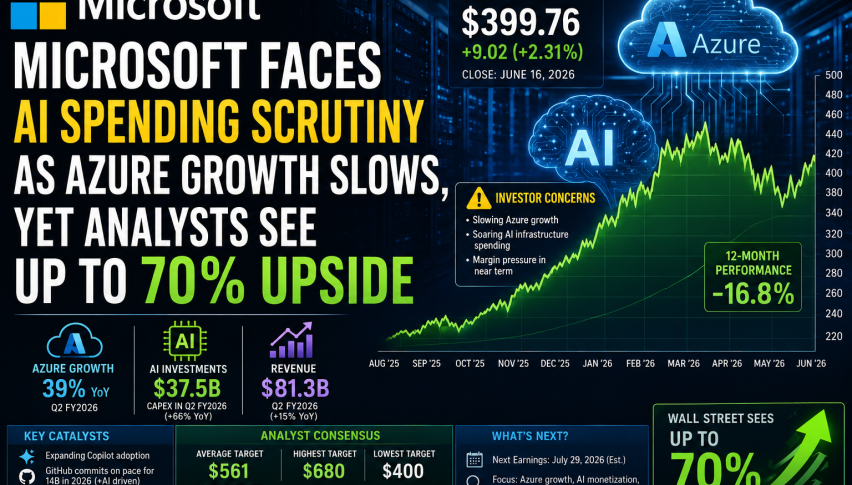
- Microsoft's stock experienced a significant 29% decline in early 2026 but has since recovered to around $390 to $398 following a strong fiscal Q3 earnings report.
- Analysts project a bullish outlook for Microsoft, with a 12-month price target ranging from $561 to $570, indicating a potential upside of 42% to 45%.
- The company reported an 18% year-over-year revenue increase to $82.9 billion, driven by a 40% growth in Azure and a 123% rise in AI business revenue.
- Despite heavy capital expenditures and supply constraints, Microsoft maintains a robust operating margin of 46% and has extended its partnership with OpenAI through 2032.
Microsoft ($MSFT$) has had a turbulent ride in 2026. , The stock faced a sharp 29% pullback after hitting an intraday high of $484.45 in late January, bottoming out near $341 in early April. This drop was fueled by macro market turbulence and investor anxiety over the company’s staggering AI capital expenditures ($CapEx$).

However, following a stellar fiscal Q3 earnings report, the stock has been recovering and currently trades near $390 to $398.
Analysts maintain a strong bullish outlook for the remainder of 2026 and heading into 2027: Average 12-Month Price Target: $561 to $570 (implying a 42% to 45% upside from current levels). Price Target Range: Targets stretch from a conservative $450 (Benchmark) to an aggressive high of $680 (Tigress Financial).
In its fiscal Q3 report, Microsoft posted revenue of $82.9 billion (up 18% year-over-year). Microsoft Cloud revenue surpassed $54 billion, with Azure expanding by a massive 40% year-over-year.
Unlike the speculative AI boom of earlier years, Microsoft is successfully proving AI monetization. Its AI business reached an annual revenue run rate of $37 billion (up 123% year-over-year). Microsoft Copilot has passed 20 million paid seats, showing massive enterprise adoption.
Microsoft managed to maintain a robust 46% operating margin despite pouring billions into data centers, indicating tight cost controls elsewhere in the business.
Microsoft has over $627 billion in remaining performance obligations (up 99% year-over-year), providing incredible long-term revenue visibility.
Microsoft is expected to spend roughly $190 billion on capital expenditures in 2026 to build out data centers. Wall Street is fiercely debating the near-term return on investment ($ROI$) for this hardware, causing several firms (like Oppenheimer) to trim their price targets to reflect near-term margin pressure.
Microsoft noted that demand for AI computing actually outstrips its current capacity. Supply constraints are expected to persist through the rest of 2026, meaning Microsoft is leaving some cloud revenue on the table simply because it doesn’t have enough chips/servers online yet.
In late April, Microsoft extended its partnership with OpenAI through 2032 but shifted to a non-exclusive licensing agreement. While this secures the relationship long-term, it eliminates Microsoft’s exclusivity over OpenAI’s future models.
- Check out our free forex signals
- Follow the top economic events on FX Leaders economic calendar
- Trade better, discover more Forex Trading Strategies
- Open a FREE Trading Account
- Read our latest reviews on: Avatrade, Exness, HFM and XM

Related Articles
Sidebar rates

Related Posts
 Save
Save