Crypto Guide: What Is Bitcoin Currency?

Bitcoin is a decentralized digital currency that lets people send and receive value online without a bank, payment processor, or central authority. It runs on a public blockchain, uses cryptography to verify transactions, and has a maximum supply of 21 million BTC.
Bitcoin was introduced in 2008 by Satoshi Nakamoto as a peer-to-peer electronic cash system designed to solve the double-spending problem without relying on trusted third parties.
What Is Bitcoin?
Bitcoin is the first widely adopted cryptocurrency. It allows users to transfer value directly to each other over the internet without using a bank or payment company.
Unlike traditional currencies such as the US dollar, euro, pound, or rand, Bitcoin is not issued by a government. Instead, it is maintained by a decentralized network of computers called nodes and miners.
Bitcoin can be used as:
- A digital payment method
- A speculative trading asset
- A long-term store-of-value asset
- A way to transfer money globally
- A hedge against currency debasement, depending on market conditions
Bitcoin is not risk-free. Its price can rise or fall sharply, and users can permanently lose funds if they lose access to their wallet.
How Does Bitcoin Work?
Bitcoin works through a public blockchain. A blockchain is a shared digital ledger that records transactions in blocks. Each block is linked to the previous one, creating a permanent transaction history.
Key Takeaways
- Bitcoin is digital money, not physical cash.
- BTC is the ticker symbol for Bitcoin.
- Bitcoin transactions are recorded on a public blockchain.
- No central bank, company, or government controls Bitcoin.
- Bitcoin’s supply is capped at 21 million coins.
- New Bitcoin is issued through mining.
- Bitcoin is volatile and can lose value quickly.
- Users must protect their private keys and wallets.
What Is Bitcoin Currency overview
- Step-by-step Bitcoin transaction process
- Why Does Bitcoin Have Value?
- Bitcoin vs Traditional Currency
- What Is Bitcoin Mining?
- What Is a Bitcoin Wallet?
- How Can You Buy Bitcoin?
- Bitcoin Wallet Safety for Beginners
- Is Bitcoin Legal?
- Bitcoin Key Facts
- Main Benefits of Bitcoin
- Main Risks of Bitcoin
- Is Bitcoin a Good Investment?
- Bitcoin for Trading
- Pros and Cons
- In Conclusion
Step-by-step Bitcoin transaction process
- A user sends BTC from a Bitcoin wallet.
- The transaction is broadcast to the Bitcoin network.
- Nodes check whether the transaction follows Bitcoin’s rules.
- Miners group valid transactions into a new block.
- The block is added to the blockchain.
- The receiver sees the transaction as confirmed.
This system helps prevent double spending, which means using the same digital money more than once. The original Bitcoin white paper describes this peer-to-peer system as a way to timestamp transactions through proof-of-work.
| Feature | Bitcoin | Traditional Currency |
| Issuer | Decentralized network | Central bank/government |
| Supply | Fixed maximum of 21 million BTC | Can be expanded |
| Form | Digital only | Digital and physical |
| Settlement | Blockchain-based | Banks/payment networks |
| Availability | 24/7 | Depends on banking rails |
| Reversibility | Usually irreversible | Often reversible |
| Volatility | High | Usually lower |
| Custody | Self-custody or exchange | Bank/account provider |
Why Does Bitcoin Have Value?

Bitcoin has value because people are willing to buy, hold, trade, and accept it. Its value is mainly supported by scarcity, network adoption, security, liquidity, and market demand.
Bitcoin’s supply is limited by protocol rules. The total supply is capped at 21 million BTC, and the mining reward decreases over time.
However, scarcity alone does not guarantee price growth. Bitcoin’s price depends on demand, regulation, liquidity, macroeconomic conditions, investor sentiment, and market cycles.
Bitcoin vs Traditional Currency
| Feature | Bitcoin | Traditional Currency |
| Issuer | No central issuer; maintained by a decentralized network | Issued by central banks and governments |
| Form | Fully digital | Physical cash and digital bank balances |
| Supply | Capped at 21 million BTC | Supply can be increased by central banks |
| Control | Not controlled by one institution | Controlled through monetary policy |
| Transactions | Sent peer-to-peer on the Bitcoin blockchain | Processed through banks, card networks, or payment providers |
| Availability | Operates 24/7 globally | Often limited by banking hours, regions, and intermediaries |
| Settlement Speed | Usually settles within minutes, depending on network fees | Can be instant locally, but cross-border payments may take days |
| Fees | Vary based on network demand | Vary by bank, card provider, payment app, or remittance service |
| Privacy | Pseudonymous; transactions are public on-chain | Account activity is usually private but visible to banks/regulators |
| Reversibility | Generally irreversible once confirmed | Payments may be reversed, disputed, or charged back |
| Inflation Risk | Lower supply inflation due to fixed cap | Inflation risk depends on currency supply and economic policy |
| Main Risks | Volatility, wallet loss, scams, regulatory uncertainty | Inflation, bank limits, account freezes, currency devaluation |
| Best Use Case | Digital store of value, borderless payments, crypto trading | Everyday spending, salaries, taxes, regulated commerce |
What Is Bitcoin Mining?
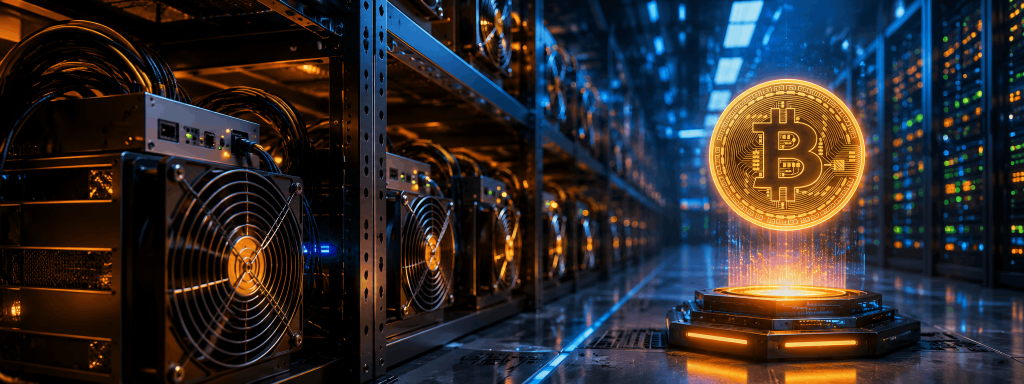
Bitcoin mining is the process that adds new blocks to the Bitcoin blockchain. Miners use computing power to solve cryptographic puzzles. The winning miner earns newly issued BTC plus transaction fees.
Mining has two main purposes:
- It secures the Bitcoin network.
- It releases new Bitcoin into circulation.
Bitcoin’s block reward halves roughly every 210,000 blocks. Since the April 2024 halving, the block subsidy has been 3.125 BTC per block. More than 95% of all Bitcoin has already been mined, with the final coins expected around 2140.
What Is a Bitcoin Wallet?
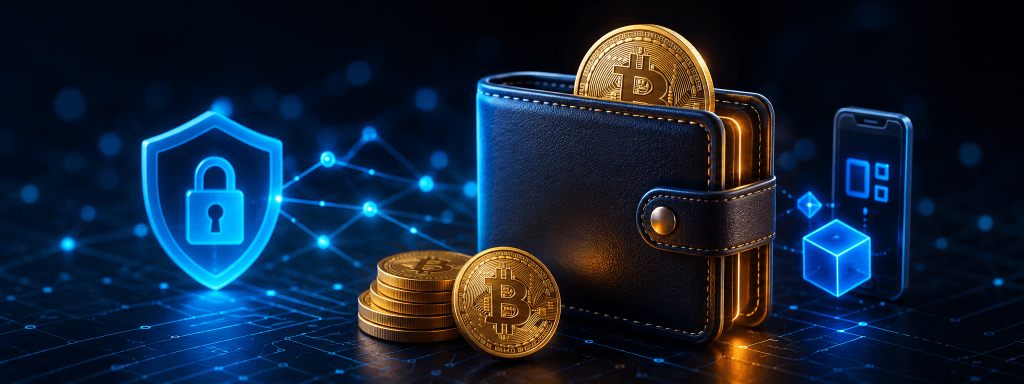
A Bitcoin wallet is software or hardware that stores the private keys needed to access BTC. The wallet does not physically “hold” Bitcoin. Bitcoin remains recorded on the blockchain; the wallet controls access to it.
| Wallet Type | Best For | Main Risk |
| Hot wallet | Frequent transactions | Online hacks |
| Mobile wallet | Everyday use | Phone loss or malware |
| Desktop wallet | Personal control | Device compromise |
| Hardware wallet | Long-term storage | Losing recovery phrase |
| Exchange wallet | Convenience | Counterparty risk |
How Can You Buy Bitcoin?
Common ways to buy Bitcoin include:
- Cryptocurrency exchanges
- Bitcoin brokers
- Peer-to-peer marketplaces
- Bitcoin ATMs
- Payment apps that support crypto
Beginners should use regulated platforms where possible, enable two-factor authentication, and avoid storing large balances on exchanges.
Bitcoin Wallet Safety for Beginners
Choosing a secure Bitcoin wallet is one of the most important steps in protecting your cryptocurrency. Unlike a bank account, there is usually no customer service or password reset if you lose access to your wallet. That’s why understanding private keys, recovery phrases, and the risks of keeping Bitcoin on an exchange is essential before you buy or store BTC.
What Is a Private Key?
A private key is a unique, secret code that gives you complete control over your Bitcoin. Think of it as the digital equivalent of the key to a safe—whoever has the private key can access and spend the Bitcoin stored in that wallet.
Never share your private key with anyone. Legitimate wallet providers, exchanges, and support teams will never ask for it.
Quick Tip: If someone has your private key, they have your Bitcoin.
What Is a Recovery Phrase?
When you create a Bitcoin wallet, you’ll receive a recovery phrase (also called a seed phrase). This is typically a list of 12 or 24 random words that acts as a backup for your wallet.
If your phone, computer, or hardware wallet is lost, stolen, or damaged, you can use this phrase to restore access to your Bitcoin.
Best practices:
- Write your recovery phrase down on paper.
- Store it in a secure, offline location.
- Consider keeping a second backup in another safe place.
- Never save it in cloud storage or send it via email or messaging apps.
Important: Anyone with your recovery phrase can restore your wallet and take your Bitcoin.
Is It Safe to Leave Bitcoin on an Exchange?
Many beginners buy Bitcoin through cryptocurrency exchanges because they’re convenient and easy to use. However, leaving your BTC on an exchange means the exchange controls the private keys—not you.
While reputable exchanges invest heavily in security, they can still face hacking attempts, technical failures, or regulatory issues that may temporarily restrict access to your funds.
For long-term storage, many experienced investors move their Bitcoin to a non-custodial wallet, where they control the private keys themselves.
Best Practices for Keeping Bitcoin Safe
Follow these simple security tips to reduce the risk of losing your Bitcoin:
- Use a trusted wallet from a reputable provider.
- Enable two-factor authentication (2FA) on all crypto accounts.
- Keep your private key and recovery phrase offline.
- Never share your recovery phrase with anyone.
- Double-check wallet addresses before sending Bitcoin.
- Keep your wallet software updated to the latest version.
- Be cautious of phishing emails, fake apps, and scam websites.
Is Bitcoin Legal?

Bitcoin’s legal status depends on the country. In many jurisdictions, owning or trading Bitcoin is legal, but regulation varies. Some countries treat Bitcoin as property, some as a virtual asset, and some restrict its use.
Always check local tax, reporting, exchange, and financial regulations before buying or trading Bitcoin.
Bitcoin Key Facts
Bitcoin is the first decentralized digital currency. It uses blockchain technology and proof-of-work consensus to let users send and receive BTC without a bank or central authority.
| Fact | Bitcoin Detail |
| Ticker | BTC |
| Creator | Satoshi Nakamoto |
| Launch Year | 2009 |
| Maximum Supply | 21 million BTC |
| Consensus Mechanism | Proof of Work |
| Network Type | Decentralized peer-to-peer blockchain |
| Main Use | Store of value and digital payments |
Main Benefits of Bitcoin

- Global transfers without traditional banking intermediaries
- Fixed supply
- Public and transparent ledger
- 24/7 market access
- Self-custody option
- Strong network security
- High liquidity compared with most cryptocurrencies
Main Risks of Bitcoin

- High price volatility
- Regulatory uncertainty
- Scam and phishing risk
- Irreversible transactions
- Wallet loss risk
- Exchange failure risk
- Tax and reporting obligations
- No guaranteed return
Is Bitcoin a Good Investment?

Bitcoin may suit investors who understand high-risk assets, can tolerate volatility, and use proper position sizing. It may not suit people who need stable capital, guaranteed income, or low-risk savings.
Bitcoin should not be treated as a guaranteed investment. Its past performance does not ensure future returns.
Bitcoin for Trading

Bitcoin is actively traded because it has deep liquidity, strong market attention, and frequent price movement. Traders often use technical analysis, market sentiment, macro news, ETF flows, and support/resistance levels to assess BTC price action.
Risk management is essential. Traders should use stop-losses, avoid excessive leverage, and never trade with funds they cannot afford to lose.
Pros and Cons
| ✓ Pros | ✕ Cons |
| Decentralized | Price volatility |
| Limited supply | Regulatory changes |
| Global access | Irreversible payments |
| Fast cross-border transfers | Scam risk |
| Available 24/7 | Wallet security risks |
| Transparent blockchain | Technical learning curve |
| Self-custody option | Network fees |
In Conclusion
In terms of intrinsic value and other aspects, bitcoin is completely different from traditional assets like fiat currencies, stocks, and commodities. Nevertheless, bitcoin has outperformed all of these asset classes by far and may continue to do so for quite a while.
Bitcoin’s extreme volatility and persistent trending behavior make it a grand champion in the trading arena for those who want explosive gains.
Traders who want to engage in the phenomenal Bitcoin market are invited to use FXLeaders’ profitable Bitcoin signals. Those who don’t have access to a reliable Bitcoin broker can choose one from this list of cryptocurrency brokers.
You might also like:
Best Brokers with Segregated Accounts
Best Forex Brokers with Trading APIs
Frequently Asked Questions
What is Bitcoin in simple terms?
Bitcoin is digital money that can be sent online without a bank or central authority. It runs on a public blockchain, where transactions are verified by a decentralized network.
Is Bitcoin real money?
Yes, Bitcoin can function as money because people can send, receive, hold, and trade it. However, it is not legal tender in most countries and its price is highly volatile.
Who controls Bitcoin?
No single person, company, bank, or government controls Bitcoin. It is maintained by open-source software, miners, nodes, and network consensus.
Why does Bitcoin have value?
Bitcoin has value because people trust, use, trade, and hold it. Its limited supply, global accessibility, liquidity, and network security all contribute to demand.
Is Bitcoin safe for beginners?
Bitcoin can be safe to use if beginners understand wallets, private keys, scams, and exchange risks. Reddit beginner discussions often focus heavily on wallet safety and avoiding scams.
Can I lose my Bitcoin?
Yes. If you lose your private key or recovery phrase, your Bitcoin may be permanently inaccessible.
Is Bitcoin anonymous?
Bitcoin is pseudonymous, not fully anonymous. Transactions are public on the blockchain, but wallet addresses do not automatically show a person’s identity.
How do I buy Bitcoin?
Most beginners buy Bitcoin through a crypto exchange, broker, peer-to-peer marketplace, or supported payment app. New users should start small and learn wallet security first.
Should I keep Bitcoin on an exchange?
Small amounts may be convenient on an exchange, but long-term holders often use self-custody wallets. The main tradeoff is convenience versus control.
Is Bitcoin better than normal currency?
Bitcoin is different, not automatically better. It offers decentralization, limited supply, and global transfers, but traditional currency is usually more stable and widely accepted.
 ABOUT THE AUTHOR
See More
ABOUT THE AUTHOR
See More


Sidebar rates

