Injective (INJ) Rallies 1.5% as Community Approves Aggressive Deflationary Token Overhaul
Injective (INJ) was trading around $4.79, which is a little 1.5% rise over the last 24 hours. This is because the community of the layer-1
Quick overview
- Injective (INJ) is currently trading at $4.79, reflecting a 1.5% increase following a significant governance vote supporting a tokenomics reorganization.
- The governance proposal IIP-617, known as the 'Supply Squeeze,' passed with 99.89% support, aiming to reduce new token issuance and enhance the burn mechanism.
- Despite recent structural changes, INJ's price remains under pressure, having dropped around 80% over the past year and facing critical support at $4.50.
- Future price movements will depend on increased network activity and the effectiveness of the new deflationary mechanics in driving demand.
At the time of writing, Injective (INJ) was trading around $4.79, which is a little 1.5% rise over the last 24 hours. This is because the community of the layer-1 DeFi blockchain unanimously supported a major tokenomics reorganization that was meant to speed up the token’s deflationary path.
With 99.89% of staked voting power in favor, the governance proposal known as IIP-617 or the “Supply Squeeze” passed on Monday. This was one of the most important votes in the network’s history. The proposed adjustments lower the number of new INJ tokens that can be issued while keeping the protocol’s buyback-and-burn mechanism, which takes tokens out of circulation permanently using money made from network activities.
Injective’s Deflationary Mechanics Target Long-Term Scarcity
With the new rules, Injective’s yearly inflation rate will decline from about 8.88%, which is the same as getting 10 million new INJ tokens per year, to levels governed by the protocol that change based on how the network is doing. The burn mechanism will now automatically adjust to the level of activity on the platform, making it easier to see how token scarcity matches up with real-world use of the ecosystem.
Injective has already taken 6.85 million INJ out of circulation since starting its burn program in 2021. The network’s official statement says that the modifications to the governance would allow “INJ to become one of the most deflationary assets over time.” This means that the token’s supply dynamics could drive long-term value even though short-term price action is still tough.
People on social media were cautiously hopeful about the vote, with many saying it was more of a structural basis than a price trigger right away. This was a fair view given INJ’s challenges in the larger market.
INJ/USD Technical Analysis Points to Critical Support Test
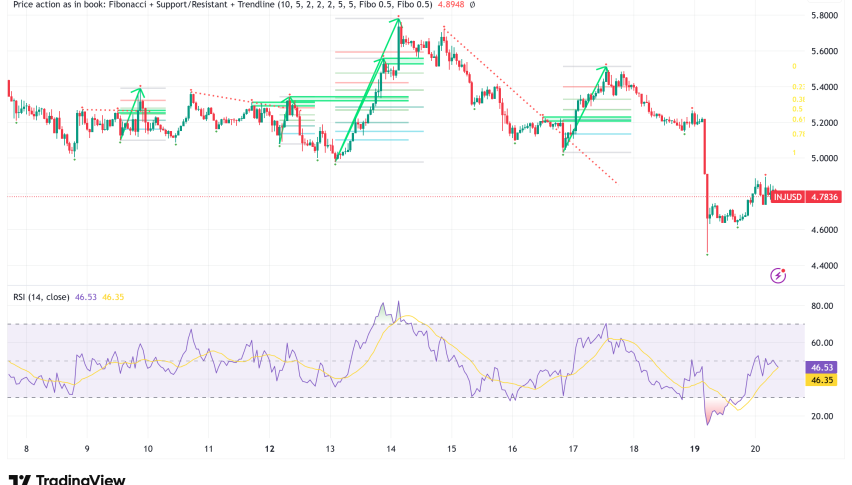
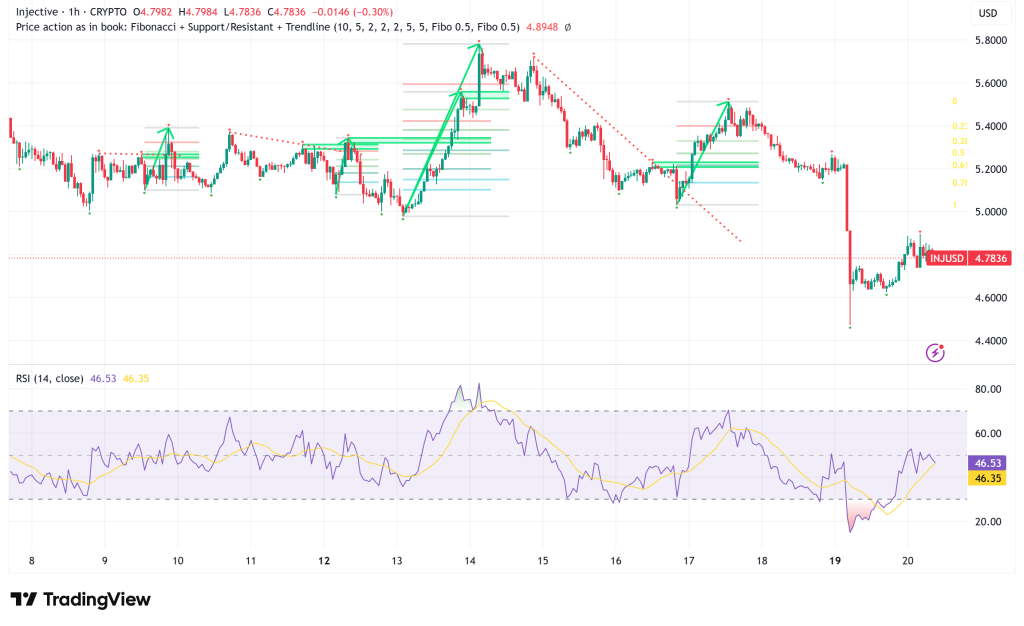
From a technical point of view, INJ seems to be stabilizing after testing important Fibonacci support levels. The coin went up from $4.16 on January 19, which was a swing low that matched the 0% Fibonacci retracement level. The Relative Strength Index is currently at 44, which means the asset hasn’t been too severely oversold yet and could yet go up.
But there is a lot of opposition above. The closest important barrier is at $5.47, which is the 23.6% Fibonacci level. A clear break above this level could mean that bullish momentum is back and interest swing traders. More importantly, INJ is still substantially below all of the big exponential moving averages, such as the 200-day EMA at $9.74. This shows that the overall trend is still strongly bearish, even after Monday’s recovery.
Injective Price Outlook Faces Headwinds Despite Structural Progress
Going forward, the price of INJ will probably rely on whether the deflationary mechanics will lead to long-term rise in demand. The token has dropped around 80% in the last year and is still down more than 90% from its all-time high in March 2024. This drop is similar to the overall weakness in altcoins, but INJ has been hit the hardest.
DefiLlama says that the total value locked in Injective’s DeFi ecosystem is only $18.67 million, down drastically from high around $60 million in 2024. There is a big problem with this drop in on-chain economic activity: for the burn mechanism to really constrain supply, network usage needs to go up a lot.
The most important support level to watch is $4.50. If the price goes below this level, it could go down again, possibly testing the $4.16 Fibonacci support again. On the other hand, if network activity measures, especially trading volume on Helix DEX and other Injective-native protocols, improve in the next few weeks, the combination of fewer new coins and faster burning could help prices go higher.
- Check out our free forex signals
- Follow the top economic events on FX Leaders economic calendar
- Trade better, discover more Forex Trading Strategies
- Open a FREE Trading Account
- Read our latest reviews on: Avatrade, Exness, HFM and XM

Related Articles

Sidebar rates

Related Posts
 Save
Save
