Forex Signals Feb 9: Coca-Cola, S&P, Barclays, Cisco, Ford, Hood Earnings Preview with NFP and CPI to Guide Markets
Besides the US CPI and NFP, this week investors will closely watch earnings from Coca-Cola, S&P Global, BP, Barclays, Robinhood, Ford, Cisco
•
Last updated: Monday, February 9, 2026

Quick overview
- Investors are closely monitoring earnings reports from major companies like Coca-Cola, BP, and Amazon this week, which could signal trends in consumer demand and financial conditions.
- US equity markets experienced a significant selloff, with all major indices down over 1%, driven by disappointing earnings and heightened capital expenditure forecasts from Amazon.
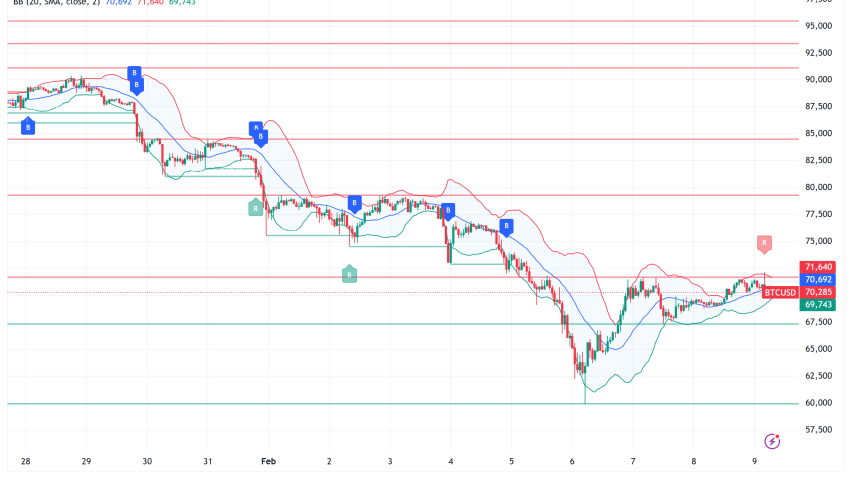
- Bitcoin has seen a sharp decline of approximately 20% this week, raising concerns about broader risk in financial markets as liquidity conditions tighten.
- US labor data has consistently underperformed, indicating a potential weakening in the labor market, which could influence future monetary policy decisions.
Besides the US CPI and NFP, this week investors will closely watch earnings from Coca-Cola, S&P Global, BP, Barclays, Robinhood, Ford, Cisco, McDonald’s, T-Mobile, and Trump Media & Technology Group, with results expected to provide key signals on consumer demand, financial conditions, and technology spending trends.
Broad Selloff Engulfs US Equities
It was another bruising session for global markets as the rout in software and technology shares broadened into a near-universal selloff. All major US equity indices finished down more than 1%, with the Russell 2000 underperforming and sliding nearly 2%. What began as a concentrated unwind in high-multiple tech continued to spill over into cyclicals, small caps, and defensives, leaving investors with few places to hide.
Amazon Earnings Deepen Equity Unease
The pressure intensified after the close when Amazon reported quarterly results. While revenue held up, the company missed on the bottom line and, more importantly, shocked markets with a capital expenditure outlook of roughly $200 billion for the year—well above the $146 billion investors had been expecting.
The combination of a soft Q4 earnings performance and sharply higher capex weighed heavily on equity futures, which continued to slide in after-hours trading.
Bitcoin Breakdown Signals Broader Risk Stress
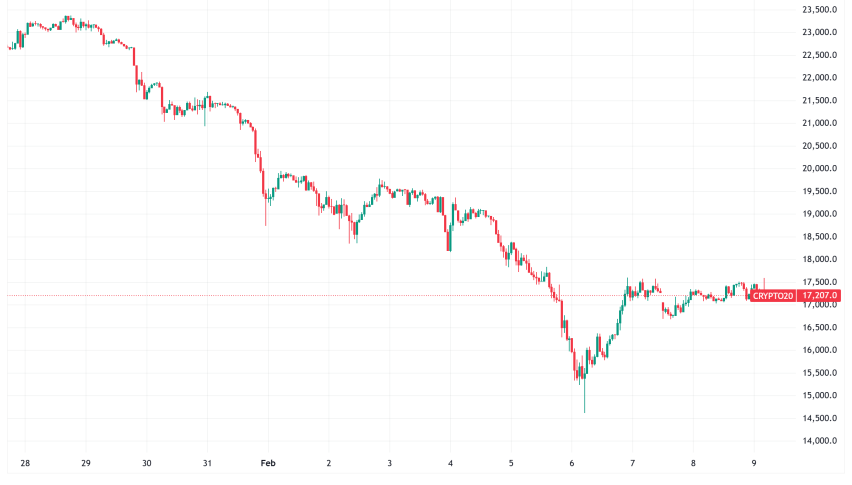
If equity markets looked fragile, crypto markets appeared outright distressed. Bitcoin fell to around $60,000, extending losses to roughly 20% on the week and pushing the drawdown to nearly 50% from its October 6 record high.
Such a rapid and deep decline is rarely contained within crypto alone. Bitcoin’s weakness has increasingly been interpreted as a broader warning for risk assets, particularly in an environment where liquidity conditions are tightening and speculative positioning is being unwound.
Silver Whipsaws Amid Extreme Volatility
Precious metals also experienced sharp swings, with silver seeing especially extreme volatility. Prices tumbled to around $64 before stabilising, marking another violent move in what has become a highly unstable market.
In response to the volatility, the CME raised margins on COMEX gold and silver futures once again. Higher margin requirements often exacerbate near-term pressure, as leveraged participants are forced to reduce positions, adding to price swings.
Interestingly, silver found support near the 100-day simple moving average, where price action began to stall. That technical level prompted the opening of a tactical buy trade near the lows, reflecting the view that some of the forced liquidation may have already played out—at least in the short term.
Weak US Labour Data Adds to Downside Pressure
Compounding the negative tone, US employment data throughout the week has consistently disappointed. ADP employment, ISM services, and JOLTS data all pointed to softening labour conditions. Thursday’s initial jobless claims and Challenger job cuts data added further evidence that momentum in the labour market is fading more quickly than expected.
Key Market Events to Watch This Week: Key U.S. Economic Data and Key Corporate Reports to Watch
This week’s U.S. economic releases represent a critical test of the “soft-landing” narrative. If employment growth remains steady while inflation continues to moderate, markets may interpret the data as supportive for risk assets and future policy easing. However, any upside surprise in inflation or signs of labor-market deterioration could quickly shift expectations, ensuring that volatility remains elevated as investors reassess the trajectory of the U.S. economy.
Wednesday: Labor Market Data
Non-Farm Payrolls (January)
- Expected: +70K jobs (previous: +50K)
Market significance:
- Indicates the pace of job creation and overall economic momentum.
- A stronger-than-expected reading could reinforce the view that the labor market remains resilient, potentially delaying rate-cut expectations.
- A weaker print may strengthen expectations of easier monetary policy later in the year.
Unemployment Rate
- Expected: 4.4% (unchanged)
Key focus:
- Stability in unemployment would suggest continued labor-market balance.
- Any unexpected rise could signal softening economic conditions, influencing bond yields and equity sentiment.
Thursday: Labor Market and Housing Indicators
Initial and Continuing Jobless Claims
- Claims data provides a high-frequency measure of labor-market health.
Investors will watch for:
- Sustained increases, which could indicate emerging labor-market weakness.
- Continued stability, reinforcing the narrative of a gradual economic slowdown rather than a sharp downturn.
Existing Home Sales (January)
- Expected: 222K (previous: 231K)
Market relevance:
- Reflects the health of the housing sector, which is sensitive to mortgage rates.
- Declining sales could indicate affordability challenges and slower property-market activity.
- Any upside surprise may suggest stabilization in housing demand, supporting consumer confidence.
Friday: Inflation Data
Consumer Price Index (CPI) YoY (January)
- Expected: 2.5% (previous: 2.7%)
Key implications:
- A decline toward 2.5% would reinforce the disinflation trend, increasing the probability of rate cuts later in the year.
- Higher-than-expected inflation could trigger renewed volatility across equities, bonds, and currencies as markets reprice policy expectations.
- Core inflation components, particularly services and housing, will be closely scrutinized for underlying price pressures.
This week’s earnings calendar features a diverse lineup of market-moving companies, making it an important checkpoint for investors assessing the strength of consumer spending, financial-market activity, and technology investment cycles. Strong guidance could reinforce expectations for continued economic resilience, while cautious outlooks—especially from consumer and technology leaders—may shape broader market sentiment heading into the next phase of the earnings season.
Key Earnings Reports This Week
Consumer and Brand Leaders
The Coca-Cola Company (KO) – Q4 2025 earnings (BMO)
- Expected EPS: $0.56
Market focus:
- Global beverage demand trends and pricing power.
- Margin performance amid input-cost fluctuations.
- Emerging-market consumption growth and FX effects.
- Coca-Cola’s results often serve as a broad gauge of global consumer spending.
McDonald’s Corporation (MCD) – Q4 2025 earnings (BMO)
- Expected EPS: $3.05
Key themes:
- Same-store sales growth across regions.
- Consumer sensitivity to pricing and promotional activity.
- Expansion strategy and digital ordering performance.
- Financials and Market Infrastructure
S&P Global Inc. (SPGI) – Q4 2025 earnings (BMO)
- Expected EPS: $4.33
Key drivers:
- Credit-rating issuance activity and debt-market conditions.
- Growth in analytics and data services.
- Corporate financing trends and global issuance outlook.
Barclays PLC (BCS) – Q4 2025 earnings (BMO)
- Expected EPS: $0.43
Areas to watch:
- Investment-banking revenue recovery.
- Net interest margin trends amid shifting rate expectations.
- Cost-reduction progress and capital allocation strategy.
Trump Media & Technology Group (DJT) – Q4 2025 earnings (BMO)
Focus points:
- Platform user growth and monetization progress.
- Advertising revenue trends and operational expenses.
- Strategic expansion initiatives and funding outlook.
Energy Sector
BP p.l.c. (BP) – Q4 2025 earnings (BMO)
- Expected EPS: $0.60
Key themes:
- Oil and gas price impacts on upstream profitability.
- Energy-transition investments and capital-spending plans.
- Shareholder returns through dividends and buybacks.
Technology and Communications
Cisco Systems, Inc. (CSCO) – Q2 2026 earnings (AMC)
- Expected EPS: $1.02
Investor focus:
- Enterprise networking demand and cloud infrastructure spending.
- AI-related hardware and cybersecurity growth.
- Order backlog trends and guidance for enterprise IT budgets.
T-Mobile US, Inc. (TMUS) – Q4 2025 earnings (BMO)
- Expected EPS: $2.06
Key considerations:
- Subscriber growth and churn levels.
- 5G network monetization and pricing strategy.
- Free cash flow trends and capital-return policies.
Consumer, Mobility, and Fintech
Ford Motor Company (F) – Q4 2025 earnings (AMC)
- Expected EPS: $0.19
Areas to watch:
- Electric vehicle profitability and production outlook.
- Demand for trucks and SUVs in North America.
- Cost management and supply-chain efficiency.
Robinhood Markets, Inc. (HOOD) – Q4 2025 earnings (AMC)
- Expected EPS: $0.64
Key drivers:
- Trading volumes across equities, options, and crypto.
- Net interest revenue trends tied to rate conditions.
- Expansion into retirement products and global markets.
Gold Resumes the Decline Again As Safe Havens Lose Status
Although demand for safe haven assets is still high, gold fell precipitously from record highs following the Fed’s most recent rate cut comments, as profit-taking was prompted by Powell’s cautious tone. In December, gold jumped above $4.3800 following the Federal Reserve’s announcement of a 25 basis point rate decrease. But the impetus soon waned, and prices dropped back to $4,004. The 20 daily SMA (gray) held as support last week and buyers returned and pushed XAU above the $5,000 mark for the first time during Asian hours and extended the rally in New York, printing a fresh record high near $5,111 before retreating below $5,000 late in the session. But buyers returned into Asian session and XAU climbed to $5,598 but pulled back below $5,000 again.
USD/JPY Rebounds Above 155
Foreign exchange markets saw sharp swings. Early in the week, U.S. yield differentials and Japanese capital outflows pushed the dollar above ¥150, but disappointing U.S. jobs data triggered profit-taking, causing the USD/JPY to slide by four yen from its peak. However, the new BOJ governor the JPY has weakened and USD/JPY soared to 154 and we decided to close our buy signal for more than 80 pips as the pair found support at the 20 daily SMA (gray) and has rebounded more than 200 pips off that MA but reversed after the 25 bps rate cut from the FED. The price approached $160 but reversed after the BOJ meeting and fell 8 cents but found support at $152 at the 100 daily SMA (red) and rebounded above 156.
USD/JPY – Daily Chart
Cryptocurrency Update
Bitcoin Heads to $50K
Cryptocurrencies remained highly active over the summer. Bitcoin (BTC) climbed to fresh highs of $123,000 and $124,000 in July and August, supported by institutional inflows and technical strength. However, remarks from Treasury Secretary Scott Bessent ruling out U.S. increases to BTC reserves triggered a steep pullback, sending the coin down to $80K before finding support at the 100 weekly SMA (green). A rebound followed, sending BTC near $100 is the first major text for Bitcoin buyers. However BTC returned lower and fell below $80K, breaking below the but the 100 weekly SMA (green) but the decline stopped at the support and resistance zone above $65K.
BTC/USD – Weekly Chart
Ethereum Slips Below $2,000
Ethereum (ETH) has been similarly strong, surging toward $4,800, its highest since 2021 and near its all-time peak of $4,860. Despite a dip last week, ETH found support at the 20-day SMA, with retail enthusiasm and renewed institutional participation driving fresh upside momentum. Last week we saw a dive below $2,500.
ETH/USD – Weekly Chart
- Check out our free forex signals
- Follow the top economic events on FX Leaders economic calendar
- Trade better, discover more Forex Trading Strategies
- Open a FREE Trading Account
- Read our latest reviews on: Avatrade, Exness, HFM and XM
ABOUT THE AUTHOR
See More

Skerdian Meta
Lead Analyst
Skerdian Meta Lead Analyst.
Skerdian is a professional Forex trader and a market analyst. He has been actively engaged in market analysis for the past 11 years. Before becoming our head analyst, Skerdian served as a trader and market analyst in Saxo Bank's local branch, Aksioner. Skerdian specialized in experimenting with developing models and hands-on trading. Skerdian has a masters degree in finance and investment.


 Save
Save