Mondi Share Price Breaks Support as Rising Costs and Plant Closures Weigh on Outlook
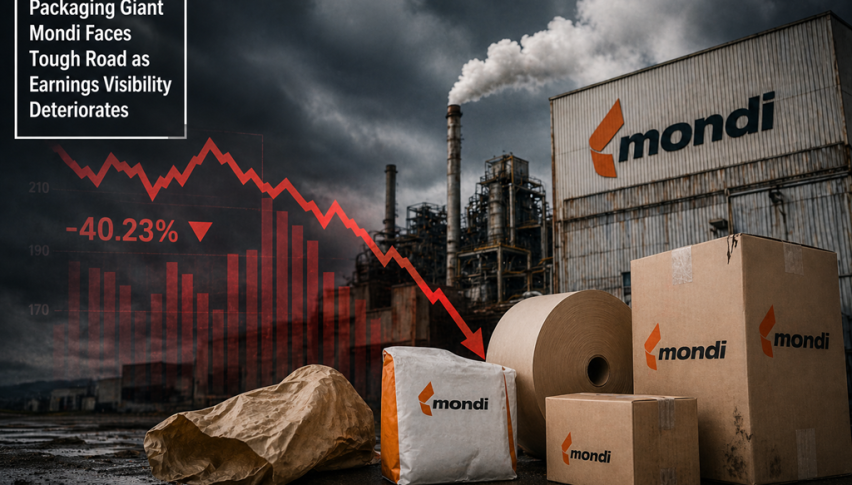
Mondi plc is facing renewed selling pressure as weak demand, rising costs, and a bearish analyst downgrade cloud its near-term outlook.
Quick overview
- Mondi plc is experiencing renewed selling pressure due to weak demand, rising costs, and a bearish analyst downgrade.
- The company's share price has dropped over 40% in the past year, with recent trading updates revealing worsening market conditions.
- Mondi is implementing cost-cutting measures, including plant closures and job losses, to address rising input costs and subdued demand.
- Analysts have downgraded the stock, citing deteriorating earnings visibility and limited prospects for recovery in the near term.
Mondi plc is facing renewed selling pressure as weak demand, rising costs, and a bearish analyst downgrade cloud its near-term outlook.
Share Price Weakness Returns
After a brief stabilization from decade lows, shares in Mondi plc have come under renewed pressure, highlighting persistent concerns around earnings visibility and structural industry challenges. The stock recently dropped sharply, including a near 9.5% decline following its latest trading update, and is now down more than 40% over the past year.
Investor sentiment has remained fragile, with any negative catalyst quickly reigniting selling pressure in a stock that has struggled to establish a sustained recovery.
Rising Costs Force Price Increases
Mondi has been forced to respond to a surge in input costs by raising prices across its product lines. The company is grappling with higher energy, raw material, and logistics expenses—pressures that have intensified following geopolitical disruptions, including conflict in the Middle East that has driven commodity prices higher.
Although sales volumes have shown some improvement, lower selling prices earlier in the cycle and rising costs have weighed heavily on profitability. Management has acknowledged that these pressures have carried into the second quarter, forcing pricing actions to protect margins.
Demand Remains Subdued Across Markets
The broader paper and packaging industry was already slowing before recent geopolitical shocks, and demand conditions remain weak. Across Europe in particular, soft consumer confidence and sluggish economic growth have kept operating rates below optimal levels.
Oversupply in several product categories continues to limit pricing power, leaving companies like Mondi exposed to margin compression. The fine paper segment remains especially challenged, with structural decline and aggressive competition further eroding profitability.
Cost Cuts and Plant Closures Intensify
In response to these pressures, Mondi has accelerated restructuring efforts, including the closure of three additional plants in Hungary, Poland, and Germany. These moves will result in around 450 job losses, adding to roughly 1,000 positions already cut over the past year.
The company has also adjusted production levels by extending maintenance shutdowns, aiming to better align supply with weakened demand. These operational changes reflect the difficult reality facing the business, as management prioritizes cost control and efficiency.
The Consolidation Period Ends
Mondi’s share price came under severe pressure in early October 2025 following a disappointing third-quarter trading update that revealed weakening demand and worsening market conditions. The stock fell to around R182, its lowest level in nearly a decade, marking the culmination of a difficult year for the paper and packaging group.
MNPJ Chart Daily – Falling Below the 50 SMA Again

At that point, shares were down roughly 28% year to date, with long-term moving averages consistently capping upside attempts and reinforcing a broader downtrend. Over the past several months, however, the selling pressure eased somewhat. Shares retraced higher but moving averages stopped the retrace on the daily chart and last Friday the decline resumed.
MNPJ Chart Weekly – The 20 SMA Rejected the Price

Prices once again rolled over after failing to break through stronger resistance levels such as the 20 weekly SMA (gray), indicating that bearish control has not yet been decisively challenged. Sellers returned and the support zone around R180 was broken.
- Underlying EBITDA: €212 million, compared to €214 million in Q4 2025 and €290 million in Q1 2025.
- Performance Drivers: Volumes increased in corrugated and flexible packaging, but this was offset by weaker selling prices and high energy input costs.
- Outlook: Management described conditions as challenging and stated that inflationary pressures persist into the second quarter.
- Strategic Moves: The firm is focusing on cost discipline, reducing headcount, and increasing prices to combat rising costs.
Downgrade Highlights Weak Outlook
Adding to the negative sentiment, Morgan Stanley recently downgraded Mondi to “underweight,” citing deteriorating earnings visibility and stretched valuation metrics. The move triggered another wave of selling, underscoring how sensitive the stock remains to shifts in analyst outlook.
The bank warned that Mondi’s margins have fallen to levels not seen since the global financial crisis, with limited prospects for recovery over the next 12 to 18 months. Forecasts have been revised lower, reflecting expectations of continued pressure across key business segments.
Long-Term Strategy Offers Limited Near-Term Relief
Despite near-term challenges, Mondi continues to invest in innovation and sustainable packaging solutions. Initiatives such as recyclable, paper-based alternatives to plastic packaging highlight its long-term strategic direction.
However, these efforts are unlikely to offset immediate earnings pressure. With demand weak, costs elevated, and margins under strain, the company faces a challenging path ahead.
Conclusion
Mondi’s current position reflects a difficult combination of cyclical weakness and structural industry challenges. While management is taking steps to mitigate the impact, including price increases and cost reductions, the near-term outlook remains uncertain.
Until demand recovers and cost pressures ease, the stock is likely to remain under pressure, with limited catalysts to drive a sustained rebound.
- Check out our free forex signals
- Follow the top economic events on FX Leaders economic calendar
- Trade better, discover more Forex Trading Strategies
- Open a FREE Trading Account
- Read our latest reviews on: Avatrade, Exness, HFM and XM

Related Articles



Sidebar rates

Related Posts
 Save
Save