South Africa GDP Growth Hits 3-Year High, But Risks Loom
South Africa's GDP growth reaches highest in three years amid warnings of potential economic risks.

Quick overview
- South Africa's economy has experienced its fastest growth in three years, driven by a rebound in mining and manufacturing sectors.
- Despite the positive growth figures, concerns about unemployment and inequality persist, as highlighted by COSATU.
- The South African Reserve Bank's monetary policies and the rand's volatility are crucial factors for traders to monitor.
- Warnings from the IMF and Afreximbank suggest that the current growth may not be sustainable in the long term.
Live USD/ZAR Chart

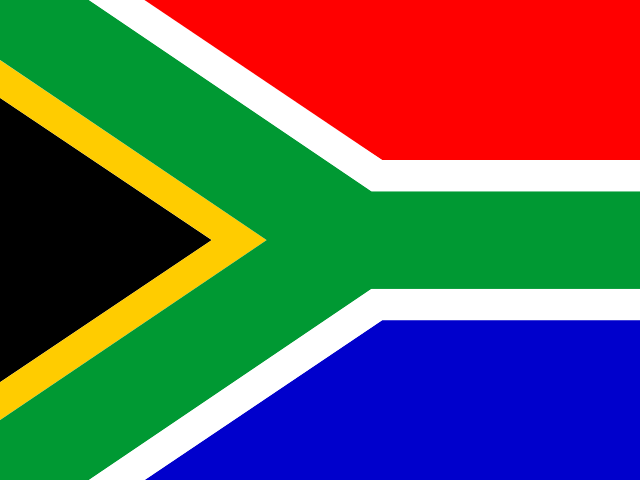
South Africa’s economy has recorded its fastest growth in three years, yet concerns about long-term sustainability persist among key stakeholders.
Behind the Headline
According to Moneyweb, the South African economy posted its fastest growth in three years, signaling a positive shift following periods of economic stagnation. This growth can largely be attributed to a rebound in key sectors such as mining and manufacturing, supported by a global demand for commodities. However, the Congress of South African Trade Unions (COSATU) expressed dissatisfaction, noting that the growth figures, though improved, do not adequately address underlying socio-economic challenges such as unemployment and inequality.
South Africa Market Angle
The South African Reserve Bank (SARB) plays a pivotal role in steering the economic direction through its monetary policies. With the rand’s performance closely watched by investors, the recent GDP growth could influence SARB’s interest rate decisions. The Johannesburg Stock Exchange (JSE) also reflects this economic optimism, experiencing a boost in investor confidence. Despite these gains, the rand remains volatile against major currencies, influenced by both domestic and international factors.
Contrary Angle
As reported by Engineering News, the International Monetary Fund (IMF) acknowledged the resilience of South Africa’s economy but warned of potential downside risks. These include structural weaknesses, policy uncertainties, and global economic pressures that could hamper sustained growth. Businessreport.co.za further highlighted a warning from Afreximbank, which projects a decade of sub-2% growth, suggesting that the current uptick may not indicate a long-term trend.
Why Traders Should Care
Traders should keep a close eye on the rand’s fluctuations in response to economic data releases and SARB’s policy signals. The interplay between GDP growth figures and interest rate expectations can create trading opportunities in USD/ZAR pairs. Moreover, any shifts in investor sentiment towards emerging markets could impact capital flows and, consequently, the JSE’s performance. Understanding these dynamics is crucial for making informed trading decisions.
Conclusion
While South Africa’s recent GDP growth offers a glimmer of hope, it is essential for traders and investors to remain vigilant. The economic landscape is fraught with challenges that could impede progress. As stakeholders navigate these complexities, the balance between optimism and caution will define the economic trajectory in the coming years.
- Check out our free forex signals
- Follow the top economic events on FX Leaders economic calendar
- Trade better, discover more Forex Trading Strategies
- Open a FREE Trading Account
- Read our latest reviews on: Avatrade, Exness, HFM and XM

Related Articles

Sidebar rates

Related Posts
 Save
Save