Wall Street Hits Record Highs, Led by Semiconductors
In this context, oil prices edged higher. Brent crude futures for July delivery rose 1.4% to $101.41 per barrel.

Quick overview
- Major indices rose sharply following strong employment data, with semiconductor stocks leading the gains.
- The April U.S. jobs report showed nonfarm payrolls increased by 115,000, surpassing expectations, while the unemployment rate held steady at 4.3%.
- Geopolitical tensions in the Strait of Hormuz continue to create caution among investors, impacting oil prices and inflation concerns.
- Consumer sentiment fell to a record low of 48.2 in May, driven by persistent price pressures, particularly from rising gasoline costs.
Major indices surged on strong employment data that eased concerns over the U.S. economy, while semiconductor stocks led the rally.

However, tensions in the Strait of Hormuz kept investors on edge due to potential implications for oil prices and inflation.
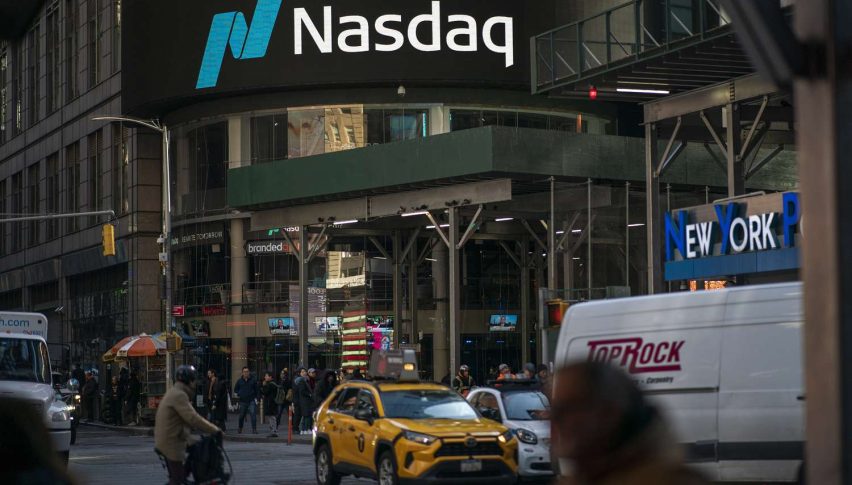
New York equities climbed to record highs on Friday, rebounding from the previous session’s losses, driven by gains in semiconductor shares and a stronger-than-expected April U.S. jobs report.
Market participants also closely monitored developments in the Middle East, as renewed clashes in the Strait of Hormuz kept traders cautious.
In this context, the Dow Jones Industrial Average rose 0.02% to 49,609.04 points, the S&P 500 gained 0.81% to 7,396.79 points, and the Nasdaq Composite advanced 1.71% to 26,247.08 points.
Strong jobs data, weak consumer sentiment
Attention on Friday was centered on the economic calendar, particularly the April employment report.
According to the U.S. Bureau of Labor Statistics, nonfarm payrolls rose by 115,000 last month, exceeding economists’ expectations of 65,000. The unemployment rate remained unchanged at 4.3%.
Although widely anticipated, the report comes at a time when investors and policymakers are increasingly focused on inflation risks, driven in part by rising oil prices amid Middle East tensions. Analysts noted that April’s data suggested potential downward pressure on wage growth due to inflation dynamics.
“Strong job growth in April extends the trend of solid employment gains since the start of the year. The labor market is shifting from low hiring and low turnover to more moderate hiring and turnover. This is encouraging news after business and consumer surveys showed rising anxiety related to the Iran conflict in recent readings,” said Bill Adams, Chief Economist for the U.S. at Fifth Third Commercial Bank.
On the consumer side, the University of Michigan reported that consumer sentiment fell to 48.2 in May from 49.8 in April, according to preliminary data, marking a record low.
Consumers continue to face persistent price pressures, particularly from surging gasoline costs.
According to the University of Michigan, developments in the Middle East are unlikely to meaningfully improve sentiment until supply disruptions ease and energy prices stabilize.
U.S. and Iran tensions escalate in the Strait of Hormuz
Geopolitical tensions in and around the Strait of Hormuz remain a key concern for investors.
Earlier this week, the United States launched and later suspended “Operation Freedom Project,” aimed at securing safe passage for commercial vessels through the strait. Meanwhile, U.S. forces have maintained pressure on Iran by restricting access to Iranian ports and coastline since mid-April.
On Friday, U.S. Central Command (CENTCOM) reported that it struck and disabled two empty Iranian-flagged oil tankers attempting to enter an Iranian port in the Gulf of Oman. CENTCOM also said it had disabled another empty tanker on Wednesday.
The escalation comes as Iran continues reviewing a new one-page proposal containing 14 points aimed at ending the conflict, with no final response yet delivered.
Former President Donald Trump told ABC News that the recent strikes were “just a friendly tap,” adding that the ceasefire with Iran remains in place. He later posted on social media that the U.S. would respond “much harder and with far greater force in the future if they don’t sign the deal quickly.”
U.S. Secretary of State Marco Rubio said on Friday that a response from Iran was expected by the deadline, though none had been received.
In this context, oil prices edged higher. Brent crude futures for July delivery rose 1.4% to $101.41 per barrel, while West Texas Intermediate (WTI) futures for June delivery gained 1.1% to $95.84 per barrel.
- Check out our free forex signals
- Follow the top economic events on FX Leaders economic calendar
- Trade better, discover more Forex Trading Strategies
- Open a FREE Trading Account
- Read our latest reviews on: Avatrade, Exness, HFM and XM

Related Articles


Sidebar rates

Related Posts
 Save
Save