Wall Street Retreats Amid U.S.-Iran Tensions and Pressure on Nvidia
The yield on the 10-year U.S. Treasury rose to 4.672%, its highest level since January 2025 and the 30-year Treasury yield climbed to 5.18%.

Quick overview
- U.S. stocks declined on May 19 due to stalled negotiations between Washington and Tehran and pressure on AI-related shares ahead of Nvidia's earnings report.
- The Dow Jones fell 0.65%, the S&P 500 lost 0.64%, and the Nasdaq Composite dropped 0.84%.
- President Trump revealed he had called off military strikes against Iran, emphasizing ongoing negotiations for a potential agreement.
- U.S. Treasury yields rose to multi-month highs, raising concerns about prolonged high interest rates impacting technology stocks.
U.S. stocks moved lower on Tuesday, May 19, as investors reacted to the lack of concrete progress in negotiations between Washington and Tehran, renewed pressure on artificial intelligence-related shares ahead of Nvidia’s earnings report, and another wave of selling in global bond markets.
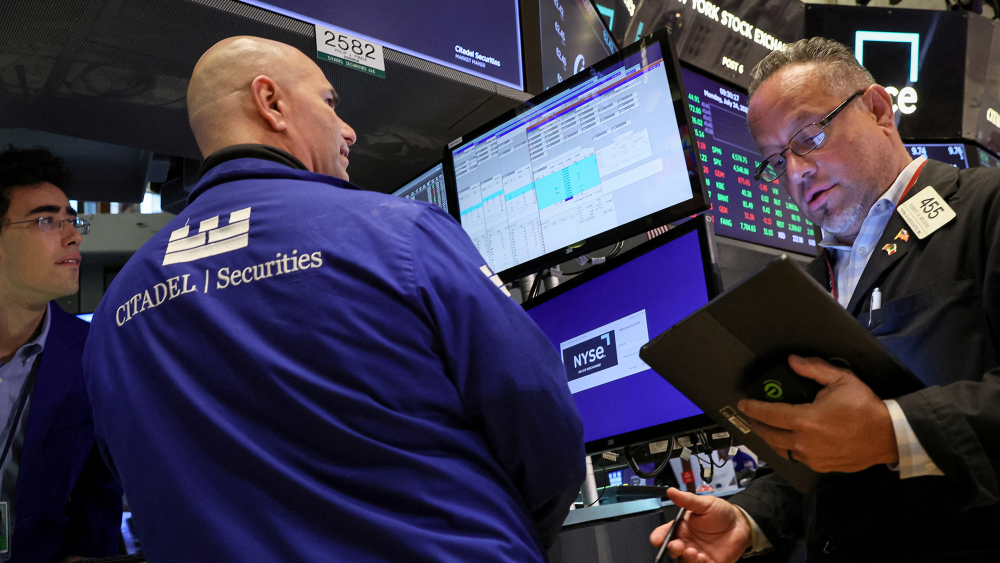
Against that backdrop, the Dow Jones Industrial Average fell 0.65% to 49,364.31 points, while the S&P 500 lost 0.64% to close at 7,355.45. The Nasdaq Composite underperformed, declining 0.84% to 25,870.71.
Trump Says He Was “One Hour Away” From Striking Iran
Developments in the Middle East once again dominated market sentiment after President Donald Trump revealed that he had called off new military strikes against Iran following requests from Gulf leaders.
Trump said that “serious negotiations” are currently underway and argued that an “acceptable” agreement could still be reached for both the United States and Middle Eastern countries. He stressed that any potential deal would require Iran to abandon nuclear weapons development, although he also warned that the U.S. military remains prepared to launch a “large-scale” attack if talks collapse.
“I had already made the decision,” Trump said, explaining that he agreed to give Gulf authorities “two or three more days” to pursue a diplomatic solution. According to Iranian state media, Tehran has already submitted a peace proposal that includes a ceasefire and demands for compensation related to damages caused by the conflict.
Oil prices pulled back slightly after the sharp rally seen in recent sessions, although they remained elevated. Brent crude fell 1% to $110.94 per barrel.
Treasury Bonds Face Another Heavy Selloff
Another major source of market stress came from the bond market. U.S. Treasury securities resumed their sharp correction, with yields climbing to multi-month highs amid growing expectations that the Federal Reserve may need to keep interest rates higher for longer.
The yield on the 10-year U.S. Treasury rose to 4.672%, its highest level since January 2025, while the 30-year Treasury yield climbed to 5.176%.
Investors fear that persistently high energy prices could reignite global inflationary pressures and force central banks to maintain restrictive monetary policies for an extended period. That scenario tends to hit technology stocks especially hard, since their valuations rely heavily on expectations of future earnings growth.
Nvidia and AI Stocks Under Pressure
Beyond geopolitical tensions, investors remained focused on the upcoming quarterly earnings report from NVIDIA, scheduled for release on Wednesday.
Shares of the chipmaker slipped 0.8%, marking a third consecutive daily decline and weighing on the broader semiconductor and technology sectors.
Nvidia’s results are expected to help determine the market’s next direction, as investors look for a fresh catalyst following the strong rally that began in March. At the same time, markets are beginning to show signs of fatigue as concerns over higher interest rates and slowing momentum return to the forefront.
- Check out our free forex signals
- Follow the top economic events on FX Leaders economic calendar
- Trade better, discover more Forex Trading Strategies
- Open a FREE Trading Account
- Read our latest reviews on: Avatrade, Exness, HFM and XM

Related Articles
Sidebar rates

