Joby Aviation Stock Gains Momentum as It Pushes Toward Commercial eVTOL Era
Joby Aviation is regaining investor attention as FAA progress, infrastructure partnerships, and scaling plans support its air taxi ambitions, though execution and timeline risks remain firmly in focus.

Quick overview
- Joby Aviation is gaining investor interest due to advancements in eVTOL development, including FAA testing and urban demonstration flights.
- The company has shown a 30-day stock return of 10.18%, but remains down 29.87% year-to-date, reflecting mixed investor sentiment.
- Joby's partnership with Metropolis Technologies aims to develop up to 25 vertiports, enhancing urban infrastructure for air taxis.
- Despite progress, significant execution risks and regulatory uncertainties continue to challenge Joby's path to commercialization.
Joby Aviation is regaining investor attention as FAA progress, infrastructure partnerships, and scaling plans support its air taxi ambitions, though execution and timeline risks remain firmly in focus.
Joby Aviation Rebounds on Commercialization Signals, but Volatility Persists
Joby Aviation (JOBY) is attracting renewed interest as it advances through a critical phase of eVTOL development, supported by FAA-aligned testing, urban demonstration flights, and growing participation in government-backed aviation programs. These developments are strengthening the narrative that the company is gradually moving from experimental aviation toward early-stage commercialization, even if the path remains uncertain and highly dependent on regulatory outcomes.
Recent performance reflects this mixed backdrop. The stock has shown short-term resilience, with a 30-day return of 10.18%, yet remains down 29.87% year to date. Over a longer horizon, however, a 1-year total shareholder return of 51.89% suggests that investor sentiment continues to oscillate between optimism over long-term potential and concern about near-term execution risks.
Urban Demonstrations Highlight Technical Progress, Not Commercial Reality Yet
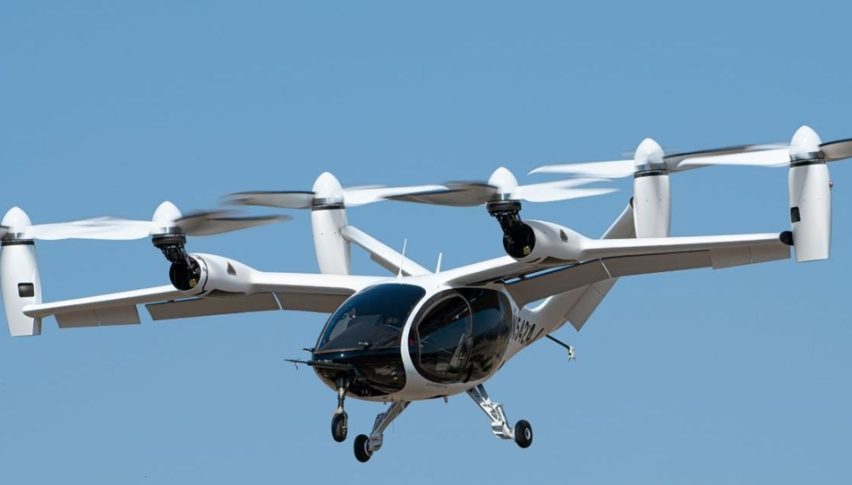
A key development came in April, when Joby Aviation completed the first-ever point-to-point eVTOL demonstration flights in New York City. The aircraft operated between John F. Kennedy International Airport and Manhattan heliport infrastructure, including Downtown Skyport and the Blade Air Mobility lounge at West 30th Street.
The demonstration aircraft, identified as N545JX, showcased a concept that could dramatically compress travel times—potentially reducing a 60-to-120-minute ground commute to roughly seven minutes by air. While symbolically important, these flights remain controlled demonstrations rather than commercial passenger operations, underscoring the early stage of adoption.
Finding Technical Support at the 20 SMA

Joby’s share price has experienced significant volatility. Valued at roughly $10 billion, the stock is up approximately 57% over the past year despite limited commercial revenue. That disconnect fueled skepticism late in 2025, triggering a sharp decline from October’s peak near $20.90 to lows around $7.80 where it formed a base and starte to reverse higher.
JOBY Stock Chart Weekly – Rebounding Off the 200 SMA After Steep Pullback

The stock has rebounded more than 33% from the 200-day week moving average—often viewed as a signal of improving momentum. This technical recovery suggests that selling pressure has weakened with buyers in control now, opening the door to a more durable recovery if positive developments continue.
Vertiport Expansion Strategy Strengthens Long-Term Infrastructure Thesis
One of the more significant catalysts is Joby’s partnership with Metropolis Technologies to explore development of up to 25 vertiports across the United States. The collaboration leverages Metropolis’ network of more than 4,200 parking facilities, potentially easing one of the industry’s biggest bottlenecks: urban infrastructure availability.
Rather than building entirely new sites, the strategy focuses on integrating air taxi access into existing dense urban locations where demand is expected to be highest. This approach could improve scalability if regulatory and demand conditions align, although execution across multiple cities will likely be complex and capital intensive.
Metropolis’ AI-enabled systems are also expected to support access control and operational efficiency, adding a layer of automation to future passenger flows.
Manufacturing Expansion Signals Preparation for Scale
Joby is also signaling readiness for potential commercial rollout through production expansion plans. The company aims to double its U.S. manufacturing capacity and target output of four aircraft per month by 2027.
This shift reflects a transition from prototype development toward industrial readiness. However, it also assumes that certification progress and demand conditions will evolve favorably over the medium term, leaving meaningful dependency on regulatory timing.
Regulatory Alignment Adds Visibility, but Not Certainty
Joby’s alignment with the U.S. Department of Transportation’s Advanced Air Mobility National Strategy adds structure to its long-term roadmap. The framework addresses safety standards, infrastructure coordination, workforce development, and integration into national transport systems.
While this improves visibility, it does not eliminate regulatory uncertainty. Certification timelines for novel aircraft categories remain inherently unpredictable, and commercial operations will depend heavily on phased approvals.
Technology Partnerships Strengthen Positioning in Autonomous Aviation
Earlier developments, including Joby’s role as NVIDIA’s exclusive aviation launch partner for the IGX Thor platform, reinforce its positioning in advanced flight systems. Integrated with the Superpilot autonomous system, the collaboration aims to improve real-time processing and situational awareness in complex flight environments.
Although the partnership is not expected to materially impact near-term revenue, it contributes to Joby’s credibility in autonomous aviation—an area likely to be central to long-term competitiveness.
Joby Aviation Earnings Report
| Metrics | Q1 2026 Results | Analysts’ Expectations |
|---|---|---|
| Revenue | ($24.25) million | ($20.17) million |
| EPS (Earnings Per Share) | (-$0.12) | (-$0.21) |
- Cash Position: The company maintained a strong balance sheet with approximately ($2.5) billion in cash and short-term investments, and minimal debt to fund its ongoing FAA certification and commercialization phases.
- Guidance: Joby reaffirmed its cash usage for the first half of 2026 would fall between ($340) million and ($370) million. Full-year 2026 revenues are projected to hit between ($105) million and ($115) million, signaling aggressive year-over-year growth.
- Next Earnings: The upcoming Q2 earnings report is expected to be released in early August 2026.
- FAA Certification: The company continues to make headway in its Federal Aviation Administration (FAA) type certification process, focusing on testing pre-production aircraft.
- New York Testing: Joby successfully completed piloted electric air taxi testing in New York City, demonstrating routes from JFK to Manhattan to show future transit time reductions.
Conclusion
Joby Aviation is making visible progress across regulatory engagement, infrastructure planning, and production readiness, supporting a gradual shift in investor expectations. However, the gap between demonstration success and scalable commercial operations remains significant, and execution risk continues to define the investment outlook.
- Check out our free forex signals
- Follow the top economic events on FX Leaders economic calendar
- Trade better, discover more Forex Trading Strategies
- Open a FREE Trading Account
- Read our latest reviews on: Avatrade, Exness, HFM and XM

Related Articles
Sidebar rates

Related Posts
 Save
Save