South African Rand: USD/ZAR Retests R17 After the Key Fed Meeting
After the Federal Reserve policy meeting, the South African rand's resilience is being put to the test by a stronger US currency, escalating
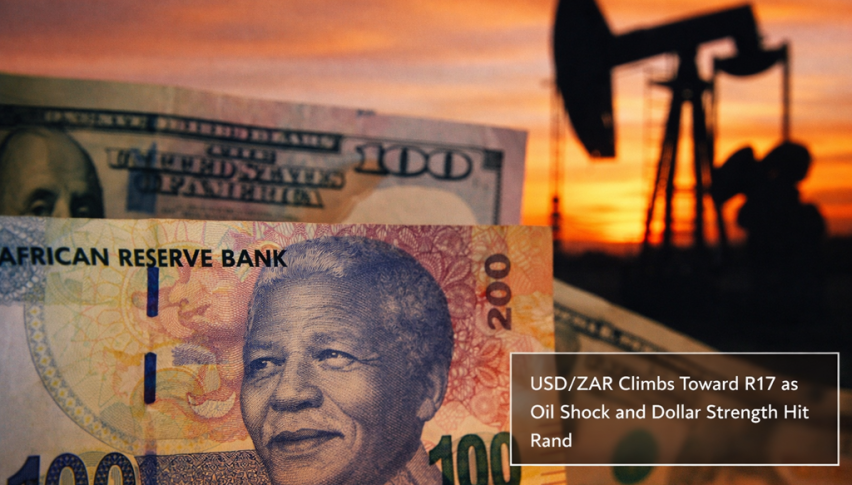
Quick overview
- The South African rand is under pressure due to rising oil prices, geopolitical tensions, and a stronger US dollar.
- Recent geopolitical conflicts, particularly in the Middle East, have heightened market volatility and risk aversion among investors.
- The upcoming Federal Reserve meeting is crucial, as potential signals regarding interest rates could further impact the rand's value.
- Despite challenges, the South African Reserve Bank's credibility and stable monetary policy provide some support for the currency.
After the Federal Reserve policy meeting, the South African rand’s resilience is being put to the test by a stronger US currency, escalating international tensions, and volatile pricing.
Rand Recovery Stalls as Global Risks Intensify
The USD/ZAR exchange rate showed notable strength earlier in the year, with the rand recovering into the mid-R16 range in late January. That move reflected improved sentiment toward emerging markets and a period of relative calm in global currency markets.
However, the trend has shifted in recent weeks. The U.S. dollar has regained momentum while geopolitical tensions have intensified, pushing USD/ZAR back above R16 and close to the R17 level late last week.
The shift reflects a broader risk-off environment in global markets as investors move away from emerging-market currencies and toward traditional safe-haven assets.
Many investors now view the current geopolitical situation not as a short-lived shock but as an event with potentially longer-lasting implications for global liquidity, commodity markets, and currency flows.
The Federal Reserve Rates unchanged as expected. Looking at the dot plot, the expectations for the end of 2026 and 2027 remain the same at 3.4% and 3.1% respectively.
The FED Leaves Rates Unchanged
Looking at the economic numbers for 2026 compared to the December,
- PCE inflation moved up from 2.4% to 2.7% while core PCE also rose from 2.5% to 2.7%.
- GDP was increased modestly to 2.4% from 2.3%.
- The unemployment rate remained unchanged at 4.4%.
Things started to unravel in the markets as Powell’s comments tilted more to the hawkish side with concerns about inflation.
He suggested that tariff impact may not be a one time affect, and the inflation has been somewhat elevated with above target inflation going on 5 years now.
He was frustrated on the non-housing service inflation remaining elevated, and for goods inflation remaining sticky. He noted that short-term inflation expectations have risen, but long-term expectations remain steady.
On the oil prices said that the price can feed into broader prices and leak into the core. He did say that the longer-term approaches to look through energy shocks, but warned that it does depend on inflationary expectations.
Conflict Escalation Fuels Global Risk Aversion
Escalating tensions in the Middle East have become a major driver of financial market volatility.
The conflict involving Iran, Israel, and the United States has intensified uncertainty across global markets.
Reports indicate that Washington is preparing a multinational naval coalition to escort ships through the Strait of Hormuz, one of the most important global shipping routes for oil and liquefied natural gas.
President Donald Trump has also reportedly called on several countries, including China, to assist in keeping the waterway open.
Despite these efforts, investors remain cautious as any disruption to shipping in the strait could have significant consequences for global energy supply and financial markets.
Federal Reserve Meeting Takes Center Stage
Another key driver for the rand this week is the upcoming Federal Open Market Committee meeting scheduled for March 18.
The meeting is particularly significant because it will be one of the final policy gatherings chaired by Jerome Powell before the end of his term in May.
Investors will closely examine the Fed’s updated “dot plot”, which outlines policymakers’ expectations for future interest-rate moves.
If the Federal Reserve signals that interest rates may remain elevated for longer, the U.S. dollar could strengthen further—potentially pushing USD/ZAR even higher.
On the other hand, any indication that rate cuts remain possible later in the year could ease some pressure on emerging-market currencies.
Technical Analysis
Technically, we saw a bullish attempt in USD/ZAR which briefly broke above R16.40 earlier in February, moving above its 20-day simple moving average (gray), which had been defining the pair’s downtrend in recent months. However, the 50-day moving average (yellow) acted as firm resistance. The rejection at this level triggered a reversal, pushing USD/ZAR back below to the 20-day average, which turned into support.
USD/ZAR Chart Daily – MAs Keeping the Pressure to the Downside

The increased tensions, the jump in the USD and in Oil prices, has weakened the Rand and USD/ZAR soared higher and was testing the 100 daily SMA (green) which provided some resistance. But, the 100 SMA was broken late last week as USD/ZAR opened with a gap higher and now it’s heading toward R17.
Oil Shock Amplifies Pressure on Emerging Markets
Energy markets have become a key driver of recent currency volatility.
As tensions escalated, Israel reportedly struck approximately 30 Iranian fuel depots, raising concerns about possible disruptions to oil supply.
Meanwhile, President Donald Trump has threatened to target Iran’s oil export infrastructure on Kharg Island, a critical hub for Iranian crude shipments.
Crude oil prices moved sharply higher as a result. West Texas Intermediate crude oil climbed back above the $100 per barrel level when trading resumed after the weekend.
For South Africa, higher oil prices can be particularly damaging. As a major oil importer, the country faces rising fuel costs when global crude prices increase, which can widen the trade deficit and place additional pressure on the rand.
Dollar Strength Returns to Currency Markets
The foreign exchange market initially reacted calmly to the early stages of the conflict, but sentiment has shifted in recent sessions.
Investors are increasingly rotating into the U.S. dollar as a defensive asset during periods of global uncertainty.
This renewed demand for the dollar has added further pressure on emerging-market currencies, including the South African rand.
As global investors reduce risk exposure, capital flows tend to move away from emerging markets and toward more liquid safe-haven currencies.
Domestic Economic Data Sends Mixed Signals
Before geopolitical tensions intensified, investors were closely monitoring South Africa’s economic data for clues about the country’s growth outlook.
Recent figures delivered a mixed picture.
M3 money supply growth slowed to 7.44%, down from 8.16% in the previous month. Meanwhile, private sector credit growth increased to 8.83%, slightly higher than the previous reading of 8.74%.
The country’s trade balance recorded a R9.31 billion surplus, significantly exceeding forecasts of R4.45 billion and providing some support to the currency.
However, fiscal concerns remain a challenge. South Africa’s budget deficit widened to R69.69 billion, highlighting ongoing pressure on government finances.
While the stronger trade surplus demonstrates the importance of commodity exports, persistent fiscal deficits continue to weigh on long-term investor sentiment.
Commodity Prices Continue to Influence the Rand
Commodity markets remain a key factor shaping the rand’s performance.
South Africa is one of the world’s largest exporters of precious metals, meaning movements in gold prices can significantly influence the country’s trade balance and currency.
Earlier this year, a decline in gold prices pushed USD/ZAR toward R16.43 before stabilizing as precious metals recovered.
However, gold has recently reversed lower again, limiting the support that commodity exports typically provide to the rand.
At the same time, rising oil prices and a strengthening U.S. dollar are working in the opposite direction, creating additional headwinds for the currency.
SARB Policy Credibility Provides Stability
Despite these global challenges, the credibility of the South African Reserve Bank has remained a key stabilizing factor for the rand.
At its January policy meeting, the central bank kept the repo rate unchanged, signaling confidence that inflation remains under control.
South Africa recorded average inflation of 3.2% in 2025, the lowest level in more than two decades. Inflation rose slightly to 3.6% in December, but it remains comfortably within the SARB’s target range.
By maintaining a disciplined monetary policy stance and avoiding premature rate cuts, the central bank has reinforced investor confidence in South African financial markets.
Outlook: The rand now faces a complex mix of domestic and global forces.
Rising oil prices, geopolitical uncertainty, and a stronger U.S. dollar are creating significant external pressure on the currency. At the same time, South Africa’s stable monetary policy and commodity exports continue to offer some support.
Much will depend on the outcome of the Federal Reserve meeting and the direction of global energy markets. If geopolitical tensions remain elevated and oil prices stay high, the rand could remain under pressure in the near term.
- Check out our free forex signals
- Follow the top economic events on FX Leaders economic calendar
- Trade better, discover more Forex Trading Strategies
- Open a FREE Trading Account
- Read our latest reviews on: Avatrade, Exness, HFM and XM

Related Articles

Sidebar rates

Related Posts
 Save
Save