5 Best High-Frequency Trading Platforms

We’ve listed the 5 Best High Frequency Trading Platforms and Brokers that provide ultra-fast, reliable, and technologically advanced access to global financial markets. High frequency trading (HFT) operates within regulated environments overseen by authorities such as the Financial Conduct Authority and the Securities and Exchange Commission, ensuring transparency, market integrity, and investor protection.
5 Best High Frequency Trading Platforms (2026)
- IC Markets – Overall, the Best Broker for high-frequency trading.
- BlackBull Markets – Institutional-grade execution infrastructure.
- FP Markets – Excellent support for Expert Advisors (EAs).
- Pepperstone – Optimized for scalping and algo trading.
- Eightcap – Stable infrastructure for high-volume trading.
Key FAQ:
Are High-Frequency Trading Platforms Legit?
Yes, High-Frequency Trading Platforms are Legit. HFT platforms are designed for speed and precision, offering low-latency execution, advanced algorithmic capabilities, and direct market access. Traders can engage with forex, equities, futures, and cryptocurrencies while benefiting from tight spreads, deep liquidity, and institutional-grade infrastructure built to handle high-volume, rapid-fire trading strategies.
10 Best Forex Brokers – Globally
Pros and Cons of High-Frequency Trading Platforms – Immediate Advantages and Disadvantages
| ✓ Pros | ✕ Cons |
| Ultra-fast execution speeds (low latency). | Requires advanced technical knowledge. |
| Tight spreads ideal for scalping strategies. | High infrastructure and VPS costs. |
| Direct market access with deep liquidity. | Not all brokers support HFT strategies. |
| Supports algorithmic and automated trading. | Sensitive to market volatility and slippage. |
| Institutional-grade tools and data feeds. | Requires powerful hardware and stable internet. |
High-frequency trading platforms are built for speed, precision, and efficiency, giving traders access to cutting-edge technology and deep liquidity across global markets. While they offer significant advantages for experienced and algorithmic traders, they also require strong technical expertise, reliable infrastructure, and careful risk management to operate effectively.
1. IC Markets
IC Markets operates as a globally recognized forex and CFD broker offering institutional-grade trading conditions. It provides ultra-fast execution, raw spreads, and deep liquidity access, making it highly suitable for high-frequency trading and algorithmic strategies across multiple asset classes and platforms.
| Broker | IC Markets |
| Regulation | 🇦🇺 ASIC 🇨🇾 CySEC 🇸🇨 FSA |
| Execution Type | ECN |
| HFT Support | Yes |
| Open an Account |  |
 | Minimum Deposit: $200 Regulated by: FSA Crypto: Yes |
Frequently Asked Questions
Is IC Markets regulated and safe for high-frequency trading?
IC Markets operates under 🇦🇺 Australian Securities and Investments Commission (ASIC), 🇨🇾 Cyprus Securities and Exchange Commission (CySEC), and 🇸🇨 Financial Services Authority (FSA). Furthermore, these regulators enforce strict standards that support transparency, fund security, and reliable execution for high-frequency trading strategies.
Does IC Markets support high-frequency trading strategies?
IC Markets enables high-frequency trading through ECN execution, raw spreads from 0.0 pips, and fast order processing. In addition, the broker supports automated trading via MetaTrader and cTrader, making it suitable for scalping, algorithmic trading, and latency-sensitive strategies.

| Minimum Deposit: $200 Regulated by: FSA Crypto: Yes |
Pros and Cons
| ✓ Pros | ✕ Cons |
| Ultra-low spreads from 0.0 pips | Requires advanced trading knowledge |
| Fast ECN execution | Not beginner-friendly |
| Strong liquidity access | No guaranteed returns |
| Supports algorithmic trading | Complex platform setup |
| Reliable trading infrastructure | Limited educational support |
Our Insights
IC Markets operates as a highly regulated ECN broker that fully supports high-frequency trading through ultra-low latency execution, deep liquidity, and advanced trading platforms. Moreover, its strong regulatory framework and institutional-grade infrastructure position it as a preferred choice for algorithmic and professional traders.
| # | Criteria | Score |
| 1 | Overall Rating and Trust Score | ⭐⭐⭐⭐⭐ |
| 2 | Range of Investments, Platforms and Tools | ⭐⭐⭐⭐☆ |
| 3 | Commissions, Fees, and Bonus Offers | ⭐⭐⭐⭐☆ |
| 4 | Research and Education | ⭐⭐⭐☆☆ |
| 5 | Mobile Trading and User Experience | ⭐⭐⭐⭐☆ |
| 6 | Customer Support and Regulatory Compliance | ⭐⭐⭐⭐☆ |
| 7 | Deposit and Withdrawal Option | ⭐⭐⭐⭐☆ |
| 8 | Execution Speed and Order Types | ⭐⭐⭐⭐⭐ |
| 9 | Risk Management and Safety Measures | ⭐⭐⭐⭐☆ |
| 10 | Markets Analysis and Trading Tools | ⭐⭐⭐⭐☆ |
2. BlackBull Markets
BlackBull Markets operates as a regulated ECN forex and CFD broker offering institutional-grade execution conditions designed for high-frequency trading strategies. The broker delivers ultra-low latency pricing, deep liquidity access, and algorithm-friendly infrastructure suitable for scalping and automated trading systems.
| Broker | BlackBull Markets |
| Regulation | 🇳🇿 FMA 🇸🇨 FSA |
| Execution Type | ECN |
| HFT Support | Yes |
| Open an Account | |
 | Minimum Deposit: $0 Regulated by: FMA Crypto: Yes |
Frequently Asked Questions
Is BlackBull Markets regulated and safe for high-frequency trading?
BlackBull Markets operates under 🇳🇿 Financial Markets Authority (FMA) and 🇸🇨 Financial Services Authority (FSA). In particular, the FMA provides strong Tier-1 oversight and enforces strict operational standards, segregated client funds, and transparency. As a result, this regulatory structure supports safe execution environments for high-frequency trading strategies.
Does BlackBull Markets support high-frequency trading strategies?
BlackBull Markets enables high-frequency trading through its ECN pricing model, low-latency Equinix server infrastructure, and raw spreads from 0.0 pips. In addition, the broker supports algorithmic trading via MetaTrader, cTrader, and TradingView, making it suitable for automated and scalping-based strategies.

| Minimum Deposit: $0 Regulated by: FMA Crypto: Yes |
Pros and Cons
| ✓ Pros | ✕ Cons |
| Ultra-fast ECN execution | Withdrawal fee applies |
| Raw spreads from 0.0 pips | Offshore entity has weaker protection |
| Deep institutional liquidity | Higher deposit for premium accounts |
| Supports algorithmic trading | Leverage varies by region |
| VPS and low-latency servers | Limited investor compensation schemes |
Our Insights
BlackBull Markets operates as a regulated ECN broker that supports high-frequency trading with fast execution, institutional liquidity access, and advanced trading platforms. Furthermore, its combination of Tier-1 regulation from 🇳🇿 FMA and strong execution technology positions it as a reliable option for algorithmic and high-speed trading strategies.
| # | Criteria | Score |
| 1 | Overall Rating and Trust Score | ⭐⭐⭐⭐☆ |
| 2 | Range of Investments, Platforms and Tools | ⭐⭐⭐⭐☆ |
| 3 | Commissions, Fees, and Bonus Offers | ⭐⭐⭐⭐☆ |
| 4 | Research and Education | ⭐⭐⭐☆☆ |
| 5 | Mobile Trading and User Experience | ⭐⭐⭐⭐☆ |
| 6 | Customer Support and Regulatory Compliance | ⭐⭐⭐⭐☆ |
| 7 | Deposit and Withdrawal Option | ⭐⭐⭐⭐☆ |
| 8 | Execution Speed and Order Types | ⭐⭐⭐⭐☆ |
| 9 | Risk Management and Safety Measures | ⭐⭐⭐⭐☆ |
| 10 | Markets Analysis and Trading Tools | ⭐⭐⭐⭐☆ |
3. FP Markets
FP Markets is a globally regulated forex and CFD broker that offers ECN execution, low-latency trading infrastructure, and raw spreads from 0.0 pips. These conditions make it suitable for high-frequency trading strategies, including scalping and algorithmic trading across multiple platforms.
| Broker | FP Markets |
| Regulation | 🇦🇺 ASIC 🇨🇾 CySEC 🇿🇦 FSCA 🇸🇨 FSA 🇲🇺 FSC 🇰🇪 CMA |
| Execution Type | ECN |
| HFT Support | Yes |
| Open an Account | |
 | Minimum Deposit: $100 Regulated by: ASIC, CySEC, FSCA, FSA, FSC, CMA Crypto: Yes |
Frequently Asked Questions
Is FP Markets a regulated broker for high-frequency trading?
FP Markets operates under 🇦🇺 Australian Securities and Investments Commission (ASIC), 🇨🇾 Cyprus Securities and Exchange Commission (CySEC), 🇿🇦 Financial Sector Conduct Authority (FSCA), 🇸🇨 Financial Services Authority (FSA), 🇲🇺 Financial Services Commission (FSC), and 🇰🇪 Capital Markets Authority (CMA). Moreover, this multi-jurisdiction regulation ensures strong oversight, fund segregation, and operational transparency suitable for high-frequency trading environments.
Does FP Markets support high-frequency trading strategies?
FP Markets enables high-frequency trading through ECN pricing, deep liquidity access, and fast execution from the NY4 and LD4 server infrastructure. Additionally, the broker supports algorithmic trading on MetaTrader 4, MetaTrader 5, cTrader, and TradingView, enabling automated and latency-sensitive trading strategies.
| Minimum Deposit: $100 Regulated by: ASIC, CySEC, FSCA, FSA, FSC, CMA Crypto: Yes |
Pros and Cons
| ✓ Pros | ✕ Cons |
| Spreads from 0.0 pips | Platform options limited to MT4/MT5 style ecosystems |
| Fast ECN execution | Complex for beginners |
| Deep liquidity access | No proprietary trading platform |
| Strong multi-regulation | Offshore entities reduce protection in some regions |
| Supports algorithmic trading | Higher commissions on raw accounts |
Our Insights
FP Markets operates as a well-regulated ECN broker that supports high-frequency trading through ultra-low spreads, fast execution, and institutional-grade liquidity. Furthermore, its strong global regulatory framework and multi-platform support makes it a reliable choice for algorithmic and professional traders seeking speed and efficiency.
| # | Criteria | Score |
| 1 | Overall Rating and Trust Score | ⭐⭐⭐⭐☆ |
| 2 | Range of Investments, Platforms and Tools | ⭐⭐⭐⭐⭐ |
| 3 | Commissions, Fees, and Bonus Offers | ⭐⭐⭐⭐☆ |
| 4 | Research and Education | ⭐⭐⭐⭐☆ |
| 5 | Mobile Trading and User Experience | ⭐⭐⭐⭐☆ |
| 6 | Customer Support and Regulatory Compliance | ⭐⭐⭐☆☆ |
| 7 | Deposit and Withdrawal Option | ⭐⭐⭐☆☆ |
| 8 | Execution Speed and Order Types | ⭐⭐⭐⭐⭐ |
| 9 | Risk Management and Safety Measures | ⭐⭐⭐⭐☆ |
| 10 | Markets Analysis and Trading Tools | ⭐⭐⭐⭐☆ |
Top 3 High-Frequency Trading Platforms – A Comparison
| Broker |  |  |  |
| Minimum Deposit | 200 USD | None | 100 AUD |
| Fund Withdrawal Fee | Generally no fee | None | None |
| Spreads From | 0.0 pips | 0.0 pips | 0.0 pips |
| Commissions | Variable | Varies by account type | Commission-free on some accounts |
| Leverage | Up to 1:1000 | Up to 1:500 | Up to 1:500 |
| Regulation | FSA (Seychelles) | FMA FSA | ASIC CySEC FSCA FSA FSC CMA |
| Read Review |  | | |
| Open an Account | | | |
4. Pepperstone
Pepperstone operates as a globally regulated ECN forex broker that offers ultra-fast execution, tight spreads, and institutional-grade liquidity, making it highly suitable for high-frequency trading strategies. The broker supports algorithmic trading, scalping, and automated systems across advanced trading platforms.
| Broker | Pepperstone |
| Regulation | 🇦🇺 ASIC 🇨🇾 CySEC 🇬🇧 FCA DFSA BaFin CMA SCB |
| Execution Type | ECN No Dealing Desk |
| HFT Support | Yes |
| Open an Account | |
 | Minimum Deposit: $0 Regulated by: ASIC, BaFin, CMA, CySEC, DFSA, FCA, SCB Crypto: Yes |
Frequently Asked Questions
Is Pepperstone a regulated broker for high-frequency trading?
Pepperstone operates under 🇦🇺 Australian Securities and Investments Commission (ASIC), 🇨🇾 Cyprus Securities and Exchange Commission (CySEC), 🇬🇧 Financial Conduct Authority (FCA), and multiple other global regulators. Additionally, these strict frameworks ensure transparency, fund security, and reliable execution, making them suitable for high-frequency trading environments.
Does Pepperstone support high-frequency trading strategies?
Pepperstone enables high-frequency trading through its ECN execution model, raw spreads from 0.0 pips, and ultra-low latency infrastructure. In addition, the broker supports Expert Advisors, API trading, and automated strategies on MetaTrader, cTrader, and TradingView, making it ideal for algorithmic traders.
| Minimum Deposit: $0 Regulated by: ASIC, BaFin, CMA, CySEC, DFSA, FCA, SCB Crypto: Yes |
Pros and Cons
| ✓ Pros | ✕ Cons |
| Ultra-low spreads from 0.0 pips | Requires experience for optimal use |
| Fast execution under 30ms | No guaranteed profits |
| Strong global regulation | Commission on Razor accounts |
| Supports algorithmic trading | Limited beginner guidance |
| Deep liquidity access | Market volatility can affect fills |
Our Insights
Pepperstone is a highly regulated ECN broker that actively supports high-frequency trading through fast execution, deep liquidity, and advanced trading platforms. Moreover, its strong global regulatory framework and low-latency infrastructure make it a preferred choice for scalpers and algorithmic traders.
| # | Criteria | Score |
| 1 | Overall Rating and Trust Score | ⭐⭐⭐⭐☆ |
| 2 | Range of Investments, Platforms and Tools | ⭐⭐⭐⭐☆ |
| 3 | Commissions, Fees, and Bonus Offers | ⭐⭐⭐⭐☆ |
| 4 | Research and Education | ⭐⭐⭐☆☆ |
| 5 | Mobile Trading and User Experience | ⭐⭐⭐⭐☆ |
| 6 | Customer Support and Regulatory Compliance | ⭐⭐⭐⭐☆ |
| 7 | Deposit and Withdrawal Option | ⭐⭐⭐☆☆ |
| 8 | Execution Speed and Order Types | ⭐⭐⭐⭐⭐ |
| 9 | Risk Management and Safety Measures | ⭐⭐⭐⭐☆ |
| 10 | Markets Analysis and Trading Tools | ⭐⭐⭐☆☆ |
5. Eightcap
Eightcap is a globally regulated forex and CFD broker that offers fast execution, raw spreads, and advanced trading platforms, making it suitable for high-frequency trading strategies. The broker supports algorithmic trading through MetaTrader 4, MetaTrader 5, and TradingView, enabling scalping and automated execution.
| Broker Name | Eightcap |
| Regulation | 🇦🇺 ASIC 🇬🇧 FCA 🇨🇾 CySEC |
| Execution Type | STP/ECN-style |
| HFT Support | Yes |
| Open an Account | |
 | Minimum Deposit: $100 Regulated by: ASIC, FCA, CySEC, SCB Crypto: Yes |
Frequently Asked Questions
Is Eightcap regulated for high-frequency trading?
Eightcap is regulated by 🇦🇺 Australian Securities and Investments Commission (ASIC), 🇬🇧 Financial Conduct Authority (FCA), and 🇨🇾 Cyprus Securities and Exchange Commission (CySEC). In addition, these regulators enforce strict compliance, client fund segregation, and transparency, supporting a secure environment for high-frequency trading strategies.
Does Eightcap support high-frequency trading strategies?
Eightcap supports high-frequency trading through ECN-style execution, raw spreads from 0.0 pips, and fast order processing on MetaTrader and TradingView platforms. Additionally, traders can use Expert Advisors and automated systems, although execution speeds may be slightly slower than those of top-tier institutional brokers.
| Minimum Deposit: $100 Regulated by: ASIC, FCA, CySEC, SCB Crypto: Yes |
Pros and Cons
| ✓ Pros | ✕ Cons |
| Raw spreads from 0.0 pips | Slower execution vs top HFT brokers |
| Supports algorithmic trading | Limited proprietary tools |
| MetaTrader and TradingView support | Not ideal for ultra-low latency HFT |
| Strong multi-jurisdiction regulation | Fewer advanced institutional features |
| Low trading costs overall | Limited research and analytics tools |
Our Insights
Eightcap is a well-regulated ECN broker that supports high-frequency trading through algorithm-friendly platforms and competitive spreads. However, while it offers strong trading conditions and global regulation, its execution speed may not match the fastest institutional brokers, making it better suited for moderate-frequency algorithmic trading.
| # | Criteria | Score |
| 1 | Overall Rating and Trust Score | ⭐⭐⭐⭐☆ |
| 2 | Range of Investments, Platforms and Tools | ⭐⭐⭐⭐☆ |
| 3 | Commissions, Fees, and Bonus Offers | ⭐⭐⭐⭐☆ |
| 4 | Research and Education | ⭐⭐⭐☆☆ |
| 5 | Mobile Trading and User Experience | ⭐⭐⭐⭐☆ |
| 6 | Customer Support and Regulatory Compliance | ⭐⭐⭐⭐☆ |
| 7 | Deposit and Withdrawal Option | ⭐⭐⭐⭐☆ |
| 8 | Execution Speed and Order Types | ⭐⭐⭐⭐☆ |
| 9 | Risk Management and Safety Measures | ⭐⭐⭐⭐☆ |
| 10 | Markets Analysis and Trading Tools | ⭐⭐⭐☆☆ |
Top 5 High-Frequency Trading Platforms – Leaders Face Off
| Ultra-low latency execution speeds. Deep liquidity from top tier providers. | | |
| Institutional-grade execution infrastructure. Strong liquidity with ECN pricing. | | |
| Consistently tight raw spreads. High-speed trade execution. | | |
 | Low-latency trading environment. Strong liquidity partnerships. | | |
 | Fast execution with low slippage. Competitive spreads for HFT. | | |
What are High Frequency Trading Platforms? – A Quick Overview
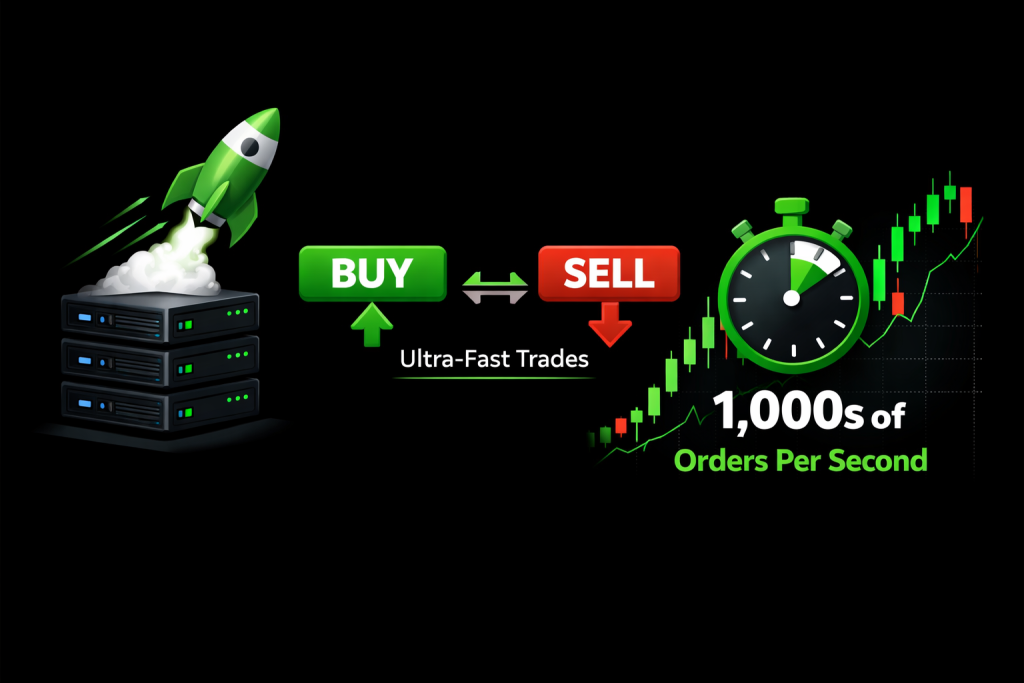
High Frequency Trading platforms are advanced trading systems designed to execute large numbers of orders in extremely short timeframes, often in milliseconds or microseconds. They use powerful algorithms, low-latency infrastructure, and direct market access to identify and exploit small price movements across financial markets.
Additionally, these platforms are typically used by institutional traders, hedge funds, and professional algorithmic traders who rely on speed, precision, and automation rather than manual decision-making. As a result, they require robust technology, stable connectivity, and sophisticated trading strategies to operate effectively.
What Real Traders want to Know about High Frequency Trading Platforms – Key FAQS
Q: What is a high-frequency trading platform in simple terms?
A: A high-frequency trading platform enables traders to execute thousands of trades within milliseconds using advanced algorithms. It prioritizes speed, automation, and the exploitation of small price differences across markets instead of relying on long-term price movements or manual trading decisions.
Q: Who typically uses high-frequency trading platforms?
A: Institutional traders, hedge funds, and professional algorithmic traders primarily use high-frequency trading platforms. These users depend on advanced technology, low-latency connections, and powerful computing systems to execute rapid trades at scale and capture small market inefficiencies.
Q: Do I need special software for high-frequency trading?
A: Yes, high-frequency trading usually requires advanced software such as algorithmic trading systems, MetaTrader with Expert Advisors, or API-based platforms. In addition, traders often use VPS hosting and low-latency servers to improve execution speed and reduce delays.
Q: Is high-frequency trading profitable for retail traders?
A: High-frequency trading can be profitable, but it is extremely challenging for retail traders. Success depends on accessing fast execution, strong infrastructure, and advanced algorithms. Furthermore, institutional competition makes it difficult for traders to consistently outperform the market.
Q: What risks are involved in high-frequency trading?
A: High-frequency trading carries risks such as technical failures, slippage, and over-optimization of algorithms. In addition, market volatility can also lead to unexpected losses. Therefore, traders must apply strong risk management and rely on reliable infrastructure to reduce potential system and execution errors.
Pros and Cons
| ✓ Pros | ✕ Cons |
| Ultra-fast execution speeds (low latency) | Requires advanced technical knowledge |
| Tight spreads ideal for scalping | High infrastructure and VPS costs |
| Direct market access with deep liquidity | Not all brokers support HFT strategies |
| Supports algorithmic and automated trading | Sensitive to volatility and slippage |
| Institutional-grade tools and data feeds | Requires strong hardware and stable internet |
You might also like:
In Conclusion
High-frequency trading platforms provide ultra-fast, reliable, and technology-driven access to global financial markets. Additionally, they operate within regulated environments overseen by authorities such as the Financial Conduct Authority and the Securities and Exchange Commission, ensuring transparency, market integrity, and investor protection. Overall, these platforms empower traders to execute rapid, data-driven strategies across multiple asset classes.
Yes, high-frequency trading platforms are legal and operate under regulated financial authorities that ensure transparency, investor protection, and fair market practices.
HFT platforms focus on ultra-fast execution, automation, and algorithmic trading, while standard platforms mainly support manual trading and slower execution speeds.
Institutional traders, hedge funds, and professional algorithmic traders primarily use HFT platforms to execute large volumes of trades within milliseconds.
Traders can access forex, equities, futures, and cryptocurrencies, depending on broker support and infrastructure.
Retail traders can access them, but they often struggle due to high technical requirements, infrastructure needs, and strong institutional competition.
Sidebar rates

