S&P 500 and Nasdaq Jump Despite Strait of Hormuz Blockade
Attention now turns to the first-quarter corporate earnings season, with several major Wall Street banks set to report results.

Quick overview
- Global markets initially opened lower but rebounded as U.S.-Iran negotiations showed signs of progress.
- President Trump ordered a blockade of Iranian ports and the Strait of Hormuz following failed ceasefire talks.
- Crude oil prices surged above $100 per barrel, raising concerns about inflation and its potential impact on the U.S. economy.
- The upcoming first-quarter earnings season is anticipated, with major banks set to report their results soon.
Global markets began the week in the red, but signs of progress in talks between the United States and Iran triggered a reversal in sentiment.
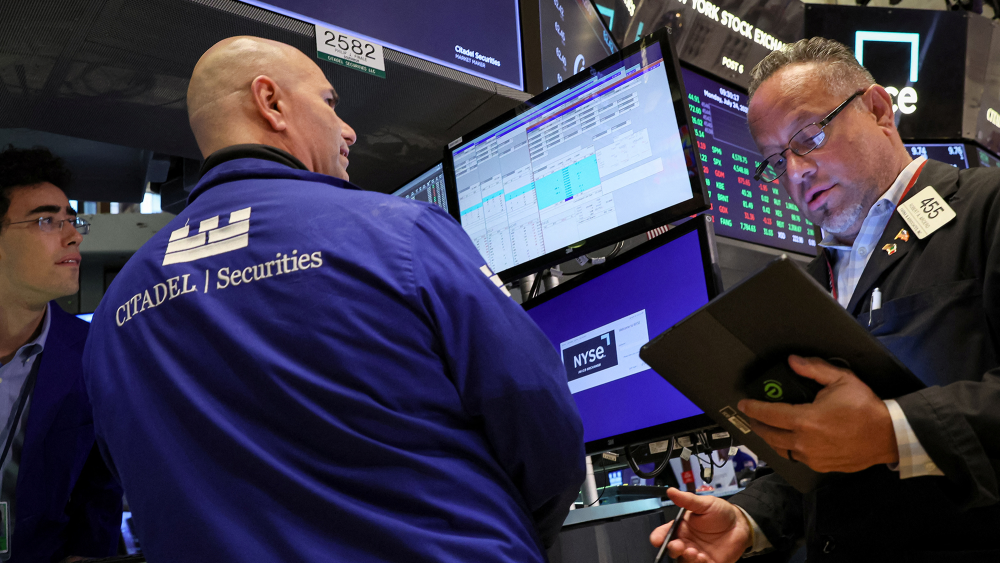
Wall Street turned higher after early losses as peace negotiations between the two countries showed tentative signs of progress. Earlier, President Donald Trump had ordered a blockade of Iranian ports and the Strait of Hormuz in retaliation.
In this context, the Dow Jones Industrial Average rose 0.6% to 48,219.05 points, the S&P 500 gained 1% to 6,887.00, and the Nasdaq Composite advanced 1.2% to 23,183.74.
Trump orders blockade of the Strait of Hormuz
President Donald Trump ordered a blockade of the Strait of Hormuz starting Monday morning after negotiations between the United States and Iran failed to reach an agreement during weekend ceasefire talks. The United States Central Command said the measure would apply only to Iranian vessels and ports.
U.S. and Iranian officials met in Pakistan but failed to secure a breakthrough. Iran’s nuclear activities and the full reopening of the Strait of Hormuz without tolls remained key points of disagreement.
The developments continued to disrupt global oil and gas markets. Crude prices surged Monday following the news, with Brent crude quickly climbing above $100 per barrel. The spike has raised concerns about renewed global inflationary pressure.
The Fed, oil prices and the economic outlook
Austan Goolsbee, president of the Federal Reserve Bank of Chicago, said Monday that oil futures markets are pricing in expectations that the war-driven surge in crude prices may be temporary, suggesting limited long-term impact on the U.S. economy.
“As long as the consumer remains strong, I think economic growth will remain strong,” Goolsbee said in an interview with Fox News. “If this were to persist—if fuel prices stayed at these elevated levels for a longer period—we would have to reassess what that means for consumer spending. But if it unfolds the way markets expect, the impact should be temporary.”
Goolsbee noted that oil futures prices suggest investors expect the shock to be short-lived. However, he added that if oil remained around $90 per barrel month after month, the increase would likely start feeding into broader price levels.
The Fed official also warned that a decline in consumer confidence would not be surprising, noting that sentiment indicators have begun to weaken.
March inflation data in the United States showed a sharp increase in consumer prices, although slightly below expectations, with energy costs playing a major role in the rise.
The figures have renewed concerns that persistent inflation could slow economic growth and force the Federal Reserve to keep interest rates unchanged this year.
First-quarter earnings season begins
Attention now turns to the first-quarter corporate earnings season, with several major Wall Street banks set to report results in the coming days.
Goldman Sachs (-1.8%) is scheduled to release earnings Monday, while JPMorgan Chase (+3.4%), Wells Fargo (+1.1%) and Citigroup (+1.8%) will report on Tuesday.
In the semiconductor sector, TSMC (-0.1%)—a leading global chipmaker—will release its full first-quarter results later this week.
- Check out our free forex signals
- Follow the top economic events on FX Leaders economic calendar
- Trade better, discover more Forex Trading Strategies
- Open a FREE Trading Account
- Read our latest reviews on: Avatrade, Exness, HFM and XM

Related Articles

Sidebar rates

Related Posts
 Save
Save